featured News Trending

Hungary’s powerful pro-government media network is rapidly weakening after former Prime Minister Viktor Orban’s election defeat last month. Several major outlets linked to Orban have already seen leadership removals, programme cancellations, and shifts in editorial tone following the landslide victory of Peter Magyar’s opposition-led Tisza party.

The new government has pledged sweeping reforms aimed at restoring media independence and press freedom after years of criticism over state influence in Hungarian journalism. Public broadcasters have begun featuring more opposition voices, while some pro-Orban influencers and media figures have reduced their activity or disappeared from major platforms. Magyar has also announced plans for a new media law and a review of public service media financing.
Analysts say one of the biggest challenges will be dismantling the financial structure that supported pro-Orban media for years, particularly through state advertising. The KESMA media conglomerate, which includes hundreds of outlets, could face severe financial pressure if government support is cut. European Union leaders are closely monitoring Hungary’s reforms, viewing the country as a key test for rebuilding democratic institutions and media freedom in Europe.

Pic courtesy: google/ images are subject to copyright

featured News Trending

Peter Magyar secured a sweeping victory in Hungary’s parliamentary election, handing his Tisza party a powerful two-thirds majority. The result gives the new government broad authority to push reforms, strengthen the rule of law, and potentially unlock billions in frozen European Union funds. Analysts say the outcome, once seen as unlikely, is the most market-friendly scenario and could boost investor confidence.

The win marks a major shift after years of tensions under former Prime Minister Viktor Orban, whose government frequently clashed with the EU. Magyar has pledged to rebuild ties with Brussels and position Hungary as a strong ally within both the EU and NATO. He also promised constitutional changes to restore checks and balances and tackle corruption, aiming to reverse what critics described as institutional control under the previous administration.

While markets have reacted positively, uncertainty remains over how quickly Hungary can access EU funding. Diplomats and analysts caution that the government must first deliver concrete reforms before funds are released. Despite comparisons with Poland’s recent experience, experts say Hungary may face stricter conditions, making the pace of economic recovery dependent on the government’s ability to follow through on its promises.

Pic courtesy: google/ images are subject to copyright

featured News Trending

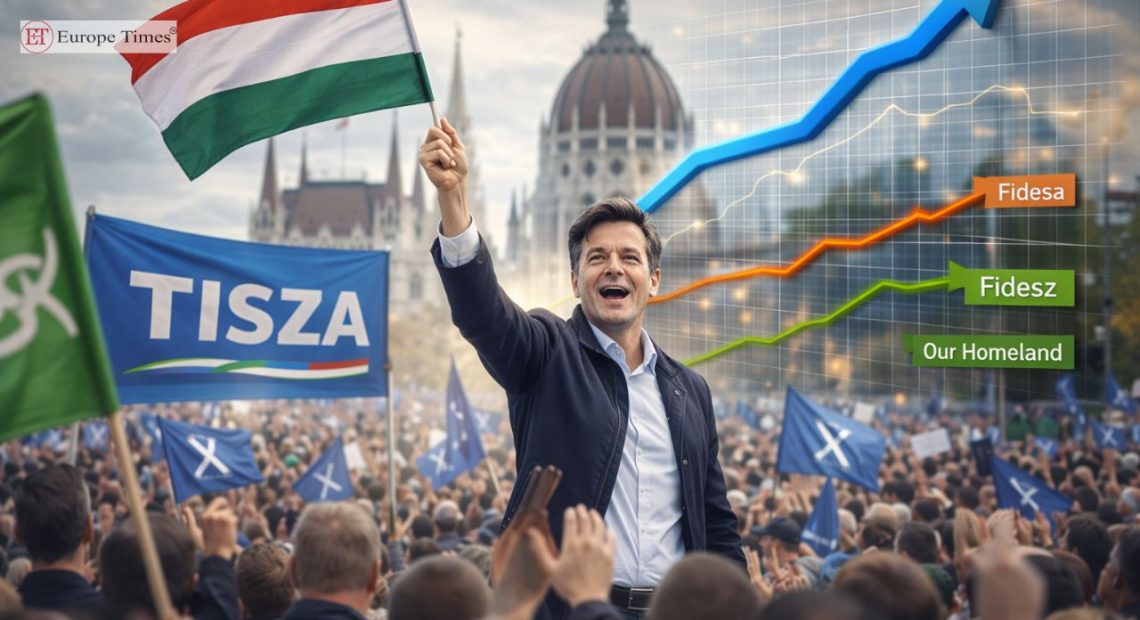
Hungary’s opposition Tisza party has taken the lead over Prime Minister Viktor Orban’s ruling Fidesz party ahead of the April 12 parliamentary elections, according to a recent opinion poll. The survey showed Tisza gaining stronger voter support, signalling a significant challenge to Orban’s long-standing leadership. Another poll also indicated that the far-right Our Homeland party is likely to secure enough votes to enter parliament.

The 21 Institute poll found that Tisza secured 35% support among all voters, slightly increasing from the previous month, while Fidesz stood at 28%. Among decided voters, Tisza gained majority support, further strengthening its position ahead of the election. Meanwhile, the Our Homeland party crossed the minimum 5% vote threshold required for parliamentary representation.

Tisza is led by former government insider Peter Magyar, who has promised to tackle corruption, revive Hungary’s economy by unlocking frozen European Union funds, and strengthen ties with the EU and NATO. Despite Tisza’s growing support, the election outcome remains uncertain as a significant portion of voters is still undecided, making the upcoming vote highly competitive.

Pic courtesy: google/ images are subject to copyright