featured News Trending

Thieves have stolen an estimated €30 million in cash and valuables after drilling into a vault at a Sparkasse savings bank branch in the western German city of Gelsenkirchen, police said. The break-in, described by investigators as highly professional and reminiscent of a Hollywood-style heist, involved the use of a large drill to access the underground vault. More than 3,000 safe deposit boxes containing money, gold and jewellery were forced open during the robbery.

Police became aware of the crime in the early hours of Monday after a fire alarm was triggered at the branch on Nienhofstrasse in the Buer district. Investigators believe the suspects exploited the quiet Christmas period to carry out the operation, gaining entry to and escaping from the bank through an adjacent parking garage. Witnesses reported seeing several men carrying large bags in the garage staircase overnight, and CCTV footage captured a black Audi RS6 leaving the area early Monday morning.

No arrests have been made so far and the suspects remain at large. Sparkasse said around 95% of the safe deposit boxes at the branch had been broken into, making it highly likely many customers were affected. The bank has set up a hotline for clients, confirmed the branch will remain temporarily closed, and said the contents of each safe deposit box are insured up to €10,300, advising customers to check for additional coverage under their home insurance policies.

Pic courtesy: google/ images are subject to copyright

featured News

German Chancellor Friedrich Merz has called on Europe to assert its interests more forcefully to safeguard peace and prosperity in 2026, warning of mounting threats from Russian aggression, global protectionism and shifting relations with the United States. Speaking in his New Year’s address, Merz said the war in Ukraine posed a direct threat to Europe’s freedom and security, adding that Russia’s actions were part of a broader strategy targeting the entire continent.

Since taking office in May, Merz has played a key role in pushing European support for Ukraine and strengthening Germany’s defence posture. He said Germany now faces daily challenges including sabotage, espionage and cyberattacks, underscoring the need for greater resilience. Merz also highlighted economic risks from rising protectionism and Europe’s dependence on imported raw materials, which he said were increasingly being used as tools of political pressure.

Merz pointed to Germany’s struggle to revive its export-driven economy after two years of contraction, as Berlin seeks to reduce reliance on China while navigating global trade tensions and the impact of U.S. President Donald Trump’s tariff policies. Acknowledging a more difficult partnership with Washington since Trump’s return to office in 2025, Merz said Europe must rely more on itself, stressing that confidence, not fear, should guide the continent’s response as it works to renew long-standing peace, freedom and prosperity.

Pic courtesy: google/ images are subject to copyright

featured News Trending

The European Union, along with France and Germany, strongly condemned U.S. visa bans on five European citizens, including former EU commissioner Thierry Breton, who have been involved in combating online hate and disinformation. Washington accused them of censoring free speech and imposing undue restrictions on U.S. tech companies, a move that European officials described as unjustified and an infringement on Europe’s legislative autonomy. French President Emmanuel Macron emphasized the importance of protecting Europe’s independence and the freedom of its citizens.

Breton, who helped design the EU’s Digital Services Act (DSA), faced particular scrutiny from the Trump administration. The DSA requires tech companies to tackle illegal content such as hate speech and child sexual abuse material, but the U.S. argued it unfairly targets American platforms and citizens. Previous disputes, including fines against Elon Musk’s X platform, have heightened tensions between Brussels and Washington over internet regulation and freedom of expression.

The visa bans also affected activists from the U.K. and Germany, with both countries expressing support and solidarity. German authorities called the bans unacceptable, noting that digital rules are determined in Europe, not Washington. British and international organizations described the U.S. actions as authoritarian and an attack on free speech, while the EU signaled it may respond decisively to what it views as a coercive measure undermining democratic norms.

Pic courtesy: google/ images are subject to copyright

featured News

Tesla has announced fresh investments to scale up battery cell production at its Gigafactory in Gruenheide near Berlin, aiming to produce up to 8 gigawatt hours of battery cells annually from 2027. The U.S. electric vehicle maker said it will invest an additional three-digit million euro amount, taking total investment in the local battery cell factory to nearly €1 billion.

The company said the expansion is part of a strategy to deepen vertical integration at the site, allowing everything from battery cells to complete vehicles to be manufactured at a single location. Tesla described this as a unique setup in Europe that will help strengthen supply chain resilience and reduce dependency on external suppliers.

Tesla also noted that producing battery cells economically in Europe remains challenging amid competition from China and the United States. The Gruenheide facility, Tesla’s only gigafactory in Europe, currently employs about 11,500 people and plays a critical role as the automaker works to stabilise its position in the European electric vehicle market.

Pic courtesy: google/ images are subject to copyright

featured News

The European Commission is poised to ease its 2035 ban on new combustion-engine cars, allowing up to 10% of sales to include non-electric options like plug-in hybrids and range extenders using CO2-neutral biofuels or synthetic fuels. This reversal follows intense lobbying from Germany, Italy, and Europe’s auto sector, including giants like BMW, Mercedes-Benz, Renault, Volkswagen, and Stellantis, as they grapple with competition from Tesla and Chinese EVs. The proposal requires approval from EU governments and the European Parliament.

This marks the EU’s biggest retreat from its aggressive green policies in recent years, with carmakers also urging relaxed 2030 CO2 targets and fines. The European Automobile Manufacturers’ Association (ACEA) has described the situation as “high noon” for the industry. However, EV advocates warn that diluting the 100% zero-emissions goal to 90% could erode investments and hand more market dominance to China.

To counterbalance, the Commission plans incentives for EVs in corporate fleets—which drive 60% of new car sales—potentially with local content rules and tax breaks for small EVs. Credits toward CO2 targets may also reward sustainable practices like low-carbon steel production, though the auto sector prefers incentives over mandates.

Pic courtesy: google/ images are subject to copyright

featured News

Germany has accused Russia of carrying out a cyber-attack on its air traffic control systems and attempting to interfere in the country’s federal elections, prompting Berlin to summon the Russian ambassador. A German foreign ministry spokesman said Russian military intelligence was responsible for hacking office communications at Germany’s air navigation service provider in August 2024, while also running a disinformation campaign aimed at destabilising domestic politics ahead of the February elections.

According to German authorities, the attack has been linked to the Russian hacker group Fancy Bear, which is believed to operate under the GRU, Russia’s military intelligence service. Officials said intelligence findings confirmed GRU responsibility and accused Moscow of spreading fake videos alleging ballot manipulation, targeting senior political figures including Green Party leader Robert Habeck and CDU leader Friedrich Merz, now Germany’s chancellor. While the cyber-attack did not disrupt flights, Berlin said it was part of a broader effort to undermine democratic processes.

Russia has firmly denied the allegations, calling them baseless and “absurd”. However, Germany said it would coordinate with European partners to impose counter-measures and make Russia “pay a price” for what it described as hybrid warfare. The accusations come amid growing concern across Europe over suspected Russian cyber and disinformation campaigns since the invasion of Ukraine, which has significantly worsened relations between Berlin and Moscow.

Pic courtesy: google/ images are subject to copyright

featured News

Germany’s population is projected to shrink significantly over the coming decades, with the national statistics office warning that the country could lose nearly 10 million people by 2070. As the large baby boomer generation ages, Germany is expected to have one in four citizens over the age of 67 within the next decade. By 2038, around 21 million residents—27% of the population—will be of pension age.

This rapid demographic shift is worsening labour shortages across Europe’s largest economy, with businesses increasingly struggling to find workers. The trend is also fuelling political tensions, as debates over immigration intensify and support grows for the far-right Alternative for Germany (AfD), which has surged in many opinion polls amid concerns about social and economic pressures.

Germany’s welfare system is expected to come under mounting strain, with the ratio of pensioners to workers projected to rise sharply. Currently, there are 33 retirees for every 100 working-age individuals, but in the worst-case scenario that figure could climb to 61 by 2070—leaving fewer than two workers contributing for each pension recipient. Only two out of 27 scenarios envision population growth, and both rely on higher immigration and increased birth rates.

Pic courtesy: google/ images are subject to copyright

featured News

Ukrainian President Volodymyr Zelensky is set to meet UK Prime Minister Sir Keir Starmer, along with French President Emmanuel Macron and German Chancellor Friedrich Merz, at Downing Street. The discussion comes amid a US-driven push for Ukraine to accept concessions in peace talks with Russia. The meeting follows negotiations in Florida, where Zelensky’s team pushed to amend a White House plan that Ukraine believes leans too heavily toward Russian demands.

The talks aim to ensure that any peace deal comes with strong security guarantees capable of deterring future Russian aggression. The UK and France have been spearheading efforts to build a “coalition of the willing” to support Ukraine’s long-term defence, though the role of a future reassurance force in Ukraine remains unclear. Some European countries, including Germany, have expressed reservations about deploying troops on Ukrainian soil, fearing escalation.

Key sticking points in the US-led peace initiative include Ukrainian troop withdrawal from contested eastern regions and the future of the Zaporizhzhia nuclear power plant, currently under Russian control. While US officials claim progress is being made, Russia shows little sign of compromise and continues to insist on retaining occupied territories and blocking Ukraine’s NATO ambitions. European leaders fear the proposed terms could prioritise a quick end to the war over long-term European security.

Pic courtesy: google/ images are subject to copyright

featured News

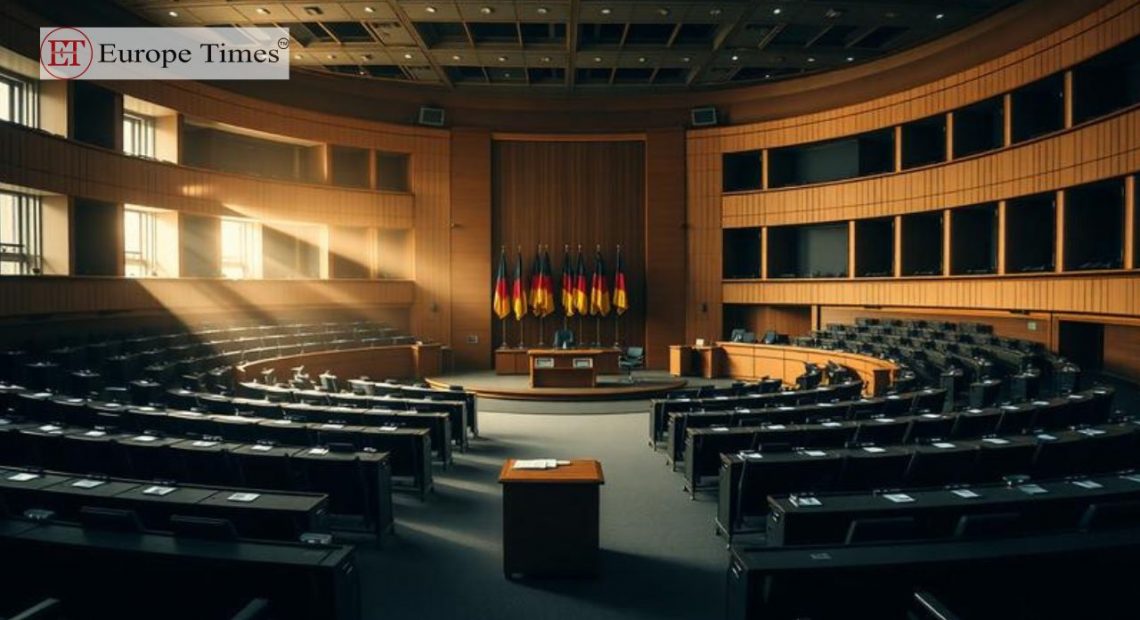
Germany’s parliament has approved a voluntary military service program for 18-year-olds, marking a major shift in the country’s defense policy. From January 2026, all 18-year-olds will receive a questionnaire asking if they are interested in joining the armed forces. While participation will initially be voluntary for men and women, mandatory medical exams for men will start in July 2027 to assess fitness for potential service. The move aims to strengthen Germany’s military after Russia’s invasion of Ukraine and to meet NATO force targets.

The decision has sparked protests across the country, with students in as many as 90 cities planning strikes. Critics argue that military service disrupts lives, encourages obedience training, and exposes young people to the realities of war. In Hamburg alone, about 1,500 people were expected to protest, highlighting widespread skepticism among German youth about the new law.

Germany’s armed forces currently number around 182,000, and officials plan to increase this to 260,000 by the early 2030s, supplemented by 200,000 reservists. Incentives for voluntary service include a monthly salary of €2,600, making it more attractive than similar programs in France. The legislation reflects Chancellor Friedrich Merz’s push to rebuild the Bundeswehr into Europe’s strongest conventional army amid growing security concerns.

Pic courtesy: google/ images are subject to copyright

featured News

German Chancellor Friedrich Merz secured an absolute majority in parliament on Friday for his controversial pensions bill, overcoming resistance from younger members of his own conservative bloc. The draft, which guarantees current pension levels until 2031, passed with 319 votes, indicating it likely succeeded without the support of opposition parties.

The vote came after days of turbulence within Merz’s Christian Democratic Union/Christian Social Union (CDU/CSU) alliance. A youth faction inside the party had threatened to vote against the bill, arguing that it preserves an unsustainable system and places an unfair financial burden on future generations.

The dispute underscored growing questions about Merz’s control over his party and the stability of the coalition government, which includes conservatives and the center-left Social Democrats. Analysts say the internal tensions and reliance on a slim parliamentary majority point to challenges ahead for implementing reforms aimed at reviving Germany’s struggling economy and strengthening its neglected military sector.

Across Europe, pensions and generational fairness are emerging as hot political issues as aging populations strain budgets. Although Merz ultimately avoided the embarrassment of needing opposition support—despite a surprising offer from the Left Party to abstain—the infighting has deepened doubts about his ability to steer major legislation in the future.

Pic courtesy: google/ images are subject to copyright