featured News

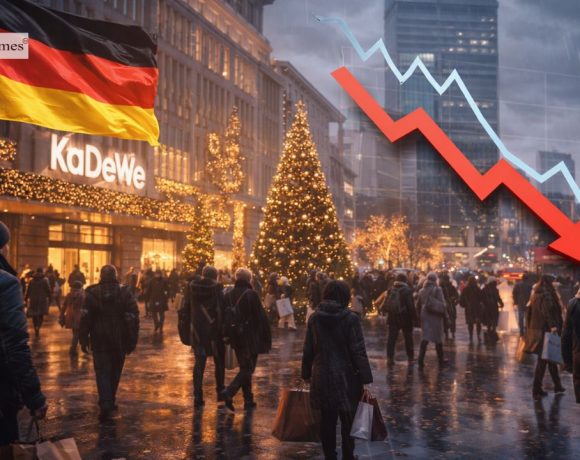
Germany’s consumer sentiment is set to improve modestly in December, supported by a rise in households’ willingness to spend on Christmas shopping despite lingering concerns about future income. The GfK and NIM consumer climate index edged up to -23.2 for December from -24.1, matching analysts’ expectations. A second month of stronger buying appetite and a small drop in saving intentions helped lift the overall mood.

However, retail expectations remain cautious. An Ifo Institute survey shows that around a quarter of retailers anticipate weak Christmas sales, with many entering the holiday season without high hopes. Only about 10% expect strong performance, while the retail association HDE forecasts €126.2 billion in November–December sales, indicating only modest growth.

Despite the slight pickup in spending sentiment, households remain wary about the year ahead. Economic expectations dipped again, reflecting concerns over Germany’s slow recovery, with GDP expected to grow just 0.2% in 2025 after two years of contraction. Toy retailers—usually strong performers in the Christmas season—are among the most pessimistic, with half expecting poorer results than last year.

Pic Courtesy: google/ images are subject to copyright
featured News

Germany’s private sector lost momentum in November, with manufacturing unexpectedly contracting and the services sector expanding at a slower pace, according to the latest HCOB flash composite Purchasing Managers’ Index (PMI) compiled by S&P Global. The index slipped to 52.1 from 53.9 in October, marking a two-month low. Despite the decline, the reading stayed above the 50-point threshold for the sixth consecutive month, signaling continued but weakening growth.

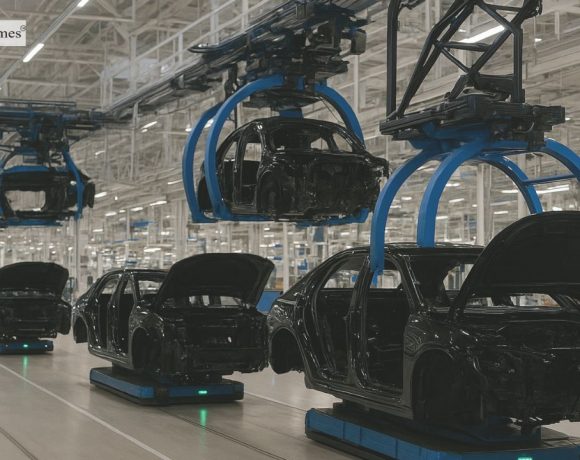
The manufacturing PMI fell deeper into contraction territory at 48.4, compared with 49.6 in October and below expectations for a slight improvement. The sector saw sharp drops in new orders, particularly export sales, which experienced their fastest decline since January. The downturn led to falling backlogs and a rise in job losses. Meanwhile, the services PMI also weakened to 52.7 from 54.6, missing forecasts and contributing to a subdued overall outlook.

“This is a major setback for Germany,” said Cyrus de la Rubia, chief economist at Hamburg Commercial Bank, noting that hopes for stronger service sector expansion have faded. He warned that the economy is “limping towards marginal growth” in the fourth quarter. While government investment in defence and civil engineering has boosted optimism for future output, the finance ministry recently stated that only a moderate recovery is likely by year-end.

Pic Courtesy: google/ images are subject to copyright

featured News

Alphabet’s Google has announced plans to invest €5.5 billion ($6.4 billion) in Germany between 2026 and 2029 to strengthen its cloud infrastructure and data centre capacity. The investment includes building a new data centre in Dietzenbach near Frankfurt and expanding its existing facility in Hanau, both located in the state of Hesse.

The initiative is expected to secure around 9,000 indirect jobs, marking a significant boost for Germany’s digital economy. Google Cloud’s Northern Europe vice president Marianne Janik said the investment will directly involve about 100 workers at each site. The move follows a series of major tech partnerships in Germany, including a $1.2 billion AI deal between Deutsche Telekom and Nvidia.

German Finance Minister Lars Klingbeil hailed the announcement as a major signal for Germany’s economic future, noting that no state funds are involved. The government continues to promote the country as a prime business destination amid efforts to modernize infrastructure and revive economic growth.

Pic Courtesy: google/ images are subject to copyright