featured News Trending

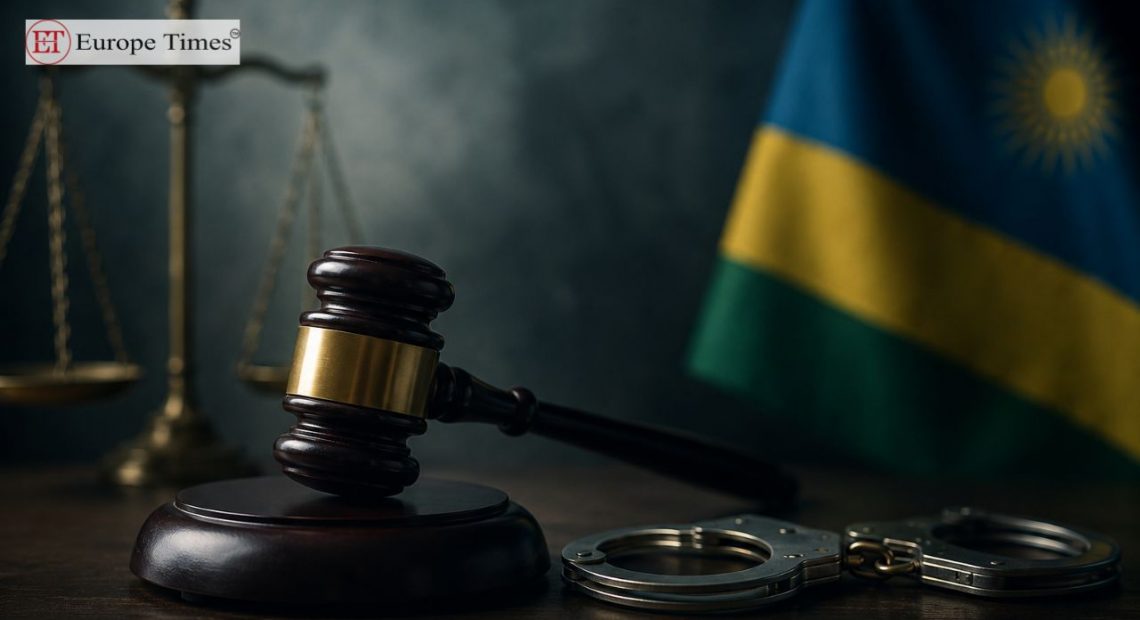
German prosecutors have arrested a German-Rwandan national accused of assisting in the 1994 Rwanda genocide by ordering the killings of Tutsis. The suspect, identified only as Innocent S under German privacy laws, was detained in the central state of Hesse. He faces charges of complicity in genocide and 25 counts of murder for allegedly directing attacks while serving as an assistant to the mayor of Kayove in northwestern Rwanda.

According to prosecutors, the suspect is accused of ordering the deaths of 25 Tutsi victims across five separate incidents. In one case, he allegedly took part directly in the killing by stabbing a victim in the chest. Investigators also claim he used his official position to incite violence against the Tutsi population and helped prepare death lists during the genocide.

Germany has pursued several Rwanda genocide suspects under the principle of universal jurisdiction, which allows courts to prosecute serious international crimes regardless of where they were committed. The 1994 Rwanda genocide, carried out by Hutu extremists over approximately 100 days, claimed the lives of more than 800,000 Tutsis and moderate Hutus, making it one of the deadliest atrocities of the 20th century.

Pic courtesy: google/ images are subject to copyright

News Trending

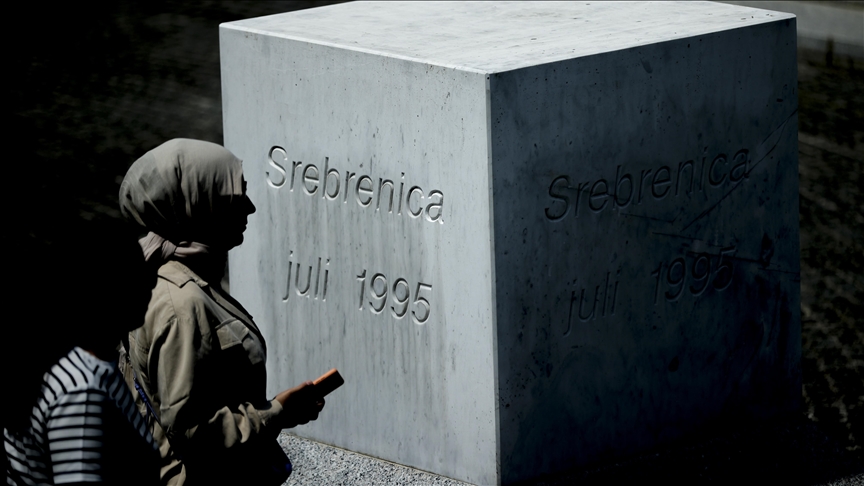
United Nations member states have voted to declare July 11 an annual day of remembrance for victims of the 1995 Srebrenica massacre, despite opposition from Serbia. The proposal, brought by Germany and Rwanda, aims to establish the “International Day of Reflection and Commemoration of the 1995 Genocide in Srebrenica.” While 84 member states voted in favor, there were 19 votes against and 68 abstentions.

Serbia’s President Aleksandar Vucic opposed the resolution, claiming it was politically motivated and could unfairly label Serbia and Serbs as collectively responsible for genocide. Vucic warned that this could lead to further resolutions on other genocides, potentially including those against Serbs during WWII by the Nazi-allied regime in Croatia.

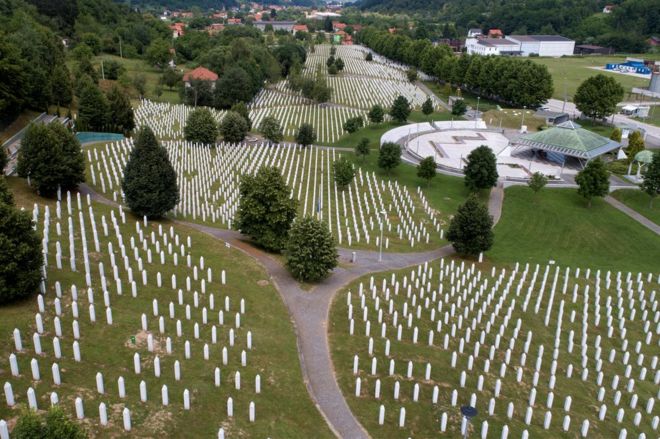
The massacre, carried out by Bosnian-Serb forces under the command of Ratko Mladic, resulted in the systematic killing of over eight thousand Bosniak Muslim men and boys. The aftermath involved attempts to hide the scale of the massacre by exhuming and redistributing bodies, complicating identification efforts. The International Commission on Missing Persons used DNA technology to identify over seven thousand victims, praising the UN resolution for its acknowledgment and commemoration.

The resolution explicitly states that genocide convictions are against individuals, not entire ethnic or religious groups. In 2007, the International Court of Justice recognized the massacre as genocide but did not hold Serbia directly responsible, though it criticized Serbia for failing to prevent it. Serbia’s National Assembly condemned the massacre in 2010, and Vucic, as prime minister in 2015, visited Srebrenica to pay respects on the 20th anniversary.

Milorad Dodik, president of Bosnia’s Republika Srpska region, and other Serb nationalists deny that genocide occurred, sometimes glorifying Mladic. Dodik threatened secession if the resolution passed but claimed victory after the vote, citing the lack of an absolute majority as evidence of failure to label Serbs as a genocidal nation. His claims, however, serve more as political posturing than an accurate reflection of the resolution’s intent.

Picture Courtesy: Google/images are subject to copyright

News

Ratko Mladic, who is a former Bosnian Serb commander, has strongly criticised the UN court, while addressing judges in The Hague as part of an appeal against his conviction for genocide and crimes against humanity.

He has called the court a child of Western powers,

Earlier, he was found guilty for his part in the 1995 Srebrenica massacre.

The massacre is one of the most brutal one the humanity has seen so far. As many as 8,000 Muslims were killed during the massacre.

The former commander denied any involvement in the case saying that he was far away from the town when the massacre happened.

His lawyer has taken the same stand in the UN court also.

The UN court, in which the hearing is at present taking place, is the one which is supposed to consider appeals and remaining cases from the International Criminal Tribunal for the former Yugoslavia (ICTY).

The original ICTY hearing ended in 2017 itself.

The UN court hearing was supposed to begin before the commencement of the Covid-19 issue. Mladic’s health problems and coronavirus restrictions delayed proceedings earlier.

Photo Courtesy: Google/ images are subject to copyright