featured News Trending

Italy’s national statistics bureau ISTAT has slightly lowered its economic growth forecast for 2026, projecting gross domestic product (GDP) growth of 0.7%, down from the 0.8% estimate issued in December. The agency also expects the economy to expand by 0.7% in 2027, supported by stronger-than-expected performance in the first quarter, when GDP rose 0.3% from the previous three months.

Despite the downgrade, ISTAT’s outlook remains somewhat more optimistic than forecasts from the European Commission, IMF, OECD and the Bank of Italy, all of which expect growth between 0.5% and 0.6% over the next two years. Prime Minister Giorgia Meloni’s government also revised its projections lower in April, citing rising energy costs and ongoing tensions in the Middle East.

ISTAT warned that geopolitical uncertainty continues to pose risks to the economy, particularly developments related to the conflict in the Middle East. The statistics bureau also improved its labour market outlook, forecasting an average unemployment rate of 5.5% this year and in 2027, lower than its previous estimate of 6.1%. Italy’s economy grew 0.5% in 2025, marking a third consecutive year of growth below 1%.

Pic courtesy: google/ images are subject to copyright

featured News Trending

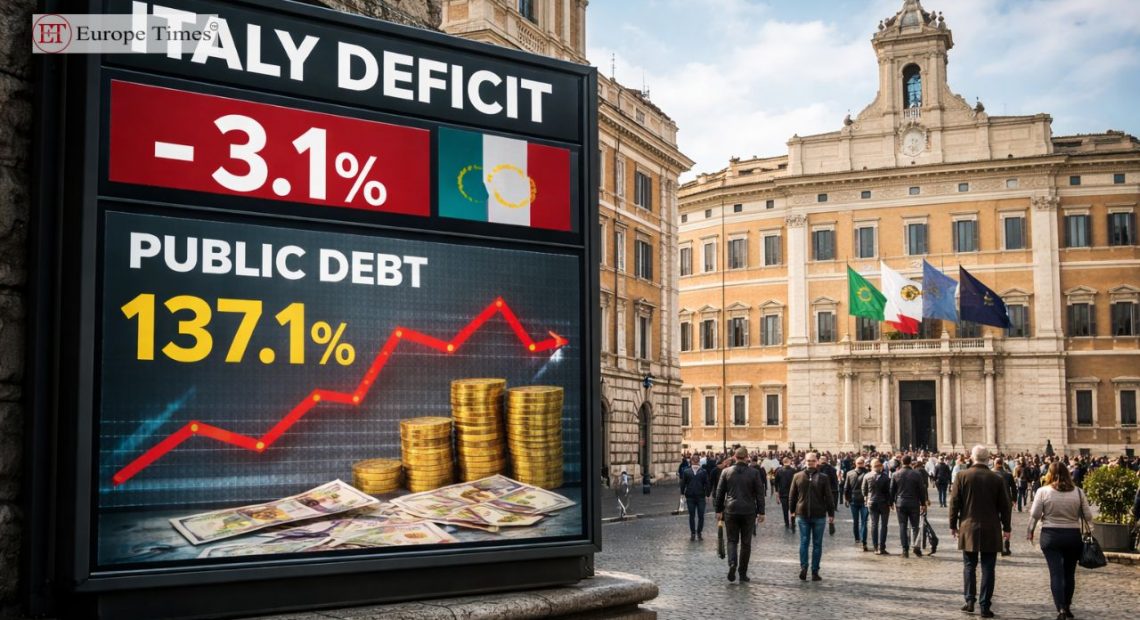
Italy’s 2025 budget deficit came in at 3.1% of GDP, slightly above the European Union’s 3% ceiling, according to ISTAT. While lower than 2024’s 3.4%, the miss casts doubt on Rome’s plan to exit the EU’s Excessive Deficit Procedure early, which could have eased spending constraints ahead of the 2027 elections.

The eurozone’s third-largest economy grew by 0.5% in 2025, matching the government’s revised forecasts, though growth remains below 1% for the fourth consecutive year despite EU recovery funds. The 2026 deficit is targeted at 2.8%, with the government hoping for modest improvement amid lingering fiscal challenges.

Italy’s public debt also exceeded expectations, rising to 137.1% of GDP from 134.7% in 2024, above the government’s 136.2% target. With debt levels remaining the second-highest in the eurozone after Greece, the Meloni administration faces mounting pressure to control spending while promoting economic growth.

Pic courtesy: google/ images are subject to copyright