featured News Trending

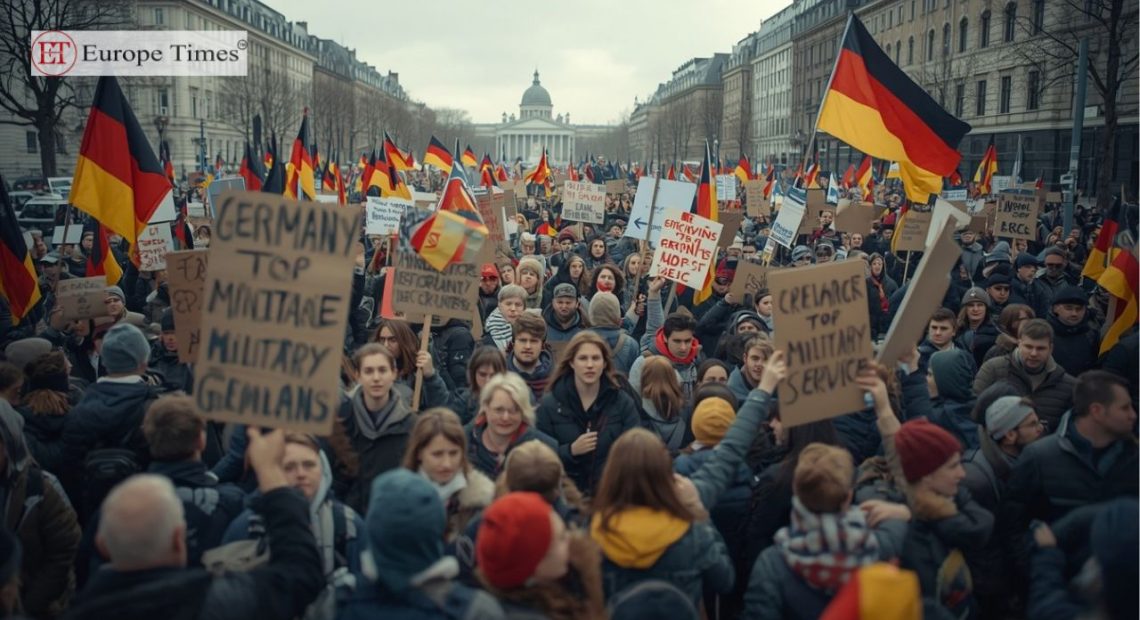
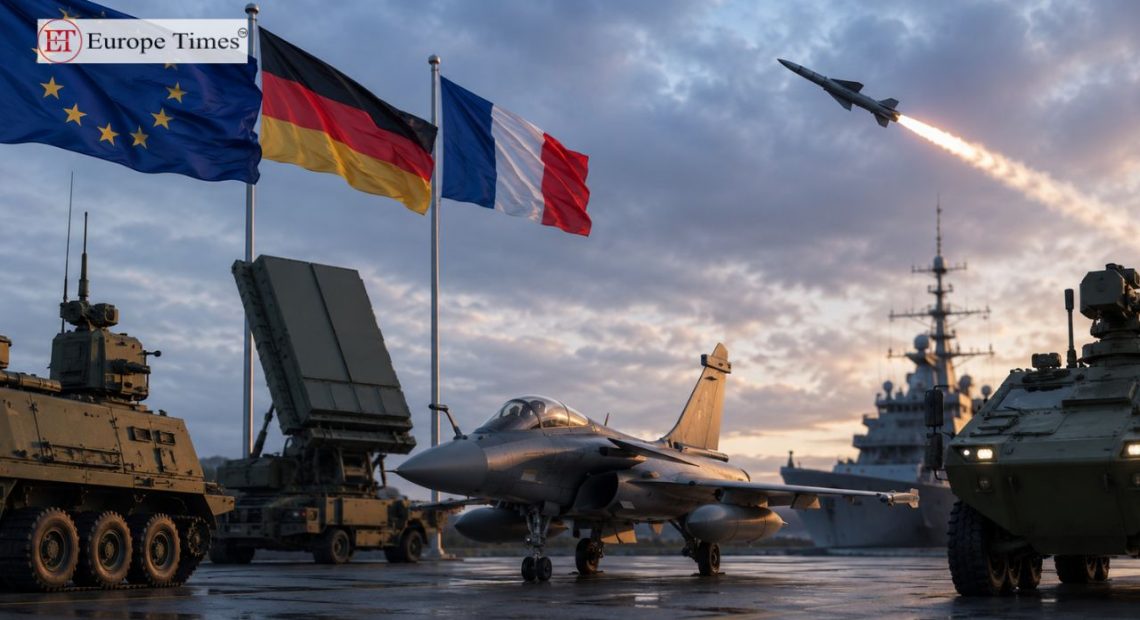
Germany has suspended a controversial requirement that men of military age seek approval for extended stays abroad, Defence Minister Boris Pistorius announced after public concern over new military service rules. The regulation, introduced under the Military Service Modernisation Act that took effect in January, had required males aged 17 and above to obtain permission before travelling abroad for more than three months, though it had not yet been enforced.

Pistorius clarified that during peacetime, citizens aged between 17 and 45 are free to travel without notifying authorities or requesting approval. The government has temporarily halted the permission process while military service remains voluntary, stressing that the measure was originally intended as a precaution tied to national defence planning amid heightened security concerns following Russia’s invasion of Ukraine.

The updated law seeks to strengthen Germany’s armed forces and allows conscription to be reinstated if voluntary recruitment falls short. Chancellor Friedrich Merz has pledged to build Europe’s strongest conventional army, with all 18-year-olds now receiving questionnaires about potential military service — mandatory for men and optional for women. From July 2027, 18-year-old men will also undergo medical examinations to assess fitness for possible service.

Pic courtesy: google/ images are subject to copyright

featured News Trending

Germany is working to clarify provisions in its updated military service law that require men aged 17 to 45 to seek permission before leaving the country for more than three months. The rule, which came into effect in January, drew attention only recently and could potentially impact millions. The defence ministry said it is now drafting clearer exemption guidelines to reduce confusion and avoid unnecessary bureaucracy.

Officials emphasised that military service remains voluntary, despite the stricter registration requirements. The law is part of broader efforts to strengthen the country’s armed forces, including the Bundeswehr, amid rising security concerns in Europe. Authorities say the measure is intended to ensure better tracking of eligible individuals in case of emergencies.

The move has sparked criticism from opposition leaders, who argue the law creates uncertainty for citizens. The government, led by Friedrich Merz, aims to expand military personnel to 260,000 by 2035 as part of efforts to boost defence readiness and meet NATO commitments in an increasingly tense geopolitical environment.

Pic courtesy: google/ images are subject to copyright

featured News Trending

German Chancellor Friedrich Merz has expressed doubts about whether the military actions by United States and Israel against Iran will achieve lasting success. Speaking at a conference in Berlin, Merz said he was unconvinced that there was a clear endgame to the conflict, which began with joint strikes on February 28 and has since escalated across the region.

Iran has responded with attacks on Israeli territory, U.S. bases, and Gulf states, while also disrupting vital oil shipments through the Strait of Hormuz. European countries, including Germany, have largely avoided direct involvement, a stance that has reportedly frustrated U.S. President Donald Trump. Merz emphasized ongoing diplomatic efforts through the G7 and regional talks but admitted limited influence over Israeli decisions.

Merz also clarified that the conflict is not a mission for NATO, noting he conveyed this position in a recent call with Trump. While Germany may consider future roles such as securing maritime routes or clearing mines in the Strait of Hormuz, he stressed that any such involvement would depend on international approval and would only be considered after hostilities end.

Pic courtesy: google/ images are subject to copyright

featured News Trending

German Chancellor Friedrich Merz faces his first electoral challenge since taking office as voters head to the polls in the state of Baden-Württemberg on Sunday. The election is seen as an early test of support for Merz’s conservative Christian Democratic Union (CDU), which hopes to regain dominance in a region long tied to Germany’s car industry.

Opinion polls show a tight race between the CDU candidate Manuel Hagel and the Greens’ Cem Özdemir, both polling around 28%. The winner will succeed outgoing Green premier Winfried Kretschmann, with the outcome likely shaping the balance of power in the state government coalition.

Meanwhile, the far-right Alternative for Germany (AfD) continues to poll strongly at about 20%, reflecting growing political shifts across Germany. The Baden-Württemberg vote is the first of several regional elections this year and comes amid economic concerns linked to rising fuel prices and global tensions.

Pic courtesy: google/ images are subject to copyright

featured News Trending

Germany’s armed forces face a critical recruitment shortfall that could force Berlin to reinstate compulsory military service if voluntary efforts fail, the country’s Parliamentary Commissioner for the Armed Forces has warned. In his annual report, Commissioner Henning Otte said personnel shortages remain the Bundeswehr’s most pressing bottleneck as Germany seeks to strengthen its military capabilities amid heightened security concerns over Russia and pressure from the United States.

Chancellor Friedrich Merz’s government has pledged to rebuild the Bundeswehr into Europe’s strongest conventional army after years of underinvestment. Berlin aims to expand active troop numbers to 260,000 from nearly 185,000 and double reservist strength to 200,000 by the mid-2030s. As part of this effort, authorities have introduced a voluntary model requiring all 18-year-olds to complete a questionnaire indicating their interest in military service.

However, the report cautions that modest gains in troop numbers — about 3,000 additional active soldiers by the end of 2025 — may not be enough to meet ambitious targets. Demographic decline, competition for skilled workers and high dropout rates are limiting growth. The commissioner warned that political goals risk outpacing military realities, adding that a return to compulsory service may become necessary if voluntary recruitment does not deliver sufficient personnel.

Pic courtesy: google/ images are subject to copyright

featured News Trending

The European Union’s 27 member states have called for “maximum restraint” and full adherence to international law amid escalating hostilities involving Iran. In a statement issued after an emergency meeting of foreign ministers, EU foreign policy chief Kaja Kallas stressed the need to protect civilians and uphold the principles of the UN Charter and international humanitarian law. The appeal followed U.S. and Israeli strikes on Iran and Tehran’s retaliatory attacks on Israel, U.S. forces and Gulf countries, which the EU described as inexcusable violations of sovereignty.

The bloc also voiced concern about the broader regional and economic fallout of the conflict, warning against escalation that could destabilize the Middle East and beyond. It highlighted the importance of keeping critical waterways such as the Strait of Hormuz open, citing risks to global energy supplies and supply chains. Disruptions to oil flows could have significant economic consequences for Europe, which is already grappling with geopolitical uncertainty.

The joint statement reflected differing views within the EU over the U.S.-Israeli military action. While German Chancellor Friedrich Merz signaled caution against criticizing allies, Spanish Prime Minister Pedro Sánchez rejected the strikes as contributing to global instability. Diplomats acknowledged that Europe has limited leverage over the unfolding crisis, despite the potential for serious regional and economic repercussions.

Pic courtesy: google/ images are subject to copyright

featured News Trending

Germany’s unemployment total remained above three million in February, underscoring persistent strain in Europe’s largest economy after two consecutive years of contraction. Labour office data showed 3.07 million people out of work, slightly down from the previous month but 81,000 higher than a year earlier. On a seasonally adjusted basis, unemployment rose by 1,000 to 2.977 million, while the jobless rate held steady at 6.3%, matching forecasts.

Labour office head Andrea Nahles said the market was still struggling to regain momentum following the winter period. The figures pose a challenge for Chancellor Friedrich Merz, who has pledged to revive growth through increased infrastructure and defence spending. Analysts said that with the economy stagnating for years and industry facing structural pressures, a gradual weakening in the labour market was largely unavoidable, with no clear turning point yet in sight.

Other data offered mixed signals. Inflation dipped below 2% in several German states in February, pointing to easing price pressures nationally, in line with a broader slowdown across the euro zone. Real wages continued to recover, rising 1.9% in 2025 and 2.9% in 2024, though they remain below pre-2019 levels after inflation shocks linked to the pandemic and Russia’s 2022 invasion of Ukraine eroded purchasing power.

Pic courtesy: google/ images are subject to copyright

featured News Trending

German Chancellor Friedrich Merz has embarked on his first official visit to China, leading a delegation of senior German business leaders, including heads of Volkswagen, BMW, and Mercedes-Benz. The trip aims to strengthen economic ties as Germany faces growing trade deficits and competitive pressures from China’s booming electric vehicle industry. Merz’s visit comes amid concerns over supply chain vulnerabilities and global economic rivalry.

China, Germany’s largest trading partner in 2025, has reversed years of trade surpluses, leaving Germany with a deficit of nearly €90 billion. German officials warn that export controls, overcapacity, and rising competition from Chinese firms have created a challenging environment for German manufacturers, prompting calls for Merz to negotiate better terms for industry.

During his visit, Merz is scheduled to meet President Xi Jinping and Prime Minister Li Qiang, signing economic agreements and visiting major facilities, including a Mercedes-Benz EV plant and Siemens Energy site. The trip reflects Germany’s strategic effort to balance trade relations with China while addressing EU measures protecting local industries from underpriced imports.

Pic courtesy: google/ images are subject to copyright

featured News Trending

Germany’s Social Democratic Party (SPD) has proposed sweeping changes to inheritance tax rules, setting up a fresh dispute with its conservative coalition partner. The reforms aim to make the system fairer by increasing taxes on large estates while easing the burden on smaller inheritances, just as the government faces several important regional elections this year.

While both the SPD and Chancellor Friedrich Merz’s conservative bloc agree on the need for tax relief to revive the weak economy, they strongly disagree on how to achieve it. The disagreement adds to growing tensions within the coalition, reinforcing public perceptions of a divided and slow-moving government at a time when voters are demanding clear economic direction.

Under the SPD plan, heirs would be able to inherit up to around one million euros tax-free, and family homes would remain exempt if the heir continues to live there. Family businesses would receive allowances of about five million euros, but larger firms would face higher taxes — a move strongly opposed by conservatives, who warn it could hurt Germany’s small and medium-sized companies.

Pic courtesy: google/ images are subject to copyright

featured News

German Chancellor Friedrich Merz has called on Europe to assert its interests more forcefully to safeguard peace and prosperity in 2026, warning of mounting threats from Russian aggression, global protectionism and shifting relations with the United States. Speaking in his New Year’s address, Merz said the war in Ukraine posed a direct threat to Europe’s freedom and security, adding that Russia’s actions were part of a broader strategy targeting the entire continent.

Since taking office in May, Merz has played a key role in pushing European support for Ukraine and strengthening Germany’s defence posture. He said Germany now faces daily challenges including sabotage, espionage and cyberattacks, underscoring the need for greater resilience. Merz also highlighted economic risks from rising protectionism and Europe’s dependence on imported raw materials, which he said were increasingly being used as tools of political pressure.

Merz pointed to Germany’s struggle to revive its export-driven economy after two years of contraction, as Berlin seeks to reduce reliance on China while navigating global trade tensions and the impact of U.S. President Donald Trump’s tariff policies. Acknowledging a more difficult partnership with Washington since Trump’s return to office in 2025, Merz said Europe must rely more on itself, stressing that confidence, not fear, should guide the continent’s response as it works to renew long-standing peace, freedom and prosperity.

Pic courtesy: google/ images are subject to copyright