featured News Trending

Commerzbank announced plans to cut 3,000 jobs and raise its long-term profit targets as it fights to remain independent amid a takeover attempt by Italy’s UniCredit. The German bank said the restructuring would strengthen revenue and profitability by 2028, while criticizing UniCredit’s €37 billion takeover proposal as unclear and risky. Commerzbank also expects around €450 million in restructuring costs tied to the layoffs.

The takeover battle has become a major issue in Germany’s financial and political circles, with UniCredit CEO Andrea Orcel pushing for a major cross-border European banking merger. UniCredit now holds just under a 30% stake in Commerzbank and argues that larger European banks are needed to compete globally. However, Commerzbank insists it can perform better independently and unveiled stronger targets, including €15 billion in revenue and €4.6 billion profit by 2028.

Germany’s government has openly opposed the takeover effort, with Chancellor Friedrich Merz criticizing hostile banking acquisitions and warning they damage trust. Germany still owns a 12% stake in Commerzbank from a past financial crisis bailout, and some politicians are urging Berlin to increase its holding to block UniCredit’s advances. The announcement came as Commerzbank reported a 9.4% rise in first-quarter net profit, beating analyst expectations.

Pic courtesy: google/ images are subject to copyright

featured News Trending

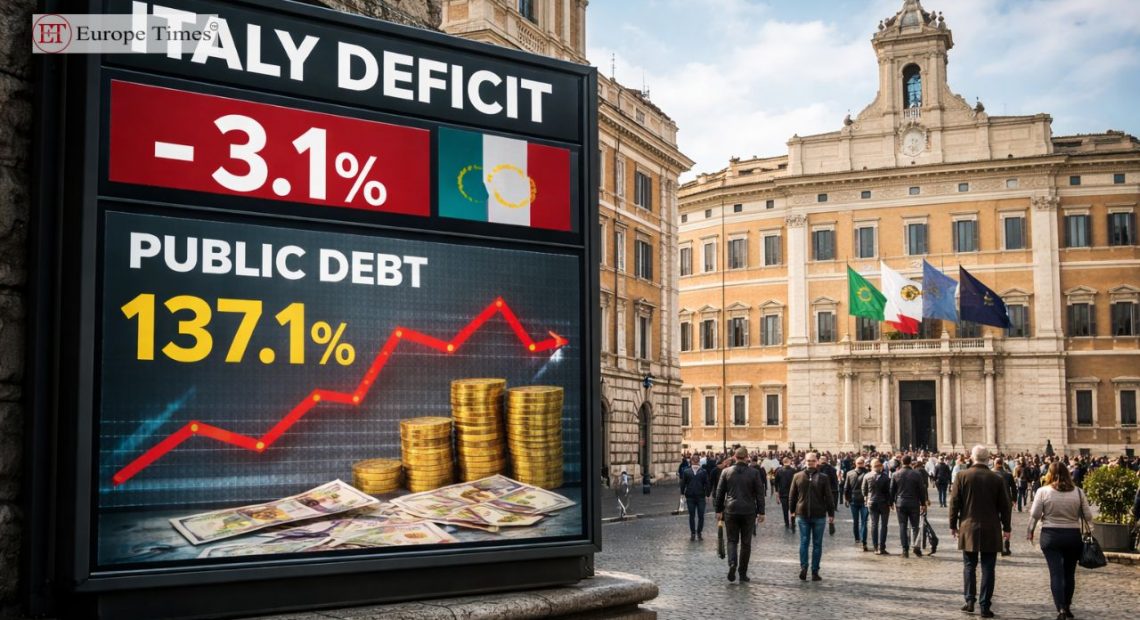
Italy’s 2025 budget deficit came in at 3.1% of GDP, slightly above the European Union’s 3% ceiling, according to ISTAT. While lower than 2024’s 3.4%, the miss casts doubt on Rome’s plan to exit the EU’s Excessive Deficit Procedure early, which could have eased spending constraints ahead of the 2027 elections.

The eurozone’s third-largest economy grew by 0.5% in 2025, matching the government’s revised forecasts, though growth remains below 1% for the fourth consecutive year despite EU recovery funds. The 2026 deficit is targeted at 2.8%, with the government hoping for modest improvement amid lingering fiscal challenges.

Italy’s public debt also exceeded expectations, rising to 137.1% of GDP from 134.7% in 2024, above the government’s 136.2% target. With debt levels remaining the second-highest in the eurozone after Greece, the Meloni administration faces mounting pressure to control spending while promoting economic growth.

Pic courtesy: google/ images are subject to copyright

News Trending

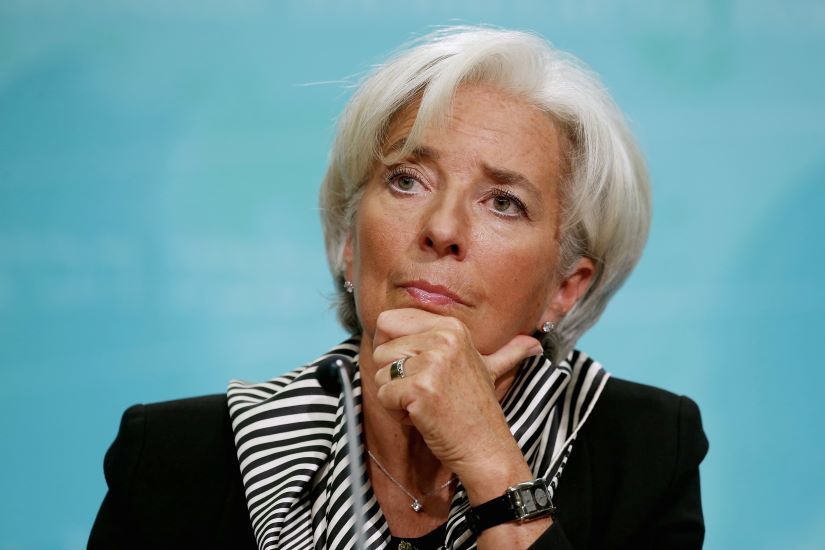
The G7 finance ministers are set to discuss whether Ukraine can receive an additional €30 billion loan from seized Russian assets totaling €270 billion. This proposal has sparked division within the G7, particularly between the US and Germany. While some advocate for full asset seizure, others, including Christine Lagarde, ECB president, raise legal and economic concerns.

The US and UK propose mobilizing the frozen assets to provide a substantial loan to Ukraine, with interest paid from the profits of the seized Russian assets. They argue this approach avoids the need for asset confiscation, which could disrupt the international legal order and financial stability.

Belgium, holding the largest share of Russia’s frozen assets within the G7, has already generated significant investment income from these assets. It has agreed to allocate a portion of this profit to a joint G7 fund for Ukraine.

Critics argue that using the assets as collateral for a loan effectively amounts to confiscation. However, some legal scholars suggest that under the doctrine of state countermeasures, seizure may be justified.

Overall, there is contention over whether to provide Ukraine with a substantial loan using the seized assets, with concerns about legal implications and potential repercussions for financial stability and international relations.

Picture Courtesy: Google/images are subject to copyright

News

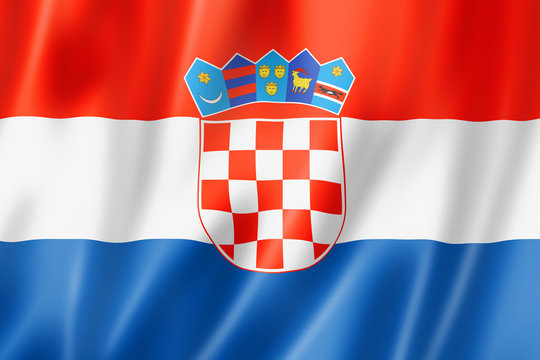
Croatia is now the only nation from the European Union on the list, which also includes Mali, the United Arab Emirates, and Panama.

The EU member state of Croatia has been added to the Financial Action Task Force’s (FATF) so-called “grey list” of nations that are subject to “increased monitoring,” according to the organization.

The United Arab Emirates, Panama, Mali, and Croatia are the only EU nations on the list, which was released on Friday. The decision was made in response to shortcomings in the nation’s “terrorism financing” and money laundering prevention policies.

“When the FATF places a jurisdiction under increased monitoring, it means the country has committed to implement an Action Plan to resolve swiftly the identified strategic deficiencies within agreed timeframes,” the watchdog stated in a statement on its website.

“New jurisdictions subject to increased monitoring are Cameroon, Croatia, and Vietnam.”

The Paris-based FATF is an intergovernmental organization that supports the fight against money laundering and “terrorism financing” by establishing international standards and monitoring their observance by nations. This week, it conducted one of its monthly plenary sessions.

The organization’s head, T. Raja Kumar, informed the media that Croatia has committed to an action plan to enhance its compliance and urged the nation to put this plan “as soon as possible” into effect.

The watchdog said in a statement that among other things, Croatia’s action plan includes “assessing risks associated with the misuse of legal persons and legal arrangements and the use of cash in the real estate sector.”

In a statement released on Friday, the organization reiterated that “all jurisdictions should be vigilant to current and emerging risks from the circumvention of measures taken against the Russian Federation in order to protect the international financial system.”

In February, the FATF put Russia’s membership on hold.

The organization also stated on Friday that no current member of the grey list has been eliminated since the meeting in June.

Picture Courtesy: Google/images are subject to copyright