
featured News Trending

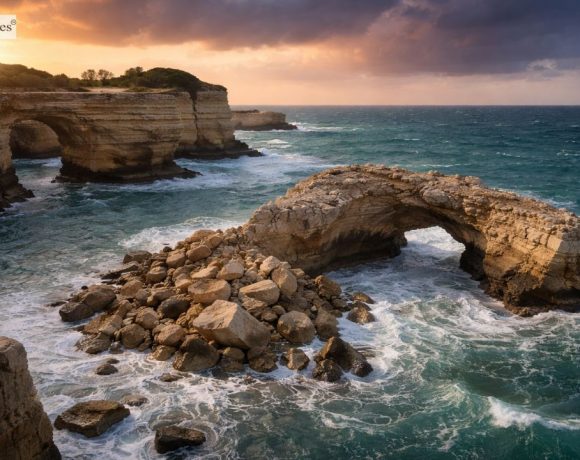
A famous natural rock formation known as “Lovers’ Arch” collapsed into the sea on Valentine’s Day after days of heavy rain and strong winds in southern Italy. The arch, located at Sant’Andrea in Melendugno, Puglia, was a popular landmark on the Adriatic coast and a favored spot for wedding proposals and photos.

Melendugno’s mayor, Maurizio Cisternino, described the collapse as “an unwanted Valentine’s Day gift,” calling it a heavy blow for local tourism. Authorities believe the severe weather brought by Storm Oriana accelerated long-term erosion, leading to the sudden failure of the rock formation, which passers-by noticed missing on Sunday morning.

Regional president Antonio Decaro said the loss marked the disappearance of a symbolic feature of the coast and highlighted the urgent need to slow coastal erosion. The arch stood in the Salento, one of Italy’s most visited tourist areas, underscoring concerns about how extreme weather is increasingly reshaping vulnerable coastal landscapes.

Pic courtesy: google/ images are subject to copyright
featured News Trending

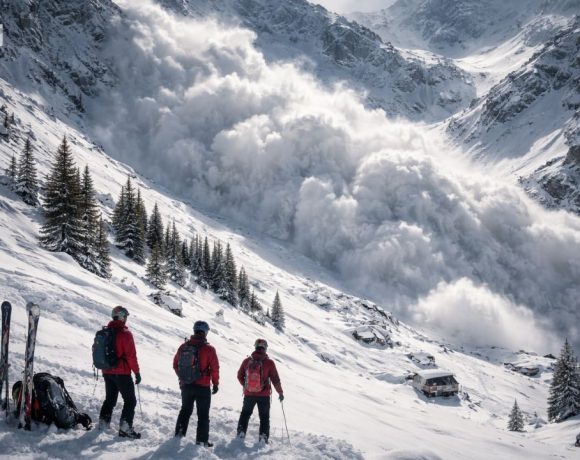
Two British men and one French national have died after an avalanche swept through the Manchet valley near Val d’Isère in the French Alps. The Britons were part of a group of five skiing off-piste with an instructor when the avalanche struck on Friday morning, while the French victim was skiing alone, according to local prosecutors. Another British skier sustained minor injuries and was treated at the scene.

The UK Foreign Office said it was aware of the deaths and was in contact with French authorities to provide consular assistance. Albertville prosecutor Benoit Bachelet confirmed that a manslaughter investigation has been opened and will be handled by specialist mountain rescue police. The ski instructor involved was unharmed and tested negative for alcohol and drugs.

The avalanche followed heavy snowfall linked to Storm Nils, which dumped up to a metre of snow across parts of the Alps, leaving the snowpack highly unstable. Météo-France had issued a red alert for avalanche risk in the Savoie region a day earlier, warning of dangerous conditions. Authorities say several fatal avalanches have occurred this winter, underscoring the ongoing risks of off-piste skiing despite lifted alerts.

Pic courtesy: google/ images are subject to copyright
featured News Trending

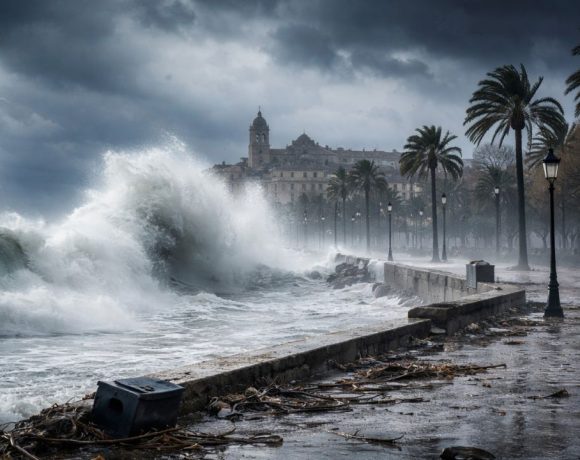
A 46-year-old woman has died in Barcelona after being struck by debris from a warehouse roof torn off by powerful winds, as the eighth major storm of the year swept across Spain and Portugal, according to officials. The woman succumbed to her injuries in hospital early Friday. Repeated bouts of heavy rain, strong gales, snow, and thunderstorms have caused widespread damage, forcing mass evacuations and disrupting daily life across the Iberian Peninsula.

Spain’s Agriculture Minister Luis Planas described the succession of storms as “truly extraordinary,” warning that authorities must assess whether such events could become more frequent. Around 14,000 hectares of farmland—including berries, citrus fruits, and olives—have already been damaged. Data from AEMET shows Spain has received 38% more rainfall than average since October, heightening concerns over infrastructure resilience and agricultural losses.

In Portugal, authorities in the historic city of Coimbra warned of possible severe flooding along the Mondego River, with up to 9,000 residents at risk of evacuation as reservoirs neared capacity. Schools and universities were closed, and similar measures were taken in parts of southern Spain, including Andalusia, where thousands have already been displaced. Forecasts also warned of intense rainfall in areas such as Grazalema, underscoring the continued threat of flooding and landslides.

Pic courtesy: google/ images are subject to copyright
featured News Trending

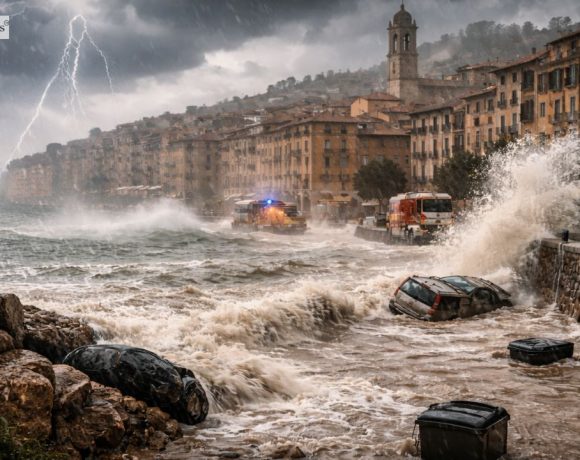
Spain and Portugal remained on high alert as heavy rain and powerful winds swept across the Iberian Peninsula, causing widespread disruption. Trees were uprooted, transport services were interrupted and schools were closed in several regions. In northeastern Spain’s Catalonia region, one person was left in serious condition after being struck by a falling tree, with at least four others reported injured.

Spain issued its highest red weather alert in Galicia, Cantabria and the Basque Country following the arrival of Storm Nils — the eighth storm to hit the country this year. Authorities in Catalonia suspended classes, sporting events and some non-essential healthcare services as wind gusts exceeded 105 km/h, disrupting road and rail networks. Around 40 flights at Barcelona’s El Prat airport were cancelled, while warnings were issued about waves reaching up to nine metres along parts of the coast.

In Portugal, an “atmospheric river” brought intense rainfall, particularly in northern areas, prompting the evacuation of about 3,000 residents. A section of the A1 motorway near Coimbra collapsed after flooding weakened its foundations, and officials said repairs could take weeks. While Storm Oriana is not expected to directly strike mainland Portugal, authorities warned of continued heavy rain and strong winds in the coming days.

Pic courtesy: google/ images are subject to copyright
featured News Trending

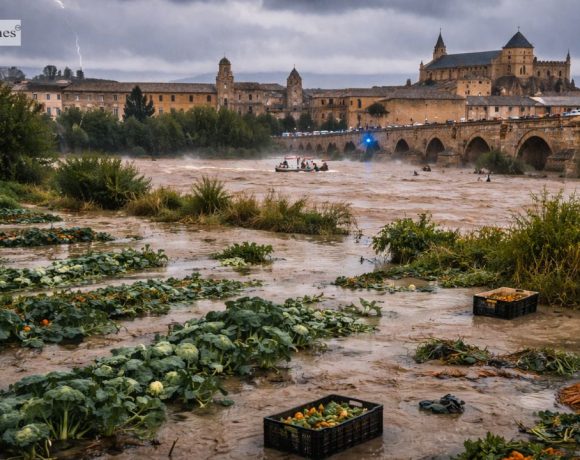
Farmers in Spain have reported catastrophic damage to crops as Storm Marta swept across the Iberian Peninsula, bringing torrential rain, strong winds and flooding. Large swathes of farmland have been submerged, particularly in southern regions such as Andalusia, where growers warned that vegetables including broccoli, carrots and cauliflower have been destroyed. The storm follows a series of extreme weather events in recent weeks that have already left soils saturated and vulnerable.

The severe weather has taken a deadly toll, with a snowplough driver killed in northern Spain after his vehicle plunged down a mountain slope, and a man drowning in Portugal. Authorities said at least five people have died since storms began hitting the region last week. More than 11,000 residents have been evacuated in southern Spain, hundreds of roads have been closed, and rail services in Portugal have faced major disruptions. Preliminary estimates from Portugal’s agriculture ministry put damage to farming and forestry at around €750 million.

Weather agencies warned that conditions could worsen, issuing orange alerts for heavy rain, snow and hazardous coastal conditions. Rising river levels, particularly along the Guadalquivir in Andalusia, have prompted evacuations and raised fears of landslides and ground instability. In Portugal, emergency services have deployed more than 26,000 rescue workers, while authorities postponed voting in several towns due to flooding, as Spain and Portugal brace for further impact from Storm Marta.

Pic courtesy: google/ images are subject to copyright
featured News Trending

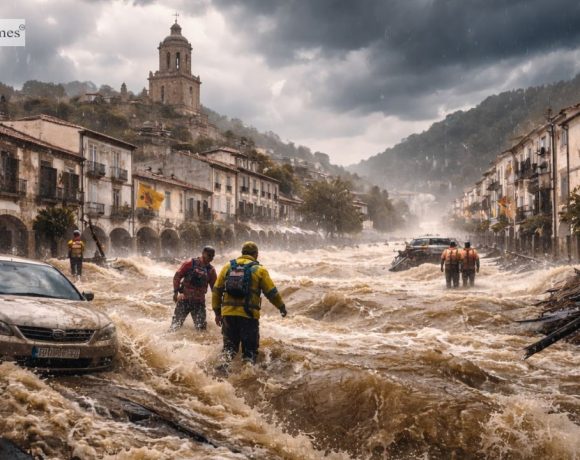
Storm Leonardo battered Spain and Portugal with torrential rain on Thursday, triggering widespread flooding, fresh evacuation orders and multiple casualties. A man was killed in southern Portugal after his car was swept away by floodwaters, while Spanish rescue teams continued searching for a woman who was dragged into a river as she tried to save her dog, authorities said.

The storm is the latest in a series of severe winter systems to hit the Iberian Peninsula since the start of 2026, causing deaths, property damage and major disruptions. Scientists say flooding across Europe is becoming more frequent as climate change warms the atmosphere, allowing it to hold more moisture. In Spain’s Andalusia region, the mountain village of Grazalema recorded as much rainfall in just 16 hours as Madrid typically sees in an entire year.

Authorities evacuated Grazalema’s roughly 1,500 residents as water flooded homes and surged through steep streets, while two nearby reservoirs were close to overflowing. In Portugal’s Alcacer do Sal, residents waded through waist-deep water after the Sado River burst its banks, submerging shops and restaurants. With another storm expected over the weekend, officials warned that conditions could worsen across the region.

Pic courtesy: google/ images are subject to copyright
featured News Trending

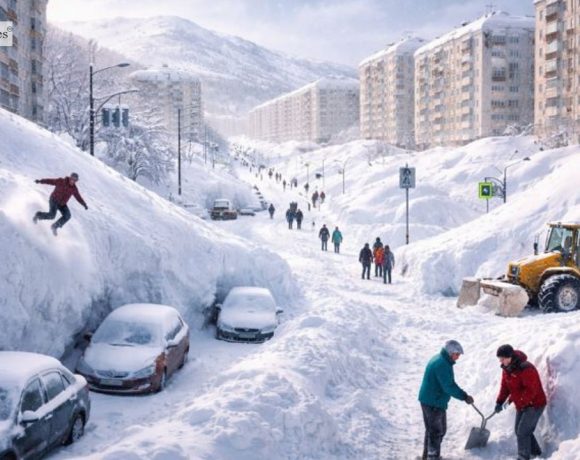
Russia’s Far Eastern Kamchatka Peninsula has been hit by its heaviest snowfall in six decades, leaving cities buried under massive snowdrifts several metres high. In the port city of Petropavlovsk-Kamchatsky, extreme winter storms have blocked building entrances, submerged cars and disrupted daily life, according to visuals and data from weather monitoring stations.

Officials said more than two metres of snow has fallen in the first half of January alone, following 3.7 metres recorded in December. Reuters images showed vehicles almost completely buried, with four-wheel drives struggling to move through thick drifts, while residents were forced to dig narrow paths to access apartment buildings and roads.

Despite the disruption, locals have tried to find moments of humour amid the chaos. Videos on Russian media showed people walking along towering snowbanks beside traffic lights, while some jumped off the drifts for fun. “The car has been parked in a snowdrift for a month,” said local photographer Lydmila Moskvicheva, capturing both the frustration and surreal beauty of the historic snowfall.

Pic courtesy: google/ images are subject to copyright
featured News

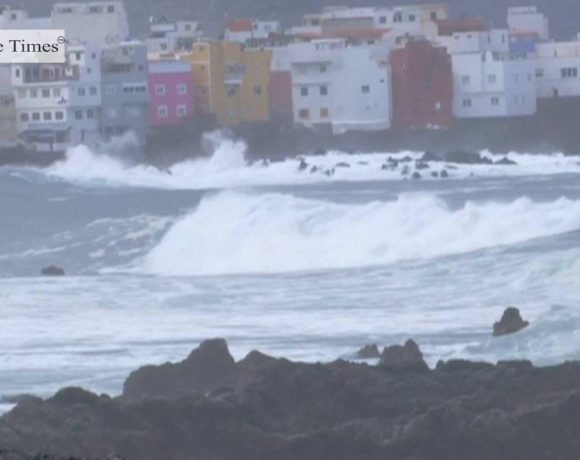
Powerful waves slammed into the popular Spanish island of Tenerife, leaving three people dead and 15 others injured. The victims included a woman who suffered a heart attack after being swept into the water near Puerto de la Cruz, and two men who were pulled from the ocean at Santa Cruz de Tenerife and El Cabezo beach but could not be revived.

Emergency services said that several people were dragged out to sea as the rough weather struck coastal areas. In Puerto de la Cruz alone, 10 people were swept away, with three left seriously injured and taken to hospital. Local witnesses described chaotic scenes, including a waiter who jumped into the water to rescue swimmers but was unable to save one of the victims.

Authorities have urged both residents and tourists to stay away from the shoreline, warning that sea conditions are expected to worsen with swells up to four metres. They cautioned the public against taking photos or videos near the waves and stressed the need for extreme vigilance along coastal paths.

Pic Courtesy: google/ images are subject to copyright
News Trending

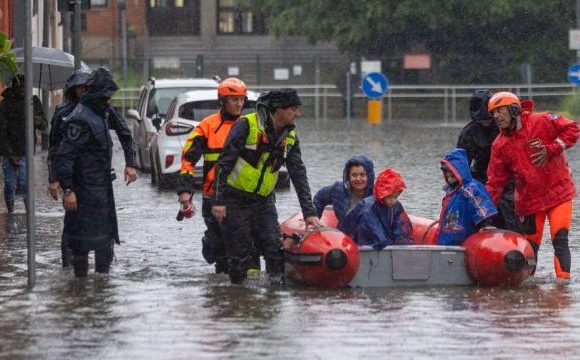
Storms and heavy rainfall have caused significant flooding in northern Italy, with cities like Padua and Vicenza heavily affected. Emergency services have been using dinghies to rescue residents, and footage shows cars floating in the streets. The governor of the Veneto region described the severe weather as a “water bomb.” In contrast, southern Italy, including Sicily, is experiencing an unusual heat wave with temperatures reaching up to 35°C.

Professor Marco Marani from the University of Padua, an expert on climate change, told Corriere del Veneto that extreme weather events are becoming more frequent due to global warming. In Padua, the banks of the Muson dei Sassi river collapsed, causing severe flooding. In Borgo Mantovano, Lombardy, a freight train was overturned by gusts up to 200 km/h. Milan saw 130 mm of rain in one day, leading to flash floods, the most intense May rainfall in over 170 years.

The Veneto region declared a state of red alert, particularly between Vicenza and Verona, where 70 mm of rain fell in 30 minutes, causing water basins to overflow. One person is missing in Como after a bridge collapse.

In the south, Sardinia is experiencing dry conditions, adversely affecting wheat harvests, and water restrictions are expected later in the summer. Prof. Marani emphasized the scientific evidence linking increased frequency of extreme weather events to climate change, underscoring the need to revise water defense calculations and manage climate change effectively.

A recent State of the Climate report by the EU climate agency Copernicus and the World Meteorological Organization highlighted the urgency of climate action and improved flood defenses, noting that in 2023, one-third of European rivers breached high flood thresholds, with 16% surpassing severe levels.

Picture Courtesy: Google/images are subject to copyright
News Trending

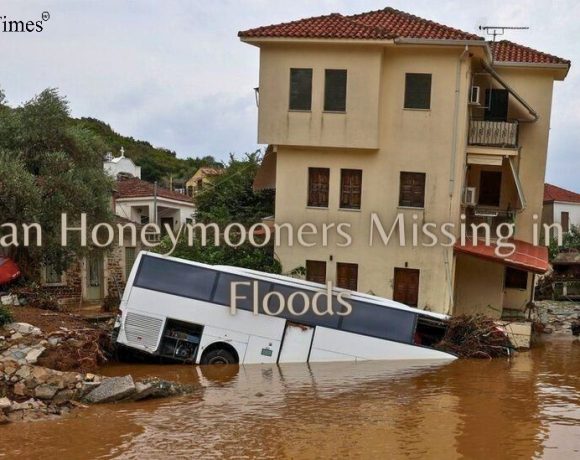
An Austrian couple celebrating their honeymoon in Greece has gone missing as heavy rains caused devastating floods, prompting a search operation by emergency services. The torrential downpour led to entire villages in central Greece being submerged, leaving residents stranded on their rooftops. Storm Daniel, affecting Greece, Turkey, and Bulgaria this week, has claimed the lives of over a dozen people.

The newlyweds, who had recently tied the knot upon arriving for their vacation, sought refuge in a bungalow they had rented in Potistika, near Mount Pelion, as the relentless rain battered central Greece. Unfortunately, the flash floods carried their rented house into the sea. The property’s owner, Samaras Thanakis, recounted advising the couple and other guests to seek higher ground, but the dire situation made decisions challenging.

Rescue efforts, hindered by collapsed bridges and damaged roads in the region, are ongoing, with the Greek fire brigade actively searching for the missing couple. Some areas in Greece received an astounding 800mm of rain, equivalent to a year’s worth of precipitation in just a few days. The Karditsa plain turned into a vast expanse of water, submerging villages near Palamas.

Palamas’ mayor, Giorgos Sakellariou, made a desperate plea for assistance on Greek television, highlighting the dire conditions and immediate danger residents faced. The extreme weather also affected Athens, the island of Skiathos, where numerous tourists remain stranded, as well as coastal regions around Volos and Pelion. In response to the escalating crisis, Prime Minister Kyriakos Mitsotakis canceled a major government event scheduled for the weekend.

Storm Daniel’s impact has been felt across the region, with Greece, Turkey, and Bulgaria collectively witnessing a death toll of over a dozen people, including at least four in Greece. Climate scientists have emphasized that global warming contributes to increased summer evaporation, leading to more intense storms.

Picture Courtesy: Google/images are subject to copyright