News Trending War

The Central Bank of Russia has raised its key interest rate to 15% in an effort to tackle inflation and support the struggling rouble, marking the fourth consecutive increase. The unexpected two-percentage-point hike was prompted by the persistently high global inflation rates, partly triggered by Russia’s military intervention in Ukraine, which has led to a 6% inflation rate in Russia as of September.

The country has been experiencing escalated government spending directed towards its military efforts, contributing to the recent inflationary pressures. With the latest hike, the Bank of Russia has cumulatively raised the rates by 7.5 percentage points since July, aiming to stabilize inflation at the targeted 4% level. The decision for the emergency rate hike in August was prompted by the rouble’s decline, which fell below 100 against the US dollar, necessitating a tighter monetary policy.

The global supply chain disruptions during the pandemic, coupled with the repercussions of Russia’s invasion of Ukraine, have notably impacted food and energy prices, driving the overall inflation up. Additionally, the imposition of Western sanctions on Russia in response to its actions in Ukraine has had adverse effects on the country’s economy, causing a significant depreciation of the rouble. The sanctions have led to constraints on Russia’s trade, with several European countries seeking alternative energy suppliers and implementing measures to limit Russia’s oil export earnings.

Despite the successive rate hikes, there are concerns that Russia may encounter challenges in attracting foreign investment due to the ongoing sanctions. The exclusion of Russia from the Swift international payment system has further added to the economic strain. Nonetheless, the European Commission has affirmed that the sanctions are effective in exerting pressure on Russia.

Picture Courtesy: Google/images are subject to copyright

News Trending

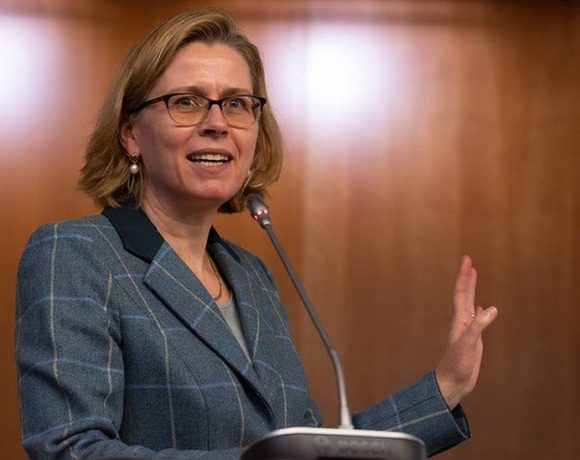
Fiona Scott Morton, a highly qualified American economist, has decided not to take up the position of Chief Competition Economist in the European Commission following widespread criticism of her appointment. The strongest objections came from France, with President Emmanuel Macron expressing doubts and questioning whether there were no qualified European candidates for the role. Scott Morton, a Yale University economics professor, has an impressive background, including working in the US justice department’s antitrust department during the Obama presidency. However, she has also worked as a consultant for major tech companies like Apple, Microsoft, and Amazon, which raised concerns given that her job would involve regulating these digital giants.

EU antitrust chief Margrethe Vestager defended the appointment, highlighting Scott Morton’s corporate experience as an asset. Nevertheless, Scott Morton made the decision not to take up the post due to the political controversy surrounding her appointment and the importance of having the full support of the EU’s competition directorate. Opposition to her appointment came from various quarters, including President Macron and several Commission colleagues, as well as the four largest political blocs in the European Parliament. However, after discussions with Scott Morton, some concerns were addressed, and Philippe Lamberts of the Greens expressed support for her.

Critics argued that the criticism of Scott Morton’s appointment was unjustified since her role would primarily involve overseeing economic evidence in competition enforcement rather than favoring specific competitors. Nobel Prize-winning economist Jean Tirole praised her qualifications and stated that the European Commission was fortunate to have attracted someone of her caliber. Margrethe Vestager emphasized that the suggestion of bias based on nationality was questionable and clarified that Scott Morton would only need to recuse herself from a few cases.

Picture Courtesy: Google/images are subject to copyright
News Trending War

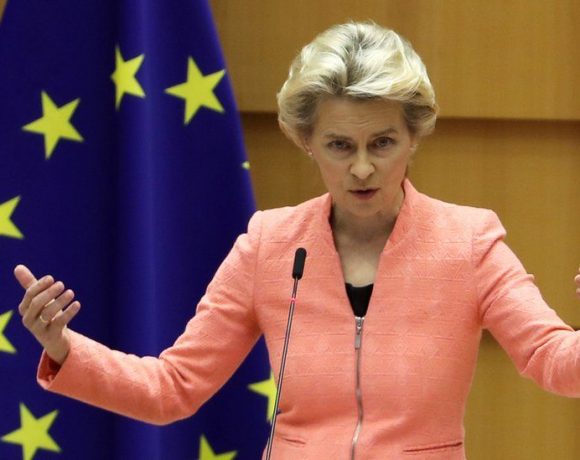
For years, the European Union (EU) has faced criticism for lacking a single voice on the world stage. However, many in Brussels now see Ursula von der Leyen, the first female President of the European Commission, as someone who can fill that role. Von der Leyen has been involved in various high-profile meetings, such as visiting Kyiv and attending an EU summit with Ukraine’s president, meeting Joe Biden at the White House to address tensions over green subsidies, and joining French President Emmanuel Macron to meet Chinese President Xi Jinping amid deteriorating EU-China relations.

During her tenure as the head of the European Commission, which shapes and enforces policies for 450 million Europeans, von der Leyen has faced significant challenges. She took office in 2019 with a focus on addressing the climate emergency but soon had to deal with the COVID-19 pandemic and the conflict in Ukraine, which marked the largest war on European soil since World War II. Despite these crises, von der Leyen has been praised for her leadership, with one EU official noting that the EU now has a central command and a leader for crisis management.

Von der Leyen follows a disciplined routine, starting her day early and living in her office at the Berlaymont, the commission’s headquarters, to avoid traffic. Her living space is a modest room on the 13th floor, originally designed as a restroom, for which she pays €18,000 in rent deducted from her salary and housing allowance. Known for her work ethic, the 64-year-old former medical doctor spends much of her time at her desk and avoids social events. She leads a frugal lifestyle, abstaining from alcohol and maintaining a vegetarian diet.

Von der Leyen rarely gives interviews and prefers to deliver carefully scripted video messages in English, French, and German. She is known for her punctuality and efficiency, with meetings starting and ending on time. While her predecessor, Jean-Claude Juncker, was known for his wit and spontaneity, von der Leyen prefers to stick to prepared remarks.

Overall, von der Leyen’s leadership has been marked by her ability to navigate crises and provide a more unified voice for the EU on the global stage.

Picture Courtesy: Google/images are subject to copyright