featured News Trending

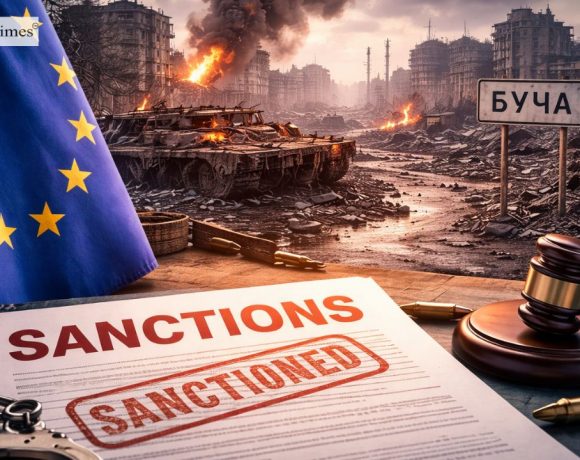
The European Union is set to impose sanctions on nine individuals accused of involvement in alleged war crimes linked to the killings in Bucha, Ukraine, French Foreign Minister Jean-Noel Barrot said ahead of an EU foreign ministers’ meeting in Brussels. The move forms part of ongoing European efforts to hold individuals accountable for actions during Russia’s invasion of Ukraine.

Ukraine has stated that more than 1,400 civilians were killed in Bucha, a town near Kyiv, during a 33-day occupation by Russian forces in the early phase of the 2022 invasion. The sanctions are expected to target individuals allegedly connected to these events, reinforcing the EU’s stance on accountability and international law violations linked to the conflict.

In addition to the nine individuals, the EU plans to sanction several alleged Kremlin propagandists accused of spreading disinformation. Among them is Franco-Russian national Adrien Bocquet, whom Barrot described as a recruiter of foreign fighters and a figure involved in promoting narratives supporting the war and influencing audiences across Europe and Africa.

Pic courtesy: google/ images are subject to copyright

featured News Trending

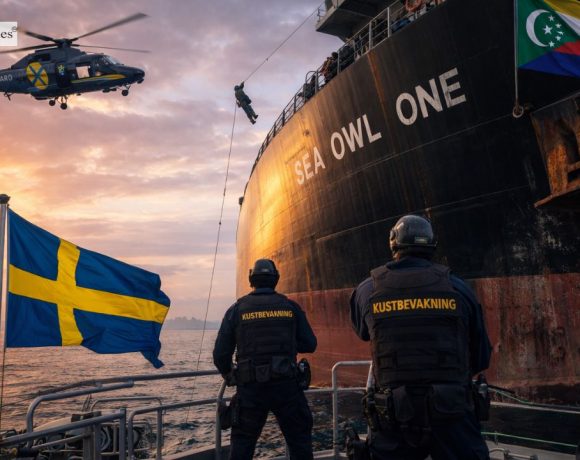
A court in Sweden has ordered the detention of the captain of a tanker suspected of being part of Russia’s so-called “shadow fleet” used to bypass Western sanctions on oil exports. The unnamed 55-year-old captain was arrested by the Swedish Prosecution Authority and appeared before a court in Ystad on suspicion of using forged documents.

The vessel, Sea Owl One, was intercepted by the Swedish Coast Guard in territorial waters south of Trelleborg. Authorities boarded the 228-metre tanker after suspecting it was sailing under a false Comoros flag. Officials said the ship was travelling from Santos to Primorsk and had previously transported oil between Russia and Brazil.

The tanker is among vessels sanctioned by the European Union and believed to be linked to Moscow’s network of ships with unclear ownership or insurance used to evade sanctions imposed after Russia’s invasion of Ukraine in 2022. Swedish authorities said the captain will remain in custody while prosecutors continue their investigation, marking the second seizure of a suspected shadow fleet vessel in the country within a week.

Pic courtesy: google/ images are subject to copyright

featured News Trending

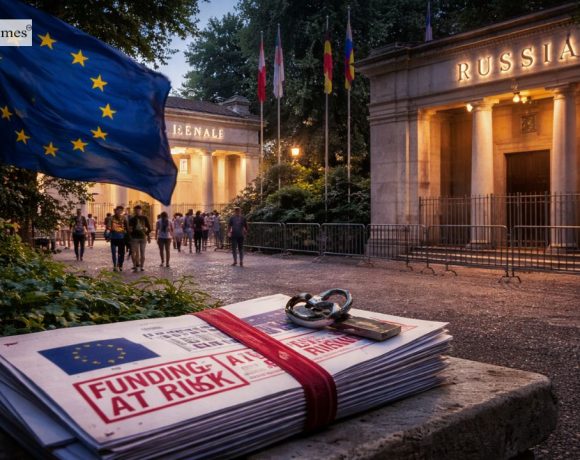
The European Commission has warned it may withdraw funding from the Venice Biennale if organisers allow Russia to reopen its national pavilion at this year’s art exhibition. Russia’s pavilion was closed after the 2022 invasion of Ukraine, which led to the exclusion of Russian artists and institutions from many cultural events across Europe. The EU said institutions must comply with sanctions and avoid giving a platform to individuals who support the Kremlin’s war.

The commission said it could review measures including suspending a current EU grant to the Biennale Foundation, which organises the event in Venice. The EU currently provides about 2 million euros for film-related projects over three years, while the festival also receives major funding from the Italian government. Culture and foreign ministers from more than 20 European countries have also written to Biennale President Pietrangelo Buttafuoco calling Russia’s participation unacceptable.

Buttafuoco defended the exhibition as a global space for dialogue without censorship, saying it should remain open even to countries involved in conflicts. However, Alessandro Giuli, Italy’s culture minister, said the government does not support the decision. Ukrainian officials also urged the international art community to stay alert to what they described as Russia’s use of culture for propaganda during the ongoing war.

Pic courtesy: google/ images are subject to copyright

featured News Trending

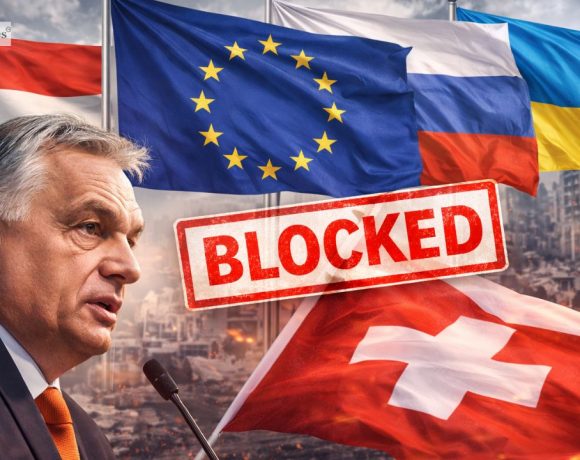
Hungary has vowed to block the European Union’s latest sanctions package against Russia and a proposed 90-billion-euro loan for Ukraine, escalating tensions ahead of the fourth anniversary of Moscow’s full-scale invasion. The dispute centres on the disruption of Russian oil supplies through the Druzhba pipeline, which Budapest and Slovakia say has undermined their energy security. Hungarian Prime Minister Viktor Orban has indicated that Hungary will withhold support for the measures until the issue is resolved.

EU foreign ministers meeting in Brussels urged Hungary to reconsider, warning that unity is crucial as the war drags on. Ukrainian President Volodymyr Zelenskiy, in an interview with the BBC, said Russian leader Vladimir Putin had “already started” World War Three and called for intensified global pressure on Moscow. Meanwhile, U.S.-led diplomatic efforts to broker peace have yet to yield a breakthrough, with recent talks in Geneva failing to produce progress.

The standoff comes as Russian drone strikes killed two people in Ukraine’s southern Odesa region, according to Ukrainian officials, while Kyiv claims it has regained control over parts of the southern frontline. Hungary and Slovakia have also warned they could halt emergency electricity exports to Ukraine if oil flows via Druzhba are not restored. The clash underscores deep divisions within the EU as it seeks to maintain pressure on Russia while managing internal political and energy challenges.

Pic courtesy: google/ images are subject to copyright

featured News Trending

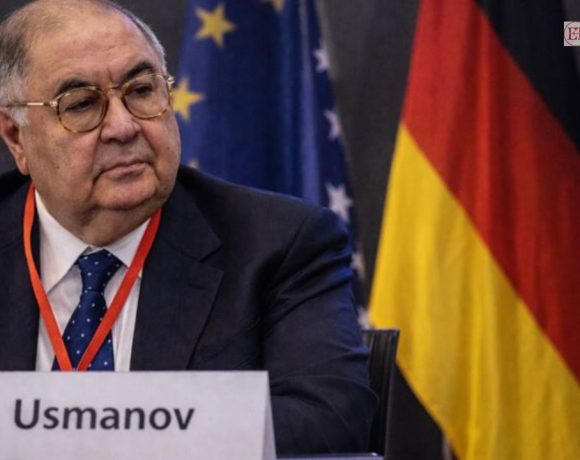
German prosecutors have agreed to end investigations into billionaire Alisher Usmanov over alleged foreign trade law violations after he consented to pay €10 million, according to statements from prosecutors and his legal team on Tuesday. Usmanov, a Russian-Uzbek businessman and founder of USM Holdings, has instructed that the full amount be paid, clearing the way for the case to be closed once the payment is received.

The probe focused on suspected payments of €1.5 million for security services at two properties in the Bavarian lakeside town of Rottach-Egern between April and September 2022, as well as allegations that Usmanov failed to declare luxury items such as jewellery, artwork and wine under EU sanctions regulations. Usmanov has denied any wrongdoing, with his lawyers stating that he neither owned nor controlled the properties involved and had no connection to the companies linked to the payments.

Munich prosecutors said that after payment, the case cannot be reopened based on the same allegations, with €8.5 million going to Bavaria’s treasury and €1.5 million allocated to prisoner welfare. Usmanov, who is subject to EU and U.S. sanctions following Russia’s invasion of Ukraine, agreed to the settlement to save time and resources, his lawyers said, stressing that the payment does not constitute a fine or admission of guilt.

Pic courtesy: google/ images are subject to copyright

News Trending

The European Commission has proposed extending sanctions on Russia to include diamonds in response to the country’s invasion of Ukraine. Russia is a major global producer of rough diamonds, with a significant portion coming from mines beneath the Siberian permafrost. The proposed ban is part of the EU’s 12th round of measures against Moscow and is set to take effect in January. While previous sanctions covered various Russian exports, including coal, gas, gold, vodka, and caviar, diamonds had been spared, largely due to Belgium’s efforts to protect Antwerp, the global diamond capital. However, pressure to stop Russian diamond supplies has mounted, with concerns about the ethics of funding the Kremlin through diamond purchases.

Antwerp, which has been a diamond hub since the 15th century, has historically relied heavily on Russian diamonds, with over 80% of global rough diamonds traded there before the war. The proposed ban has led some diamond dealers to seek alternative suppliers, though the shift may result in increased costs for both businesses and consumers. Critics argue that importing Russian diamonds is unethical, as a significant portion of the profits goes to the Kremlin. The US banned imports of rough diamonds from Russia and imposed sanctions on the main producer, Alrosa, in April, linking the trade to the conflict in Ukraine.

The ban faces challenges due to the lack of transparency in the diamond trade. Unlike other products with clear certifications of origin, diamonds often lack traceability, changing hands numerous times between the mine and market. This opacity has made the diamond trade attractive to criminal activities. A significant complication is that 90% of global diamond supplies are sent abroad for cutting and polishing, mainly in India, where they are labeled as of Indian origin. Closing this loophole is crucial for the ban’s effectiveness. However, success depends on India’s cooperation, and so far, Prime Minister Narendra Modi has not reduced economic ties with Russia.

While some argue that the ban may still allow some Russian diamonds to enter the European market, proponents believe it will discourage the purchase of jewelry financing the Kremlin’s war in Ukraine. The diamond industry, particularly in India, remains a significant employer, creating challenges for implementing a ban without causing job losses. Despite these complexities, there is a sense of urgency to address the issue, as Russian diamonds are increasingly associated with war and human rights violations. Belgian Prime Minister Alexander De Croo expressed the belief that EU sanctions will have a meaningful impact on reducing support for the conflict.

Picture Courtesy: Google/images are subject to copyright

News Trending

Austria’s former Foreign Minister, Karin Kneissl, known for her pro-Russian stance, is relocating to St. Petersburg, Russia, accompanied by her two ponies.

Karin Kneissl had previously been residing in Lebanon but left her government position amid a scandal involving the far-right Austrian party that appointed her.

She explained that her ponies were transported to St. Petersburg via a Russian military transport plane from Syria.

Ms. Kneissl disclosed that her decision to move to Russia was driven by her role in managing a think tank at St. Petersburg University, which she co-founded. She emphasized the dedication required for this work and her inability to carry it out remotely.

When asked about her move to Russia’s second-largest city, she declined to provide further comment. However, on social media, she mentioned that her stay in Lebanon had been temporary “to survive” while she commuted to Russia for teaching.

Ms. Kneissl is renowned for her love of animals and cited sanctions against Syria and the security situation there as the reasons for using a military transport plane to bring her ponies and belongings to Russia.

The Leningrad region’s veterinary department confirmed that the ponies had undergone examinations and were placed in quarantine.

Karin Kneissl served as Austria’s Foreign Minister from 2017 to 2019, appointed as an independent by Austria’s far-right Freedom Party, which has close ties to Russia.

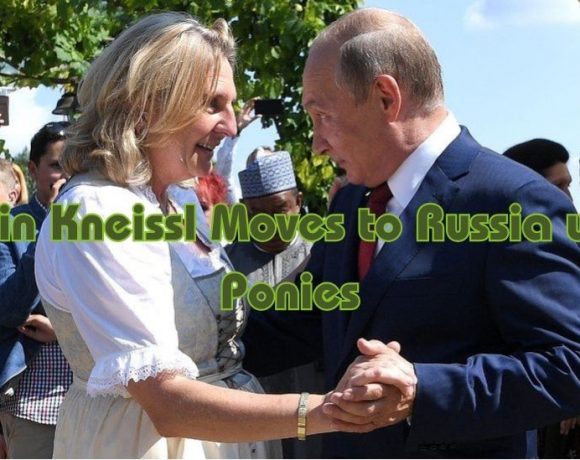
She gained international attention in 2018 when she invited Russian President Vladimir Putin to her wedding in southern Austria, with photographs showing her dancing with him.

Ms. Kneissl announced her move to Russia while attending the Eastern Economic Forum in Vladivostok, an annual event aimed at encouraging investment in Russia’s far east. During the forum, she was seen appearing to fall asleep while listening to President Putin’s keynote speech.

Karin Kneissl is a regular commentator on the Russian state-backed news channel RT and served as a board member of the state-owned oil company Rosneft.

She left Austria in 2020, citing death threats and a de facto ban on working in the country.

Her departure followed the collapse of the government coalition between the conservatives and the far-right Freedom Party in 2019, triggered by a scandal involving FPÖ leader Heinz Christian Strache, who was filmed allegedly promising government contracts to a woman posing as a niece of a Russian oligarch at a villa in Ibiza.

Currently, the Freedom Party is in opposition but leads in opinion polls, making it a strong contender in upcoming elections. Its new leader, Herbert Kickl, has criticized EU sanctions against Russia, blaming them for the rising cost of living.

Peter Gridling, Austria’s former spymaster from 2008 to 2020, expressed concerns about the Freedom Party’s ties with Russia and warned that the party had not severed its connections with the Kremlin.

Vienna, Austria’s capital, has a longstanding tradition as a hub for espionage, which persists to this day.

Picture Courtesy: Google/images are subject to copyright