featured News Trending

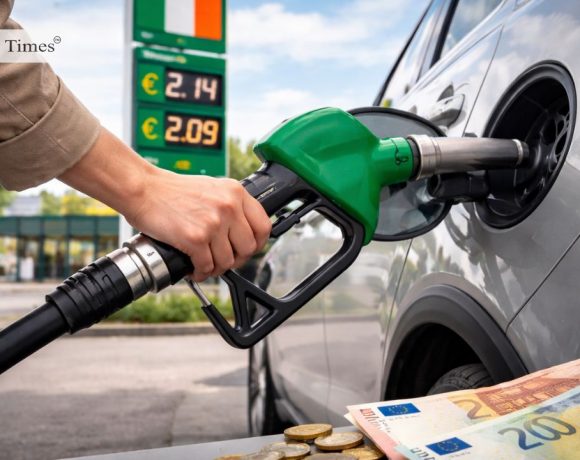
The Irish government has announced plans to reduce excise duty on petrol and diesel in an effort to ease pressure on motorists facing sharp fuel price increases linked to ongoing conflict in the Middle East. The temporary measures, expected to take effect from midnight Wednesday until the end of May, will lower diesel duty by 20 cents per litre and petrol by 15 cents per litre, pending cabinet approval.

Fuel prices have surged in recent days, with diesel rising from around €1.80 per litre to between €2.20 and €2.30, while petrol prices climbed close to €2 per litre. In addition to the duty cuts, authorities are preparing a backdated diesel rebate scheme aimed at supporting hauliers and bus operators, along with reductions for agricultural and green diesel users.

The broader support package, estimated to cost €235 million, will also include targeted energy assistance for pensioners, carers, and people with disabilities. Irish Prime Minister Micheál Martin noted that recent diplomatic developments involving the United States and Iran had helped lower crude oil prices but declined to confirm whether the changes would alter the government’s planned relief measures.

Pic courtesy: google/ images are subject to copyright

featured News Trending

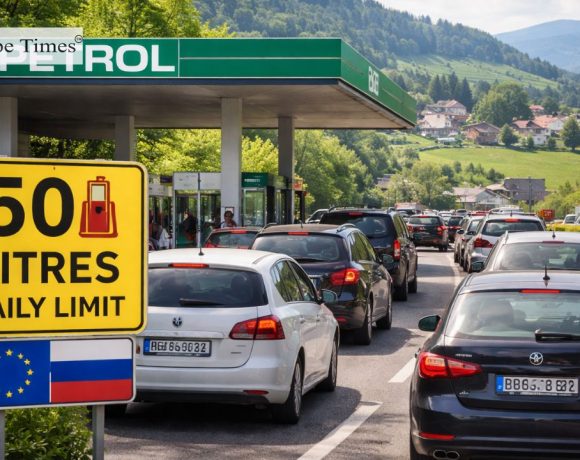
Slovenia has become the first EU country to introduce fuel rationing in response to supply disruptions following US-Israeli strikes on Iran and subsequent regional tensions. Private motorists are now limited to 50 litres per day, while businesses and farmers can purchase up to 200 litres. Petrol stations are tasked with enforcing the rules, and stricter limits are encouraged for foreign drivers.

The move comes as “fuel tourism” increases, with drivers from neighbouring Austria crossing into Slovenia to take advantage of lower, regulated prices. While Austria sees petrol prices approaching €1.80 per litre and diesel near €2.00, Slovenian rates remain capped at €1.47 and €1.53, respectively, though an increase is planned.

Reactions among locals are mixed: some view the foreign visitors as a nuisance, causing long queues, while others appreciate the economic boost they bring to shops and restaurants. Prime Minister Robert Golob reassured citizens that Slovenia’s fuel reserves are sufficient and there will be no shortage despite the rationing.

Pic courtesy: google/ images are subject to copyright

featured News Trending

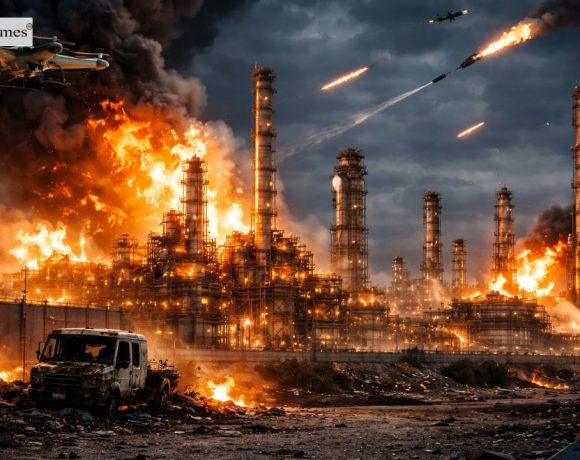
Iran launched drone attacks on Kuwait’s Mina Al-Ahmadi oil refinery, causing fires and further straining global energy supplies, while Israel killed a spokesperson for Iran’s Revolutionary Guards in a targeted strike in Tehran. The ongoing U.S.-Israeli conflict with Iran has already disrupted oil and LNG flows through the Strait of Hormuz, affecting roughly 12% of global demand and sending Brent crude prices to $108 per barrel.

Air raids and missile barrages have shaken cities in Israel and Iran, with Israel targeting Iranian government facilities and Iran retaliating with strikes on multiple energy assets in the Gulf. The conflict has displaced millions and killed thousands, heightening tensions in the region and drawing warnings from European allies who emphasize de-escalation and the protection of international shipping lanes.

Despite U.S. and Israeli efforts to disable Iran’s missile and nuclear capabilities, Iran continues production and attacks, highlighting a complex war with no clear end. The crisis has severe economic implications, as energy disruptions are expected to impact supply chains for months or even years, prompting U.S. considerations for deploying additional troops to the region.

Pic courtesy: google/ images are subject to copyright

featured News Trending

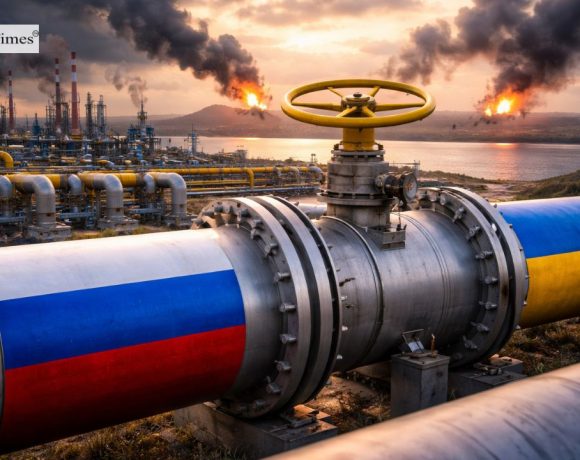
Russia has raised concerns over what it describes as a surge in Ukrainian attacks on key gas infrastructure, particularly compressor stations operated by Gazprom. According to Moscow, these facilities support the TurkStream and Blue Stream pipelines, which transport natural gas across the Black Sea to Turkey and onward to parts of Europe. While recent attacks were reportedly repelled, officials say their increasing frequency poses risks to critical energy routes.

The pipelines in question are among Russia’s last operational gas links to Europe, supplying countries such as Hungary, Slovakia, and Serbia. The warning comes at a time when global energy markets are already under strain due to geopolitical tensions, including conflict in the Middle East that has driven gas prices higher.

Kremlin spokesperson Dmitry Peskov said the attacks threaten both infrastructure and broader energy stability, calling them destabilizing during an already volatile period. Ukraine has not commented on the claims, though it has previously targeted Russian energy assets as part of its strategy, while Russia continues strikes on Ukraine’s power grid.

Pic courtesy: google/ images are subject to copyright

featured News Trending

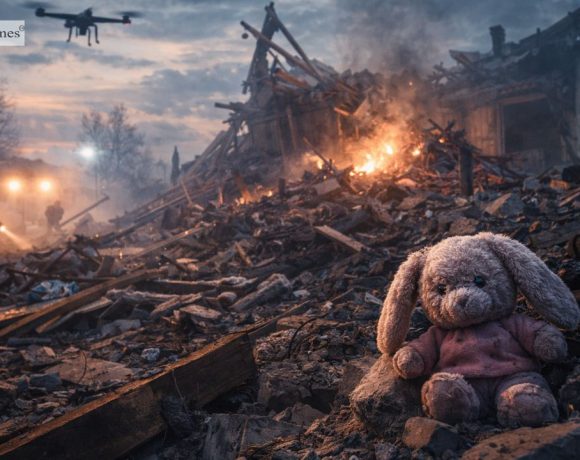
A Russian drone attack in Bohodukhiv, Kharkiv region, killed three young children and their father, while injuring the pregnant mother, local officials reported. The victims were twin boys Ivan and Vladyslav, aged two, and their one-year-old sister Myroslava, along with their 34-year-old father, Hryhoriy. The mother, Olha, 35, sustained minor burns but survived. The family had recently relocated from a town near the Russian border, seeking refuge from ongoing shelling.

The attack marks a renewed wave of Russian strikes following a short pause, with the Kharkiv region under near-daily assaults. Regional authorities described the incident as “brutal,” noting that tens of thousands of residents face severe power outages and lack of heating, worsened by Moscow targeting energy and transport infrastructure.

In parallel, Russian forces hit other areas including Slovyansk, causing further casualties, while Ukraine launched retaliatory drone attacks on Volzhsky in Russia’s Volgograd region. Ukrainian President Volodymyr Zelensky emphasized the continued strain on civilians and noted ongoing international efforts, including upcoming U.S.-hosted talks, to end the war that began in February 2022.

Pic courtesy: google/ images are subject to copyright

featured News Trending

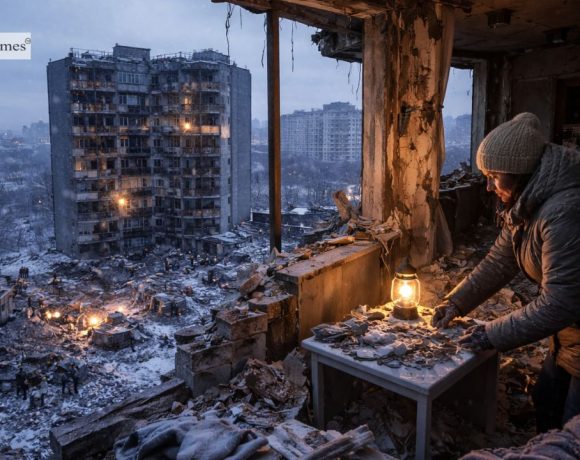
Kyiv residents are struggling to cope with freezing temperatures after a Russian drone strike ripped open a high-rise apartment building, shattering windows and cutting off basic services. Nataliya Revutska, a 58-year-old resident, said her flat remains partly habitable despite severe damage, but there is no water or electricity. The strike exposed families to harsh January winds as temperatures dropped to around minus 10 degrees Celsius.

The attack was part of a wider overnight assault in which Russia launched 242 drones and 36 missiles across Ukraine, killing four people and further straining the country’s energy system. Ukrainian officials said they were working urgently to restore power to about 500,000 consumers and heating to thousands of buildings in Kyiv. In western Ukraine, a hypersonic missile strike near the EU border added to concerns over escalating pressure on civilian infrastructure.

At the damaged Kyiv building, residents cleared debris amid falling snow and the hum of generators. Twelfth-floor resident Oleg Marasin described chaos and casualties after a second strike hit medics nearby. Despite the destruction and ongoing outages, residents told Reuters they remain determined to endure. “We’ve already survived,” Revutska said. “We’ll continue living somehow.”

Pic courtesy: google/ images are subject to copyright

featured News

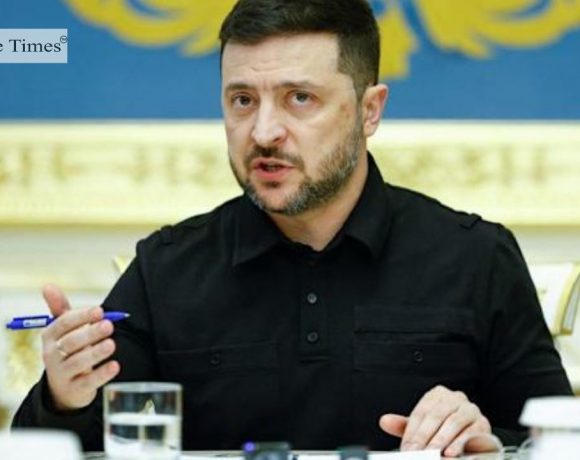
Ukraine will begin importing US liquefied natural gas through Greece this winter, using the Trans-Balkan pipeline to help stabilise its energy supply amidst ongoing Russian attacks. The announcement followed a meeting in Athens between Ukrainian President Volodymyr Zelensky and Greek Prime Minister Kyriakos Mitsotakis, who emphasised Greece’s growing role in supplying American LNG to reduce regional dependence on Russian gas.

Zelensky said the first deliveries are expected in January, noting that Ukraine urgently needs external supplies to offset the damage inflicted on its domestic gas infrastructure. Kyiv has allocated close to €2bn—backed by European Commission guarantees and bank financing—to secure gas imports through March. The deal comes as the EU pushes toward a complete halt of Russian gas imports by 2027.

During his European tour, Zelensky also met French President Emmanuel Macron and signed a letter of intent for Ukraine to potentially acquire up to 100 Rafale fighter jets, along with air defence and radar systems. The visit highlighted Ukraine’s dual battlefronts—strengthening its military capabilities while preparing for a harsh winter as Russia intensifies attacks on energy facilities and multiple regions report continued casualties.

Pic Courtesy: google/ images are subject to copyright

News Trending

Across Europe, there’s a significant pushback against green policies, termed a “greenlash.” This contrasts starkly with the sentiment during the last European elections five years ago, when especially young voters were fervently demanding action against climate change.

The current resistance is fueled by soaring energy prices, partly due to Russia’s war in Ukraine, and a broader cost of living crisis, prompting many Europeans to reconsider the move away from fossil fuels. Additionally, farmers across Europe have staged roadblocks in protest against environmental reforms.

This shift could pose a serious challenge for the EU’s Green parties in the upcoming elections from June 6-9. The Greens/European Free Alliance (G/EFA), currently the fourth-largest group in the European Parliament, might see a 30% reduction in their seats according to most polls. Terry Reintke, the Greens’ lead candidate, warns that if right-wing groups gain more influence, they could obstruct substantial parts of the parliament’s agenda.

Such an outcome could significantly affect the implementation of the EU’s Green Deal, part of the Climate Law aimed at achieving carbon neutrality by 2050. Some measures have already been enacted, like the package to cut net greenhouse gas emissions by 55% of 1990 levels by 2030, which includes a contentious ban on petrol and diesel cars by 2035. However, many policies essential for meeting 2040 targets still need to be agreed upon, and existing directives could be modified under sufficient political pressure.

Right-wing parties across Europe have quickly responded to public discontent, balancing costly decarbonization processes and green investments against the cost of living crisis. In Italy, Matteo Salvini of the far-right League criticizes the 2035 ban on petrol and diesel cars, viewing it as a “gift” to the Chinese electric car industry. Hungary’s Viktor Orban supports farmers protesting in Brussels and accuses European leaders of ignoring ordinary people.

In Germany, backlash over plans to ban new oil and gas heating systems almost toppled the coalition government, leading to a watered-down policy. The far-right AfD, decrying an “eco-dictatorship,” is challenging for second place in the polls. Similarly, in the Netherlands, government plans to reduce nitrogen oxide emissions sparked farmer protests and boosted the Farmer-Citizens Movement (BBB), now set to join a coalition with Geert Wilders’ Freedom Party, which aims to roll back green policies.

Sweden, once a leader in climate action, has seen its government, supported by the far-right Sweden Democrats, criticized for policies that could increase emissions. In Spain, the far-right Vox party denies human-caused climate change and seeks to undo recent green policies.

Hannah Neumann, a German MEP from the Greens, refutes the radical right’s narrative that economic competitiveness and climate protection are mutually exclusive, emphasizing that the global shift towards net zero includes major economies like the US and China. She warns that the EU risks falling behind if it slows its green transition.

However, center-right parties also challenge the speed and cost of this transition. The European People’s Party (EPP), the largest group in the European Parliament, has long opposed the 2035 ban on petrol and diesel cars. Farmers’ protests have also led to reversals of Green Deal policies, such as scrapping a proposal to halve pesticide use.

Jessica Polfjärd, an MEP from Sweden’s Moderate Party, acknowledges the urgency of climate issues but stresses the need for realistic and balanced policies. She argues that overly ambitious green policies have not provided industries with adequate tools for the transition and that their impacts need thorough assessment.

Despite the backlash, climate change remains a significant concern for European voters. A recent Eurobarometer survey found that 78% of respondents feel environmental issues directly impact their lives, and 84% believe EU environmental legislation is necessary. Yet, only 58% want to speed up the transition to renewable energy, with cost of living concerns dominating the current campaign landscape, potentially leading to significant losses for the European Greens compared to five years ago.

Picture Courtesy: Google/images are subject to copyright