featured News Trending

Rumen Radev has secured a sweeping victory in Bulgaria’s parliamentary election, paving the way to lead the country’s first single-party government in nearly 30 years. The former president capitalised on widespread public frustration with corruption, political instability, and rising living costs, following years of repeated elections and fragile coalitions.

Radev, a former fighter pilot often viewed as sympathetic to Russia, positioned himself as an anti-establishment figure promising reform. His win also dealt a major blow to traditional parties, including those led by Boyko Borissov. Despite his rhetoric and past criticism of EU policies, analysts believe he is unlikely to risk jeopardising crucial European Union funding or dramatically shift Bulgaria’s geopolitical alignment.

The new government faces significant domestic challenges, including tackling corruption, stabilising the economy, and restoring public trust in institutions. While some voters remain concerned about his perceived pro-Russian stance, many see his decisive mandate as an opportunity to bring stability after years of political turmoil.

Pic courtesy: google/ images are subject to copyright

featured News Trending

Hungary is set for a major political shift after Péter Magyar and his Tisza party secured a sweeping victory, ending Viktor Orbán’s 16-year rule. Winning 52% of the vote and a two-thirds parliamentary majority, Magyar has moved quickly to accelerate the transition of power, with plans for parliament to convene in early May. His government is already outlining reforms, including curbing media influence and introducing term limits that could block Orbán from returning to office.

Orbán, who finally addressed the defeat days later, described it as “the end of an era” and accepted responsibility, though he offered little reflection on campaign failures. His Fidesz party suffered a dramatic drop in representation and now faces internal uncertainty, with no clear successor emerging. The loss has exposed growing dissatisfaction among voters, especially younger generations, and highlighted the challenges of maintaining support after years in power.

Magyar’s incoming administration is expected to act swiftly on anti-corruption measures, economic recovery, and restoring democratic institutions. Priorities include preventing capital flight, preserving evidence of alleged wrongdoing, and unlocking withheld EU funds by meeting governance standards. With Hungary’s economy struggling, the new leadership faces pressure to deliver rapid reforms while redefining the country’s direction both domestically and within Europe.

Pic courtesy: google/ images are subject to copyright

featured News Trending

Former Bulgarian president Rumen Radev is leading opinion polls ahead of the April 19 parliamentary election, campaigning on an anti-corruption platform and promising stability after years of political turmoil. Backed strongly by rural and older voters, Radev has positioned himself as a reformer determined to dismantle what he calls an entrenched oligarchic system.

The vote comes after repeated elections and fragile coalitions that failed to address graft and economic concerns. While Radev’s Progressive Bulgaria party holds a clear lead, it is unlikely to secure a majority, making coalition-building essential. Potential partners include pro-European groups, which could moderate his policies, especially on foreign relations.

Radev’s perceived pro-Russian stance has raised concerns within the European Union, particularly regarding Bulgaria’s position on Ukraine and broader EU alignment. Despite this, many voters prioritize domestic issues like corruption, economic inequality, and governance, viewing Radev as a chance for decisive leadership in a politically unstable landscape.

Pic courtesy: google/ images are subject to copyright

featured News Trending

Andrej Babiš has voiced strong support for Viktor Orbán ahead of Hungary’s parliamentary election, calling him the best choice for stability and national interests during uncertain times. Babiš praised Orbán’s stance on sovereignty and competitiveness, emphasizing the importance of experienced leadership amid ongoing geopolitical tensions.

Opinion polls suggest Orbán, who has led Hungary for over 16 years, faces a serious challenge from opposition leader Péter Magyar. Orbán’s tenure has been marked by frequent clashes with the European Union and relatively closer ties with Russia, making the upcoming election a significant political moment for the region.

Since returning to power, Babiš has aligned more closely with Orbán in European politics, including within their shared parliamentary grouping. His government has reduced support for Ukraine and taken positions that diverge from broader EU policies, while proposing reforms critics say could mirror Hungary’s approach to governance. Despite this, the Czech Republic continues to maintain a comparatively moderate stance on Russia.

Pic courtesy: google/ images are subject to copyright

featured News Trending

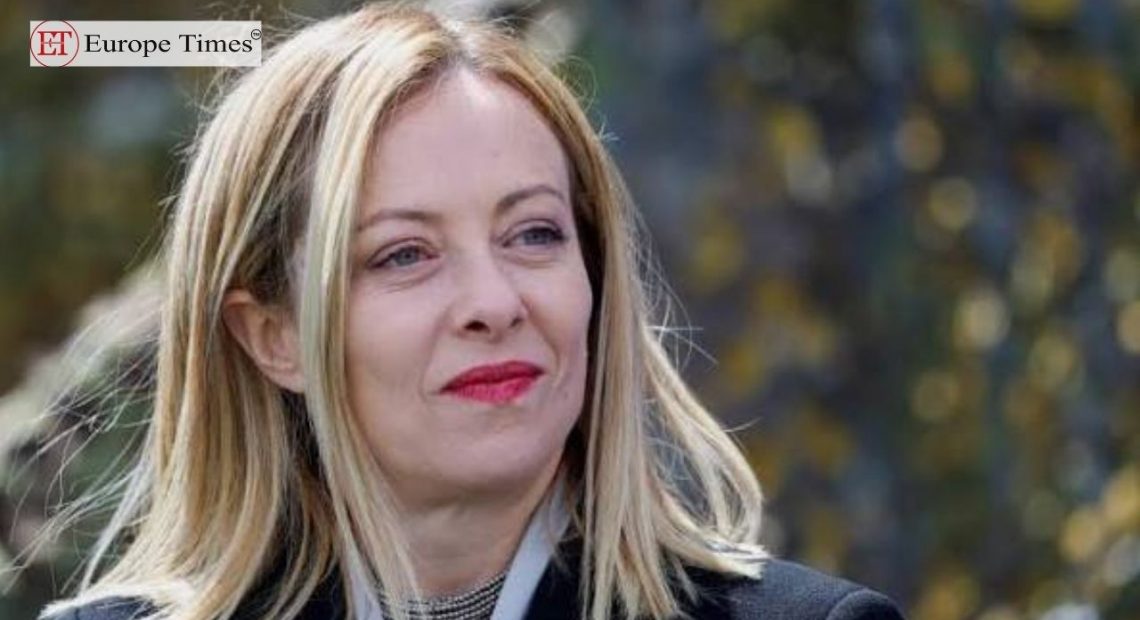
Giorgia Meloni faced a major political setback after Italian voters rejected her proposed judicial reforms in a national referendum. Around 54% voted against the changes, dealing a blow to her right-wing coalition ahead of upcoming elections.

Despite the defeat, Meloni said she would not resign, acknowledging the result while expressing regret over the missed opportunity to modernize Italy’s justice system. The vote saw strong turnout, reflecting deep divisions between the government and the judiciary.

The outcome has weakened Meloni’s political momentum and boosted opposition forces, with centre-left parties now aiming to unite. Analysts suggest the referendum result may reshape the political landscape as the country heads toward future elections.

Pic courtesy: google/ images are subject to copyright

featured News Trending

In the southern French city of Perpignan, far-right mayor Louis Aliot is campaigning for another term with a strong focus on law and order. Representing the National Rally, Aliot has made increased policing, surveillance cameras, and stricter enforcement key parts of his administration, presenting the city as a model for how his party would govern elsewhere.

Since taking office in 2020, the municipality has expanded its police force and intensified efforts against drug trafficking, leading to a sharp rise in reported cases and fines. Perpignan now has one of the highest ratios of municipal police per resident among major French cities. Supporters say these measures have improved safety and cleanliness, while critics argue the tougher policing has not solved deeper social and economic problems.

The city has become a symbolic battleground ahead of France’s municipal and future presidential elections, drawing attention from national political figures such as Jordan Bardella and Jean-Luc Mélenchon. Meanwhile, Aliot’s leadership also faces scrutiny over rising municipal debt and a pending court appeal that could affect his political future.

Pic courtesy: google/ images are subject to copyright

featured News Trending

Germany’s Cologne administrative court has granted an injunction preventing the domestic intelligence agency (BfV) from classifying the Alternative for Germany (AfD) as right-wing extremist, pending a full court ruling. The decision provides temporary relief to the far-right party ahead of five state elections scheduled for later this year.

The injunction was filed by the AfD to contest the 2025 BfV decision labeling the party as extremist, which would have allowed increased monitoring by the intelligence service. The court noted that it could not currently establish that the party as a whole is dominated by extremist positions, thereby suspending the agency’s classification until further review.

The BfV’s May 2025 classification had triggered political tensions in Germany, with calls from some lawmakers to ban the party and criticism from the AfD itself, which argued the move undermined democratic principles. The U.S. administration also expressed concern, with Secretary of State Marco Rubio urging German authorities to reconsider the designation.

Pic courtesy: google/ images are subject to copyright

featured News Trending

Hungary’s nationalist Prime Minister Viktor Orban will face his strongest electoral challenge in 16 years when the country holds parliamentary elections on April 12. The vote is being closely watched across Europe, as Orban has been a key figure among far-right leaders and maintains close ties with U.S. President Donald Trump and Russia despite the Ukraine war.

Orban, who has ruled since 2010, has reshaped Hungary into what he calls an “illiberal democracy,” often clashing with the European Union over media freedom, migration and LGBTQ rights. His Fidesz party is campaigning on stability and security, promising to keep Hungary out of the Ukraine conflict and stop illegal migration, while also trying to revive an economy hit by high inflation and a cost-of-living crisis.

Challenging him is Peter Magyar, a former government insider whose Tisza party has surged since entering politics in 2024. Recent polls show Magyar ahead among decided voters, as he campaigns on fighting corruption, restoring EU ties and unlocking frozen European funds to boost the economy. With many voters still undecided, the election outcome remains uncertain and could reshape Hungary’s role in Europe.

Pic courtesy: google/ images are subject to copyright

featured News Trending

Asylum applications in Sweden fell by 30% in 2025, dropping to their lowest level since 1985, the government said on Friday. The right-of-centre minority government, which is supported by the anti-immigration Sweden Democrats, said it intends to further tighten migration and asylum rules this year ahead of a closely contested general election in September.

Since taking office in 2022, the coalition has made reducing asylum numbers a central policy goal, arguing that decades of lenient asylum laws and weak integration under previous governments contributed to rising gang-related crime. Immigration Minister Johan Forssell said the shift was not only about fewer migrants overall, but also about a significant change in the composition of immigration, with asylum-related arrivals now at a record low.

Official data showed total immigration, excluding Ukrainian refugees, declined to 79,684 last year from 82,857 in 2024, with asylum seekers and their families accounting for just 6% of arrivals, down sharply from 31% in 2018. The number of voluntary and forced returns also increased. Forssell said the government plans new legislation to boost returns and tighten citizenship requirements as voters prepare to head to the polls later this year.

Pic courtesy: google/ images are subject to copyright

News Trending

French President Emmanuel Macron has raised serious concerns about the growing threat of antisemitism in schools after a 12-year-old Jewish girl was raped in what police have classified as a hate crime. According to French media, the girl reported being in a park in Courbevoie, north-west of Paris, with a friend last Saturday when three boys, two aged 13 and one aged 12, approached her. She knew at least one of them. The boys dragged her to an isolated location, where they hurled antisemitic abuse at her and raped her.

The boys were arrested on Monday, and two of them were charged with gang rape, antisemitic insults and violence, and issuing death threats. One of the attackers reportedly threatened to kill the girl if she went to the police. In response to the attack, people took to the streets on Wednesday to protest against antisemitism, carrying banners with messages such as “It could have been your sister.”

Macron addressed the attack during a Council of Ministers meeting on Wednesday. He asked the Minister of Education, Nicole Belloubet, to ensure that schools hold discussions on racism and antisemitism in the coming days to prevent “hateful speech with serious consequences” from “infiltrating” classrooms. Belloubet later condemned the crime on social media, stating that “every part of this crime is revolting.” Prime Minister Gabriel Attal called the attack “absolutely despicable, unbearable, and unspeakable,” noting that antisemitism has been on the rise in France since October 7.

Chief Rabbi of France Haim Korsia expressed horror at the incident and called for the perpetrators to be firmly punished. He emphasized that no one can be excused from the current surge in antisemitism. A January 2024 report by the Council of Jewish Institutions in France (CRIF) highlighted a 284% increase in antisemitic acts between 2022 and 2023, with nearly 13% occurring in schools. The report noted a significant spike in such incidents following the October 7 Hamas attacks against communities in Israel.

The attack and the rise in antisemitism come amid a heated election campaign in France, after President Macron called a snap parliamentary election two weeks ago. Politicians from various parties quickly condemned the incident and vowed to combat antisemitism.

Picture Courtesy: Google/images are subject to copyright