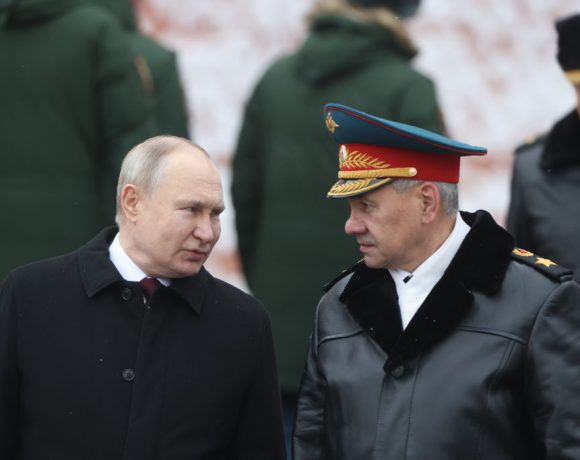
The Kremlin has announced the removal of long-time ally Sergei Shoigu from his position as defense minister, replacing him with Deputy Prime Minister Andrei Belousov, who lacks significant military experience. Shoigu will be appointed secretary of Russia’s Security Council. This move, a rare reshuffle in Russian politics, is seen as reflecting President Putin’s decision-making authority, particularly regarding the conflict in Ukraine.
Belousov’s appointment surprises many due to his background as an economist. However, analysts suggest this decision aligns with Putin’s aim to integrate the Russian economy more closely with military efforts. Kremlin spokesperson Dmitry Peskov emphasized the need for innovation in the defense ministry, comparing Russia’s situation to the mid-1980s Soviet Union when a large portion of GDP was allocated to military spending.
The decision to appoint a civilian to such a significant military role underscores the changing priorities within the Kremlin and the necessity to improve efficiency in the armed forces amid ongoing conflicts. Recent events, including the arrest of one of Shoigu’s deputies on corruption charges and prolonged military engagement in Ukraine, likely contributed to speculation about Shoigu’s weakening position.
While Shoigu will retain influence as secretary of the Security Council, his reassignment may be interpreted as a demotion. The future of Nikolai Patrushev, the council’s current head, remains uncertain. Shoigu, who has a civil engineering background, gained prominence in the 1990s as head of the emergencies and disaster relief ministry.
Belousov, described as a staunch defender of the state who believes Russia faces numerous external threats, shares a close relationship with Putin and the Russian Orthodox Church. He has practiced martial arts, including karate and sambo, and previously served as an aide to Putin. His support for the annexation of Crimea in 2014 aligns with Putin’s policies.
Putin’s recent reelection for a fifth term with an overwhelming majority solidifies his leadership position in Russia, which he has held since 2000.
Picture Courtesy: Google/images are subject to copyright