featured News Trending

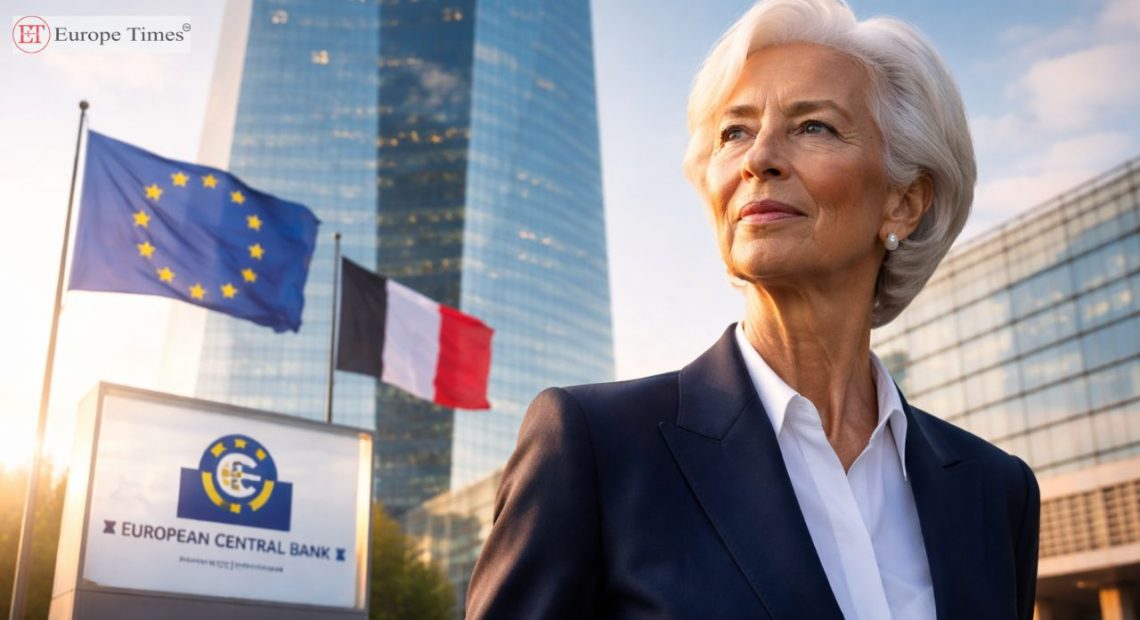
European Central Bank policymakers have downplayed the likelihood of an interest rate hike in April, emphasizing the need for more economic data before making any decision. European Central Bank officials noted that while inflation has risen above the 2% target due to higher energy costs, the timing of any policy move is less important than ensuring the decision is well-supported by evidence.

Key voices, including Philip Lane and Francois Villeroy de Galhau, stressed patience. Villeroy said that betting on an April hike would be premature, as policymakers still need clarity on how inflation is affecting underlying prices and economic demand. Markets have also scaled back expectations, now assigning only a small probability to an April move, though a rate increase is still widely anticipated by mid-year.

Other policymakers echoed similar caution, highlighting limited signs that energy-driven inflation is spreading across the broader economy. Officials such as Martins Kazaks indicated that even a small rate hike would mostly serve as a signal rather than a strong policy shift. Overall, the ECB appears inclined to wait for clearer signs of sustained inflation before taking action.

Pic courtesy: google/ images are subject to copyright

featured News Trending

A European Central Bank policymaker has warned that inflation expectations in the euro zone could climb faster than previously seen, urging the ECB to remain ready to raise interest rates if price pressures persist. Dimitar Radev said rising energy costs linked to the Iran conflict have pushed inflation above the ECB’s 2% target, increasing risks that higher prices could spread across the broader economy.

Radev noted that the balance of economic risks has shifted in an unfavorable direction, with the likelihood of a more adverse scenario increasing due to ongoing uncertainty and energy market disruptions. Policymakers are concerned that consumers and businesses, still influenced by the inflation surge following Russia’s invasion of Ukraine, may quickly adjust wage and pricing behavior, potentially triggering a self-reinforcing inflation cycle.

While inflation expectations remain broadly anchored and no strong second-round effects are visible yet, the ECB cannot assume stability will continue, Radev said. Financial markets already expect multiple rate hikes this year, though it remains too early to determine whether action will come at the April meeting. The ECB will closely monitor wages, energy prices, economic sentiment, and the duration of geopolitical tensions before making policy decisions.

Pic courtesy: google/ images are subject to copyright

featured News Trending

Inflation increased to at least 2.5% across four German states in March, driven largely by rising energy prices linked to the ongoing U.S.-Israeli conflict with Iran. In North Rhine-Westphalia, Germany’s most populous state, annual inflation climbed to 2.7% from 1.8% in February. Similar increases were recorded in Bavaria, Baden-Wuerttemberg and Lower Saxony, signalling a likely nationwide rise in inflation figures expected later in the day.

Economists surveyed by Reuters predict Germany’s harmonised inflation rate will reach 2.8% in March, up from 2.0% the previous month. Analysts warn that while energy costs are currently the main driver, broader price increases may follow. Berenberg Bank chief economist Holger Schmieding said higher transport costs and potential fertiliser shortages could push food prices higher, with inflation possibly exceeding 3% if the conflict continues.

A survey by the Ifo institute showed German companies increasingly expect to raise prices due to rising production and transport expenses. The data comes ahead of eurozone inflation figures, with markets anticipating further monetary tightening by the European Central Bank. Investors now expect up to three interest rate hikes this year as policymakers respond to mounting inflation pressures.

Pic courtesy: google/ images are subject to copyright

featured News Trending

European Central Bank President Christine Lagarde is reportedly considering an early departure from her post, potentially before France’s 2027 presidential election. The move, cited by the Financial Times, would allow outgoing President Emmanuel Macron to have a say in selecting her successor, as a far-right victory next year could complicate the choice. ECB officials, however, insist Lagarde remains focused on her current term and has made no final decision.

France, as the eurozone’s second-largest economy, traditionally plays a major role in appointing ECB leadership, with Germany also influencing the selection. Potential successors include Klaas Knot, Pablo Hernández de Cos, and Joachim Nagel, all mainstream central bankers expected to maintain policy continuity. Lagarde’s early exit could also accelerate appointments for other key ECB executive roles, including chief economist Philip Lane and market operations head Isabel Schnabel.

The news follows the early resignation of François Villeroy de Galhau, enabling Macron to influence domestic central bank appointments. Despite political maneuvering, markets remain calm, with inflation stable and interest rates neutral, making the ECB’s current policy environment relatively stable and predictable. Analysts warn, however, that attempts to preempt a far-right government could have unintended political consequences.

Pic courtesy: google/ images are subject to copyright

featured News Trending

European Central Bank policymaker and Lithuanian central bank governor Gediminas Simkus said the ECB’s current policy stance is appropriate, with inflation at target and interest rates in a neutral zone, but warned that fresh shocks could disrupt this balance. Speaking to Reuters, Simkus highlighted persistent global uncertainty driven by geopolitical tensions, particularly the risk of Russian military aggression in eastern Europe, alongside trade frictions and other external pressures.

Simkus stressed that the ECB must ensure its systems are resilient to such risks, including safeguarding cash distribution and payment infrastructure in case of heightened security threats. He noted that countries bordering Russia face unique challenges, ranging from cyberattacks to airspace incursions, and argued that central banks must remain operationally prepared. He also added that banks need to be ready for longer-term risks such as climate change.

On monetary policy, Simkus said interest rates are firmly on hold at the ECB’s February meeting, as modest inflation fluctuations around 2% are normal. However, he cautioned against signalling future moves, saying the next rate change could equally be a hike or a cut. Emphasising flexibility, he said the ECB should avoid overreacting to short-term data swings and instead focus on broader economic trends, as shocks tend to affect growth before feeding into inflation.

Pic courtesy: google/ images are subject to copyright

featured News Trending

The European Central Bank (ECB) should be careful about taking preemptive policy action in response to rising uncertainty, Austrian central bank chief Martin Kocher said in an interview with German outlet Platow. Kocher noted that while geopolitical risks have intensified recently, central banks should avoid committing to policy moves before risks clearly materialise.

Kocher pointed to heightened global uncertainty driven partly by fresh geopolitical tensions, including threats of new U.S. trade measures. However, he cautioned that acting too early—especially when inflation risks are not clearly tilted in one direction—could lock policymakers into a difficult position and complicate communication. “Some risks can be addressed in advance, but many cannot,” he said.

He added that over the past six months, risks had shifted “slightly to the positive,” with modestly improved euro zone growth expectations and stable financial markets. While acknowledging recent developments, Kocher said it was too soon to reassess the broader outlook. Financial markets currently expect the ECB to keep interest rates unchanged through 2026.

Pic courtesy: google/ images are subject to copyright

featured News Trending

The euro zone economy showed fresh signs of resilience at the end of 2025, with retail sales outperforming expectations and German industrial activity picking up, according to data released on Friday. Retail sales across the bloc rose 0.2% in November, slightly above forecasts, while annual growth of 2.3% was driven by strong upward revisions to earlier data. Spain continued to outperform peers, while France also posted above-trend growth, even as Germany lagged behind the regional average.

Despite lingering global trade disruptions, the euro zone grew faster in 2025 than many economists had anticipated, suggesting households and businesses are adapting to economic shocks. Analysts noted that inflation hovering around 2% has created a favourable environment, aligning with the European Central Bank’s policy goals. While the ECB has already delivered multiple rate cuts to support growth, economists expect further easing to be limited as the recovery remains modest rather than robust.

Germany’s industrial sector offered cautious optimism, with output rising 0.8% month-on-month and industrial orders surging 5.6%, boosted by large contracts. Government plans to ramp up spending on defence, infrastructure and housing are expected to further lift confidence and growth into 2026. However, exports remain a weak spot, particularly shipments to the United States, which fell sharply after new tariffs were imposed, dragging German exports down by 2.5% in November and reducing the country’s trade surplus.

Pic courtesy: google/ images are subject to copyright

featured News Trending

Bulgaria officially joined the euro zone on Thursday, marking a historic shift as the euro replaced the lev as the country’s currency from midnight. Celebrations took place across the capital Sofia, with euro coin projections lighting up the central bank’s facade and fireworks welcoming the milestone. Bulgaria becomes the 21st member of the euro area, increasing the number of Europeans using the common currency to over 350 million.

The move grants Bulgaria a seat on the European Central Bank’s Governing Council, allowing it to participate directly in euro zone monetary policy decisions. Successive governments have pursued euro adoption since Bulgaria joined the European Union in 2007. While public opinion remains divided, businesses have largely backed the transition, citing easier trade, travel and financial stability within the EU.

Many citizens expressed cautious optimism, saying the currency change would simplify travel and everyday transactions. However, concerns remain among some Bulgarians about potential price rises and broader political instability, following the government’s recent resignation amid protests over proposed tax hikes. Despite these worries, officials say euro adoption represents a major step toward deeper European integration.

Pic courtesy: google/ images are subject to copyright

featured News Trending

Germany’s economic recovery after three years of stagnation is expected to begin slowly next year before gaining momentum later, according to the Bundesbank’s latest biannual economic projections. Europe’s largest economy has struggled since 2023 due to a weakened industrial sector, subdued consumer spending and restrained government expenditure. A turnaround began this year after Chancellor Friedrich Merz eased spending rules and announced higher outlays on defence and infrastructure.

Bundesbank President Joachim Nagel said growth would remain modest at first but strengthen from the second quarter of 2026, supported by increased government spending and a revival in exports. The central bank now forecasts economic growth of 0.2% in 2025, an improvement from its earlier expectation of stagnation, while growth in 2026 is projected at 0.6%, slightly below its previous estimate.

Inflation projections, however, have been revised sharply higher due to faster-than-expected wage growth. The Bundesbank warned that strong wage increases, driven by low unemployment and labour shortages, could persist for years. Consumer price inflation is now expected to reach 2.2% in 2025, up from an earlier forecast of 1.5%, influencing the European Central Bank’s decision to raise its own euro zone inflation outlook and maintain a cautious policy stance.

Pic courtesy: google/ images are subject to copyright

featured News

The European Central Bank has proposed major reforms to simplify the EU’s banking rulebook, aiming to streamline supervisory requirements without reducing overall capital burdens. The ECB argues that reducing complexity should not weaken financial resilience, despite industry pressure for lighter regulations as seen in the U.S. and UK. The plan centres on merging several capital buffers into two core layers—releasable and non-releasable—while keeping guidance requirements separate.

Banking groups broadly welcomed the effort but warned that the proposals fall short of delivering the regulatory relief needed to boost competitiveness. German banking associations said the changes do not go far enough, particularly for small lenders, and urged the European Commission to move more decisively. European bank stocks nonetheless gained over 1% following the ECB’s announcement, outpacing wider market performance.

Beyond capital buffers, the ECB also called for reforms to AT1 convertible bonds, questioning whether these instruments truly absorb losses, and recommended an overhaul of EU-wide bank stress testing to make the process more effective. The proposals, backed by the ECB’s Governing Council, must now be reviewed by the European Commission, meaning any concrete changes could take months or even years to implement.

Pic courtesy: google/ images are subject to copyright