featured News Trending

Estonia’s foreign intelligence service has reported that Russia is rebuilding its military forces in response to Europe’s rearmament, though it does not plan to attack any NATO state in the near term. According to the report, Moscow aims to delay and hinder Europe’s ability to conduct independent military action, viewing European rearmament over the next two to three years as a significant concern.

The intelligence service highlighted Russia’s rapid expansion of ammunition production, which allows for stockpiling supplies for potential future conflicts while continuing operations in Ukraine. Any hypothetical attack on Estonia could involve coordinated drone operations across land, air, and sea. Estonia emphasized the need for the continent to invest in defense and internal security to deter potential aggression.

The report also noted Russia’s continued view of the U.S. as its main adversary while attempting to use diplomatic channels to ease sanctions and influence the Ukraine conflict. It highlighted Moscow’s strategic alignment with China, which could use Russian cooperation to challenge Western influence globally, particularly in the context of energy and military technology collaboration.

Pic courtesy: google/ images are subject to copyright

featured News Trending

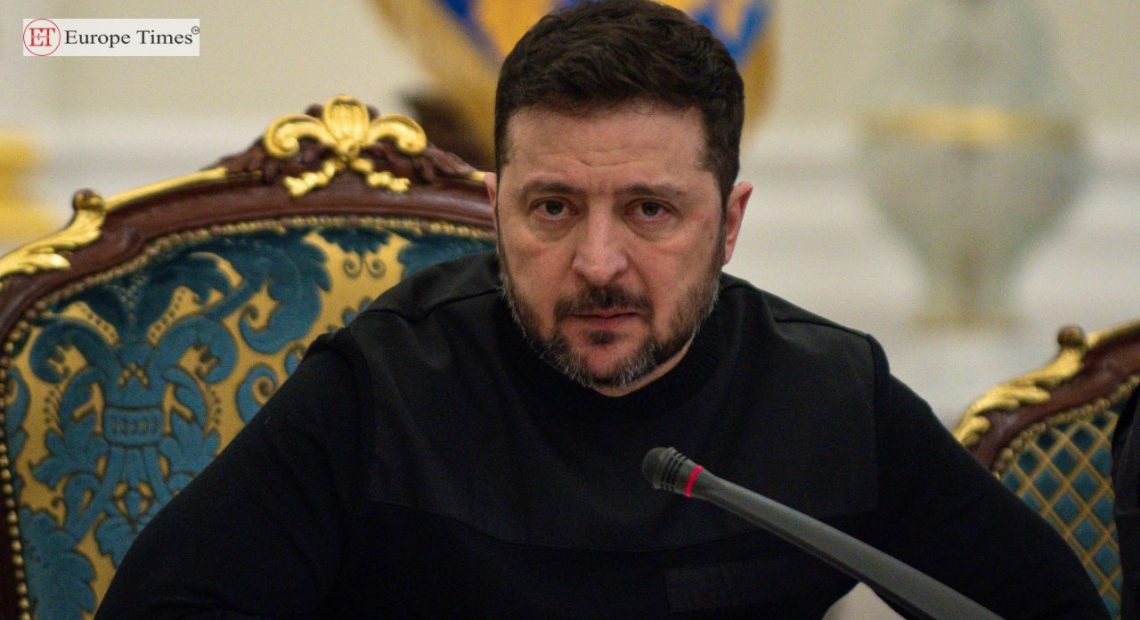
Ukrainian President Volodymyr Zelensky announced that the US aims to end the war with Russia by June, inviting both sides to hold talks in the United States next week, likely in Miami. Zelensky confirmed Ukraine’s participation but noted that difficult issues, including territorial concessions, remain unresolved. For the first time, leaders may be involved in trilateral discussions, though preparatory steps are required before this can happen.

Meanwhile, Russia continues to target Ukraine’s energy infrastructure, causing widespread blackouts amid freezing temperatures. More than 400 drones and 40 missiles struck power plants, substations, and transmission lines, affecting regions such as Lviv, Ivano-Frankivsk, and Rivne. Thousands of Ukrainians remain without electricity, forcing many to take shelter in metro stations. Ukraine has also retaliated with strikes on Russian military and industrial facilities in Tver and Saratov regions.

Since Russia’s full-scale invasion nearly four years ago, more than 55,000 Ukrainian soldiers have been killed, with nearly 160,000 Russian military casualties confirmed. Zelensky emphasized that Moscow should not be allowed to leverage the harsh winter to pressure Ukraine. Despite ongoing diplomacy, the conflict continues to inflict severe humanitarian and infrastructural damage.

Pic courtesy: google/ images are subject to copyright

featured News Trending

Elon Musk said on Sunday that steps taken by SpaceX to prevent Russia from using its Starlink satellite internet system without authorization appear to have been effective. His comments came after Ukraine reported finding Starlink terminals on long-range drones used in recent Russian attacks, raising concerns over misuse of the technology in the conflict.

Ukraine’s military relies heavily on Starlink for battlefield communications and for operating certain drone missions. Kyiv said it is working closely with SpaceX to stop any Russian access to the system. Posting on X, Musk said the measures introduced by the company had worked so far and added that SpaceX would take further action if needed.

Ukrainian Defence Minister Mykhailo Fedorov said authorities are now developing a system that would allow only authorised Starlink terminals to function within Ukraine. He said initial steps had already delivered quick results in countering Russian drone operations. SpaceX has previously said it does not sell or ship Starlink to Russia and does not conduct any business with the Russian government or military.

Pic courtesy: google/ images are subject to copyright

featured News

The Royal Navy has launched a new Atlantic strategy featuring advanced underwater drones and surveillance systems to protect vital subsea infrastructure from Russia’s growing presence. A key component, the SG-1 Fathom submarine glider, is being trialled to autonomously patrol for months, detect hostile submarines and support the Atlantic Bastion programme — a network of drones, warships and aircraft. Officials say the rising activity of Russian vessels near British waters, including suspected attempts to map cables and pipelines, has prompted faster deployment of new technology.

Defence Secretary John Healey says the move is a direct response to a 30% surge in Russian submarine activity in the past two years. The government recently highlighted risks after a Russian research vessel, Yantar, allegedly shone lasers at RAF pilots monitoring its route near the UK. Healey stressed that Russia continues to invest heavily in its submarine fleet and warned that protecting undersea infrastructure, including telecom and energy links, is now a national security priority.

Despite ambitious plans, critics argue the UK lacks sufficient naval resources and is relying on drones to fill gaps. Experts warn the Royal Navy has neglected its historic role in guarding the western Atlantic, forcing it to “play catch-up” even as threats grow. First Sea Lord Gen Sir Gwyn Jenkins acknowledged the urgency, urging allies such as Norway to join the UK in countering Russian undersea strategy before the technological gap narrows further.

Pic courtesy: google/ images are subject to copyright

News Trending

Michael Mosley, the well-known British broadcaster, has gone missing during his holiday on the Greek island of Symi. He was last seen on Wednesday when he set off on a walk to the island’s center. Despite initial search efforts, he has not been found. The search involves 25 people, including police, volunteers, and firefighters, along with a helicopter and drones. Mosley’s wife reported him missing after he left for his walk, leaving his phone behind. Efforts to locate him have expanded to include assistance from the Greek fire department and the use of CCTV footage.

The search has focused on the Pedi area of Symi, with divers now being deployed to investigate the possibility of Mosley having fallen into the sea. Local officials express concern, especially given the challenging conditions of the area and the hot weather, with temperatures exceeding 40°C. Despite efforts, there’s been no sign of Mosley, leaving many worried about his safety.

Mosley, known for his work on various BBC programs and his advocacy for intermittent fasting diets, was on holiday with his wife Clare, who is also a doctor. The Foreign Office is providing support to the family, and colleagues and friends have expressed their concern and hopes for his safe return.

Picture Courtesy: Google/images are subject to copyright

News Trending

The European Union has expanded sanctions on Iranian drone and missile producers in response to Iran’s recent attack on Israel. European Council President Charles Michel stressed the significance of further isolating Iran, highlighting the need for decisive action.

These new sanctions build upon existing measures implemented by the EU, including penalties for Iran’s involvement in supplying drones to Russia. The decision to escalate sanctions was reached during a summit in Brussels, marking the first gathering of the bloc’s leaders since the attack on Israel.

In the wake of Iran’s assault, which involved a barrage of over 300 missiles and drones from multiple countries, the international community has urged restraint to prevent the situation from spiraling into a wider conflict. Despite calls for caution, Israel has not ruled out a potential response to the aggression.

German Chancellor Olaf Scholz emphasized the importance of de-escalation following the summit, encouraging Israel to leverage diplomatic channels to strengthen its position in the region. Scholz’s remarks reflect a broader sentiment among global leaders to mitigate tensions in the volatile Middle East.

Meanwhile, Israel has appealed to its allies to take robust action against Iran, advocating for sanctions on Tehran’s missile program and the designation of the Islamic Revolutionary Guard Corps (IRGC) as a terrorist organization. However, the EU and UK have not yet followed the United States in designating the IRGC as such.

In addition to EU sanctions, the United States is also considering imposing new penalties on Iran. US Treasury Secretary Janet Yellen highlighted the potential for disrupting Iran’s terrorist financing and targeting its oil exports as areas of focus. Furthermore, US National Security Advisor Jake Sullivan affirmed that Iran’s missile and drone programs, alongside the IRGC and Iranian defense ministry, would be subject to forthcoming sanctions.

Picture Courtesy: Google/images are subject to copyright

News Trending

On Wednesday, Kim Jong Un showcased North Korea’s latest weaponry to Russia’s Defence Minister Sergei Shoigu during a visit to Pyongyang. The Russian delegation, along with Chinese officials, was invited to attend the 70th-anniversary celebrations of the Korean War armistice, which typically includes massive military parades.

Among the weapons displayed was the Hwasong intercontinental ballistic missile (ICBM), which was successfully tested in April. It is believed to be North Korea’s first ICBM using solid propellants, making it quicker to launch than liquid-fueled ones. Additionally, two new drone designs were shown, with one resembling a primary offensive strike drone used by the US Air Force, according to NK News.

During the visit, discussions between Kim Jong Un and Sergei Shoigu covered matters of mutual concern in the fields of national defense and international security.

This marks the first time Kim Jong Un has welcomed foreign guests since the Covid pandemic began, indicating a possible loosening of Covid restrictions in North Korea. The visit by Chinese and Russian envoys to the Victory Day parade suggests a potential reconnection of diplomatic ties after the country had sealed itself off from trade and diplomatic interactions in early 2020, even with its main economic and political partners, Russia, and China.

Picture Courtesy: Google/images are subject to copyright

News Trending War

Russia has conducted a large-scale drone attack on the capital of Ukraine, Kyiv. According to reports, 54 kamikaze drones were launched by Russia, out of which 52 were shot down by Ukraine’s Air Force. The attack resulted in the death of one person and injury to a woman when drone wreckage fell near a petrol station. Several high-rise buildings in different districts of Kyiv caught fire due to falling drone fragments, and warehouses in the Holosiyivsky district were also set ablaze.

Kyiv residents described their experiences during the attack, with one person mentioning being woken up by a drone flying close to her window and witnessing a series of bright flashes followed by loud explosions. Despite the terrifying situation, many residents expressed gratitude for the air defense and rescue services and emphasized the importance of cherishing every moment of life.

Some officials accused Russia of intentionally targeting Kyiv, particularly as the city was preparing to celebrate Kyiv Day. The attacks by Russia have been escalating, using kamikaze drones, cruise missiles, and ballistic missiles. Ukraine has been preparing for a counter-offensive, and one of its senior security officials stated that the country was ready to launch such an operation.

Both Russia and Ukraine have been engaging in drone attacks, with Russia targeting critical infrastructure and military targets. Ukraine has been retaliating by targeting key locations in the occupied regions of southeastern Ukraine. The frequency of military exchanges between both sides has been increasing as Ukraine prepares for its counter-offensive.

Russia’s ambassador to the UK warned about the escalation of the war, emphasizing that the supply of weapons to Ukraine could further escalate the conflict beyond the current levels. He expressed Russia’s desire to avoid such a scenario.

Picture Courtesy: Google/images are subject to copyright

News Trending War

According to Moscow, three people have died as a result of an attack by a Ukrainian drone on a bomber airbase in southern Russia. The drone was shot down by air defences close to the Engels base, but the falling debris killed three technical workers, according to the defence ministry.

Russia accused Ukraine of carrying out a similar strike on the airbase earlier this month, where aircraft that have launched missile attacks against Ukraine are stationed. Nearly 650 kilometres (400 miles) lie between the base and the Ukrainian border.

Although the air force spokesman, Yuriy Ihnat, claimed the explosions were a result of what Russia was doing on Ukrainian soil, the Ukrainian military did not formally acknowledge the latest strike.

Hours afterwards Russia’s FSB security service announced it had killed a four-strong “sabotage group” trying to enter the Russian border region of Bryansk from Ukraine armed with improvised explosive devices and German-made submachine guns. The FSB released video of what it said was the “liquidation” of the group, although there is no independent confirmation of the incident.

The most recent drone strike inside of Russia will humiliate Russian authorities because it occurred so quickly after the two attacks on December 5 that occurred hundreds of kilometres away from the front line, at the Engels base and in the Ryazan region. At the time, Russia also attributed the deaths of three military members and what it claimed as minor damage to two planes on falling debris.

Early on Monday, footage of explosions and air sirens near Engels Airfield were shared on social media.

The drone was downed by Russia’s air defences at around 1:00 AM on Monday, according to the country’s defence ministry (22:35 GMT Sunday).

Saratov governor Roman Busargin expressed his condolences to the men’s families and friends, and said there was “absolutely no threat to residents” in the town of Engels itself.

The full extent of Monday’s attack’s destruction will soon be seen in satellite imagery of the airfield, the spokesman for the Ukrainian air force said, adding that earlier explosions had damaged planes at the facility.

Since Moscow began its full-scale invasion on February 24, the Russian military has frequently launched missile attacks on numerous targets in Ukraine from the Engels air base. Although the Kremlin has previously accused Ukraine of invading its territory, the most recent instances occurred much farther into Russian territory.

There were many calls for increased security surrounding Russian military stations following the attacks on December 5; but, the most recent attack implies that has not happened.

Picture Courtesy: Google/images are subject to copyright

News Trending War

Both sides of the conflict have launched attacks on southern Ukraine, with Russia firing drones at Odessa and Kiev retaliating near Melitopol. The Ukrainian army claimed to have shot down 10 drones on Saturday, but an additional five struck electrical infrastructure, knocking out electricity for about 1.5 million people.

Later, the exiled mayor of Melitopol, a Ukrainian, claimed that an attack had been conducted on the city under Russian control. There is a large fire seen in pictures posted by a Russian official there. According to Ukrainian officials, Russia used drones built in Iran in its drone strike on the Ukrainian port city of Odesa.

“The situation in the Odesa region is very difficult,” President Volodymyr Zelensky said in his nightly video address. “Unfortunately the hits were critical, so it takes more than just time to restore electricity. It doesn’t take hours, but a few days.”

Moscow has been employing heavy missile and drone assaults against Ukraine’s energy infrastructure since October.

Ivan Fedorov, the exiled mayor, claimed that scores of “invaders” had been slain while pro-Moscow officials in Melitopol claimed that a missile attack had killed two persons and injured ten others.

“Air defence systems destroyed two missiles, four reached their targets,” Yevgeny Balitsky, the Moscow-appointed governor of the occupied part of the Zaporizhzhia region, said on the Telegram messaging app.Oleksiy Arestovych, a presidential counsellor, described Melitopol, which Russia has held since March, as essential to the defence of the south.

Picture Courtesy: Google/images are subject to copyright