News Trending War

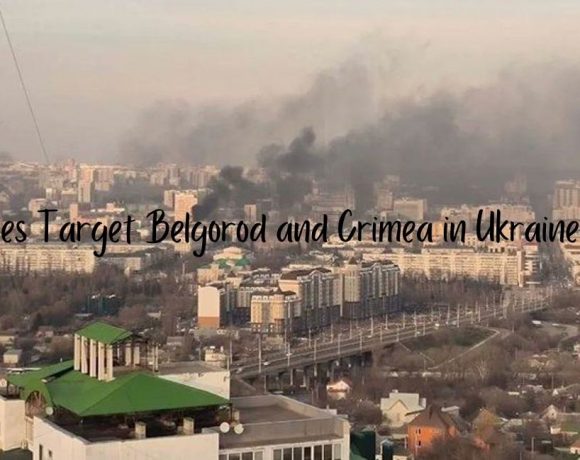
Russian authorities claim to have thwarted a Ukrainian attempt to attack a border city as the ongoing aerial conflict between the two nations escalates. They reported intercepting a dozen missiles targeting Belgorod, where 25 people lost their lives on Saturday. Ukraine has not provided a response.

This development follows Russia’s largest aerial bombardment on Ukraine, with President Volodymyr Zelensky stating that Russia deployed around 300 missiles and 200 drones over five days. The renewed attacks began last week, prompting a Ukrainian counterattack on Belgorod that resulted in over 100 injuries.

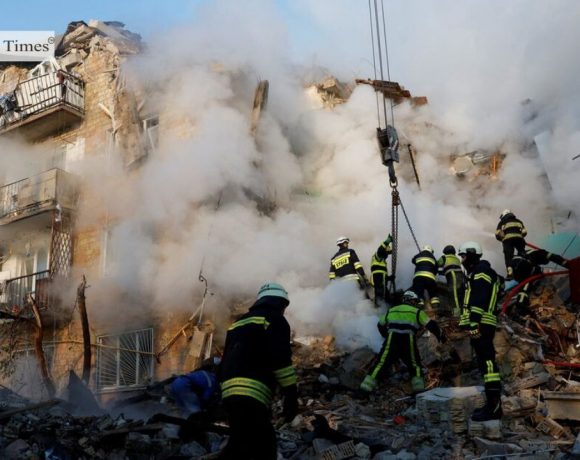
Zelensky revealed in a broadcast that Russia fired nearly 100 strategically chosen missiles on Tuesday, and Ukrainian forces successfully shot down 10 hypersonic ballistic missiles on that day alone. Ukrainian officials reported over 130 casualties from Tuesday’s attacks, including major cities like Kharkiv and Kyiv.

In response, Russia’s air defense system intercepted 12 missiles targeting Belgorod overnight, causing one fatality and five injuries in the region. Explosions were also heard in Sevastopol, the largest city in Russian-occupied Crimea, where a missile was shot down over the port with no reported casualties or damage.

Ukrainian Ambassador to the US, Oksana Markarova, expressed that Ukraine anticipated Russia’s recent bombardment but stressed the need for more weapons to effectively respond and send a clear message to Russia to halt its actions.

Russian President Vladimir Putin has pledged to increase strikes in retaliation for Ukraine’s recent attacks on Belgorod.

Picture Courtesy: Google/images are subject to copyright

News Trending

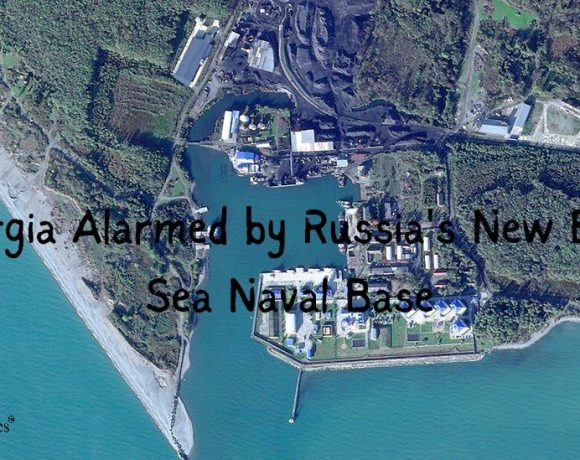
In early November, 50 opposition MPs in Georgia urged NATO and EU member states to unite against Russia’s plan to establish a permanent naval base in Abkhazia, a breakaway region. The move has raised concerns that it could involve Georgia in Russia’s conflict in Ukraine and disrupt Tbilisi’s plans for a Black Sea port. Abkhazia, though internationally recognized as part of Georgia, has been under Russian and separatist control since the 1990s.

Georgia’s foreign ministry condemned Russia’s plan as a violation of sovereignty, but officials downplayed the immediate threat. Satellite imagery suggests ongoing dredging and construction at the port, indicating potential infrastructure for larger cargo ships. Some fear the base could involve Georgia in a conflict between Russia and Ukraine.

The head of Georgia’s Foreign Relations Committee emphasized the government’s focus on immediate threats, such as Russian forces near the occupation line. Despite assurances, concerns exist that the naval base could impact Georgia’s mega-infrastructure project—a deep-sea port in Anaklia, crucial for the Middle Corridor, a fast route between Asia and Europe avoiding Russia.

The Anaklia project was canceled in 2020, with accusations that the government yielded to Moscow’s interests. The cancellation led to international arbitration. The government maintains plans to revive the deep-sea port.

While Georgia has a pro-EU population, its government has a complex relationship with Moscow. Accusations of a pro-Russian stance were labeled “absurd,” citing EU agreements and aspirations. However, the delicate situation underscores Georgia’s vulnerability due to its history of conflicts with Russia and lack of NATO security.

Georgia alleges Russia is using the naval base to pressure against EU integration. A decision on Georgia’s EU candidate status is expected at a December summit. Officials assert Russia aims to undermine Georgia’s stability and European integration, showcasing its influence in the South Caucasus.

Picture Courtesy: Google/images are subject to copyright
News Trending

More than 200 years after their removal by Lord Elgin, the Elgin Marbles remain a contentious issue, symbolizing perceived injustice among the majority of Greeks. The British claim of ownership is widely rejected, and the sculptures, often referred to as the Parthenon Sculptures, are seen as stolen treasures, taken through imperial theft.

In central Athens, a consensus prevails among the people, regardless of age, asserting that the Parthenon and its sculptures rightfully belong to Greece. The argument that the British Museum ensures better preservation is dismissed, with anecdotes about issues like a leaking roof at the museum cited as evidence to the contrary.

At the foot of the Acropolis, a dedicated museum has been waiting for 14 years to showcase the missing marbles upon their return. While countries like Italy have expressed willingness to return Greek antiquities, the British government has not followed suit, maintaining a contentious stance on the issue.

The cancellation of a meeting between UK Prime Minister Rishi Sunak and Greek Prime Minister Kyriakos Mitsotakis has strained diplomatic relations. Cabinet minister Adonis Georgiadis, expressing a sense of offense, underscores the bipartisan unity in Greece, asserting that the return of the marbles is not merely a political stance but a matter of national and cultural significance.

Foreign Minister Giorgos Gerapetritis reinforces the claim, emphasizing the historical, just, and ecumenical cultural value attached to the sculptures. Despite the strained relations, there is a hope for a resolution, with Georgiadis expressing the wish for the British Museum to find a “reasonable way out” of a predicament seen as a “disgrace” by many Greeks.

Among the late-night shoppers in Athens, skepticism towards the British Museum’s motivations is evident, with some attributing the reluctance to financial concerns. The sentiment among Athenians is that the return of the marbles would not only make Greeks happy but also foster goodwill globally, promoting fairness and reasonability.

Picture Courtesy: Google/images are subject to copyright
News Trending

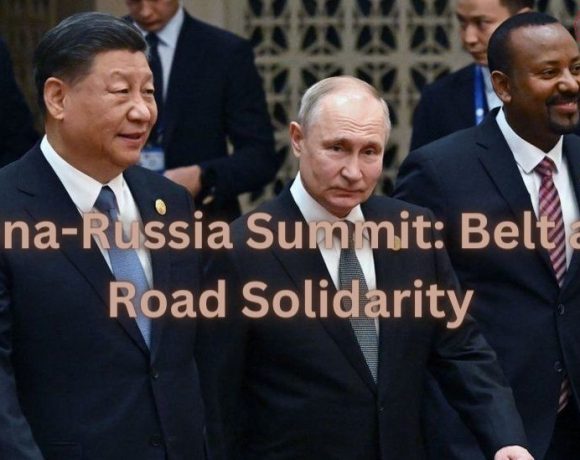
At a global summit in Beijing, Russian leader Vladimir Putin received special treatment, alongside China’s President Xi Jinping, as the two countries solidified their alliance amid global geopolitical tensions. The event commemorated a decade of China’s Belt and Road Initiative (BRI).

Despite diplomatic scrutiny and an international arrest warrant issued against him, Putin’s close relationship with Xi was evident throughout the summit. The two leaders were prominent during the opening ceremony and engaged in an extended bilateral meeting.

The summit highlighted China and Russia’s mutual opposition to the Western world order, advocating for a multipolar global system. China, positioning the BRI as a means to establish a more equitable world order, emphasized principles of cooperation, inclusivity, and sustainable development.

While the BRI has stimulated development, it has also faced criticism for fostering debt dependency and environmental degradation. The summit saw participation from various countries, particularly from Africa, Southeast Asia, and South America, including Hungarian Prime Minister Viktor Orban and representatives from the Afghan Taliban government.

Picture Courtesy: Google/images are subject to copyright

News Trending

Italy’s government has taken a remarkable diplomatic step by covering the restaurant expenses of four Italian tourists who engaged in a dine and dash episode in Albania. This incident, which gained attention in both nations, led Albania’s Prime Minister Edi Rama to discuss the matter with his Italian counterpart, Giorgia Meloni, during her visit to Albania. In response, Meloni instructed her ambassador to personally settle the bill for these tourists, as recounted by Edi Rama in an interview with La Stampa.

Confirming the action, Italy’s embassy in Albania issued a statement, acknowledging the payment of the bill, estimated to be around €80 (£68), on behalf of its citizens. The embassy emphasized Italy’s adherence to regulations and the expectation that such incidents would not recur.

Francesco Lollobrigida, Italy’s agriculture minister and Giorgia Meloni’s brother-in-law, was also part of the Albanian trip. He expressed that taking responsibility for the bill was a matter of national pride, asserting that the actions of a few dishonest individuals should not tarnish the reputation of a nation of honorable people.

The exact date of the dine and dash event remains unclear, but surveillance footage depicting the group exiting the restaurant and disappearing into the night has gained substantial traction on social media platforms. The owner of the restaurant conveyed to Albania’s Report TV that this was the first instance of customers departing without settling their bill. Interestingly, the four Italian tourists had even expressed their appreciation for the quality of the food before leaving the establishment.

Picture Courtesy: Google/images are subject to copyright

News Trending War

Russian President Vladimir Putin has reiterated his country’s opposition to Western sanctions following the invasion of Ukraine.

Speaking at the virtual Shanghai Cooperation Organisation (SCO) summit, his first international address since the recent mutiny in Russia, Putin expressed defiance towards the West, stating that Russia would counter external sanctions and pressures while continuing to develop. He emphasized the importance of trade agreements between SCO nations in local currencies, seen as a measure to mitigate the impact of sanctions. Putin also welcomed Belarus’s application to become a permanent member of the SCO. Indian Prime Minister Narendra Modi, hosting the summit, called for increased trade, connectivity, and tech cooperation among member states.

However, he did not directly address the war in Ukraine or China’s assertiveness in the Indo-Pacific, reflecting India’s delicate diplomatic position as it strengthens ties with both the West and China. Instead, Modi urged SCO members to cooperate on countering cross-border terrorism, with his statements commonly interpreted as aimed at Pakistan. China’s President Xi Jinping emphasized the importance of regional peace and security and called for solidarity and mutual trust among SCO members. All members agreed on the need to maintain stability in Afghanistan following the Taliban’s takeover.

The SCO, formed in 2001 by China, Russia, and four Central Asian countries, has gained relevance as relations with the West deteriorate for Russia and China. With around 40% of the world’s population and over 20% of global GDP, the SCO holds significant potential, and the inclusion of Iran as a full member further enhances its energy portfolio.

However, India’s ability to strike a diplomatic balance between its global partners, including Russia, China, and Pakistan, will impact the future of the SCO. Indian diplomats assert their commitment to an independent foreign policy without favoring any particular group.

Picture Courtesy: Google/images are subject to copyright