featured News Trending

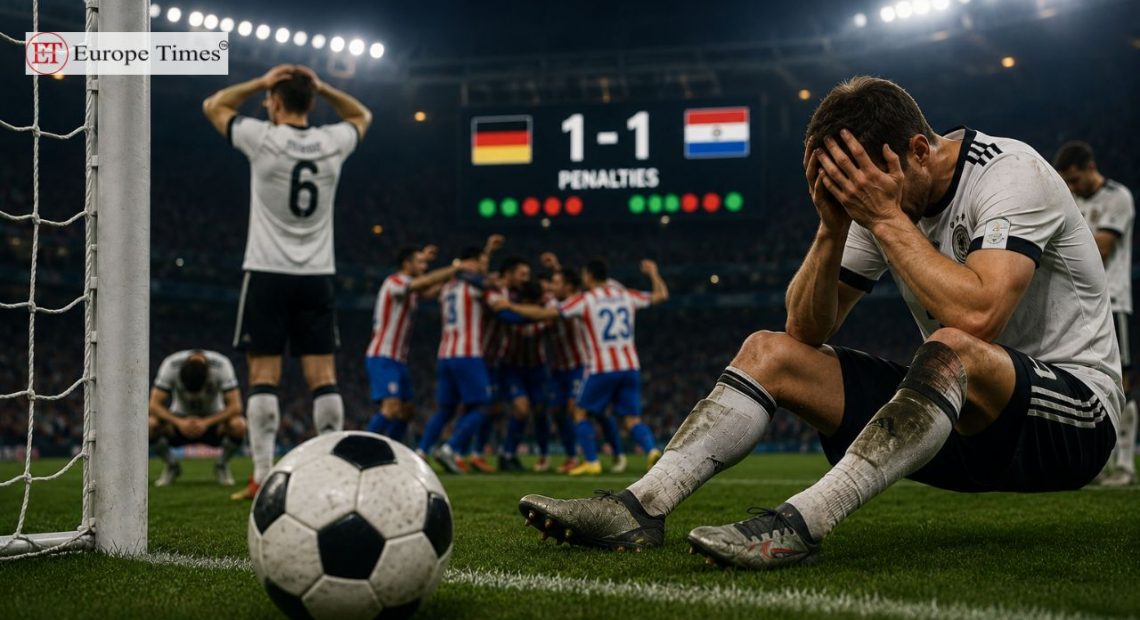
Germany’s FIFA World Cup campaign came to a disappointing end after a dramatic penalty shootout defeat to Paraguay in the Round of 32, intensifying pressure on head coach Julian Nagelsmann. Despite dominating possession and creating several chances, Germany were held to a 1-1 draw after extra time before losing 4-3 on penalties. The defeat marked another early World Cup exit for the four-time champions and extended a worrying run of disappointing performances in major tournaments.

The loss has sparked widespread criticism of Germany’s display and renewed questions over Nagelsmann’s future. Former players and football analysts argued that the team lacked creativity, physical presence and the winning mentality that once defined German football. While Nagelsmann admitted the elimination was painful and acknowledged his team’s shortcomings, he insisted he was prepared to continue if the German Football Association chooses to keep him in charge.

Germany’s struggles have reignited debate over the country’s football development system, with experts suggesting the national team has lost the aura that once made it one of the world’s most feared sides. Although the squad showed flashes of quality during the tournament, another premature exit has increased calls for significant changes as Germany looks to rebuild ahead of future international competitions.

Pic courtesy: google/ images are subject to copyright

News Sports Trending

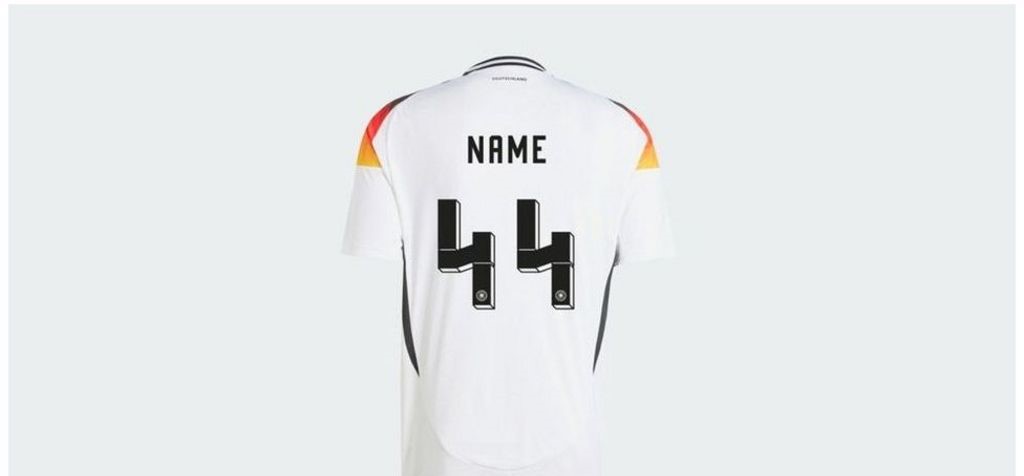
Adidas has decided to prohibit football fans from customizing German football kits with the number 44 due to concerns raised by the media regarding its resemblance to symbols used by Nazi SS units during World War Two. This decision comes after historian Michael König criticized the design, calling it “questionable” due to its similarity to the SS rune, which was associated with the atrocities committed by the Nazis.

The controversial kit has also faced criticism for its choice of pink as the away color, with some supporters seeing it as a representation of diversity, while others view it as a non-traditional choice aimed at generating revenue for the German Football Association (DFB).

Adidas spokesperson Oliver Brüggen emphasized that the resemblance to Nazi symbols was unintentional and stated the company’s commitment to opposing hatred and discrimination in all forms. The DFB explained that the shirt designs, including the numbers, were approved by UEFA during the design process, with no concerns raised about Nazi symbolism. They also announced plans to develop an alternative design for the number 4.

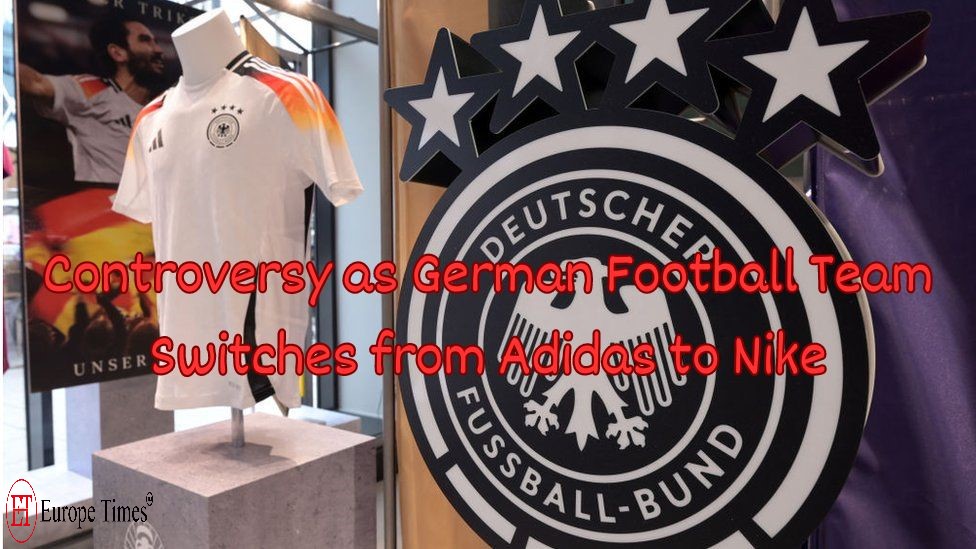
Furthermore, controversy surrounds the decision by the DFB to switch from Adidas to Nike as the manufacturer of German football kits starting in 2027, criticized by some for lacking patriotism. Germany is set to host the upcoming European Football Championship, which will take place across 10 cities.

Picture Courtesy: Google/images are subject to copyright

News Trending

The decision by the German Football Association (DFB) to change the supplier of the national team’s kit from Adidas to Nike starting in 2027 has sparked strong reactions from German politicians. Economy Minister Robert Habeck and Health Minister Karl Lauterbach both voiced their disapproval, with Habeck expressing a desire for more local patriotism and Lauterbach labeling the move as “wrong”. The long-standing partnership between Adidas and the German national team, spanning over 70 years, has been a significant part of the country’s football culture.

The DFB defended its decision, emphasizing the financial benefits and support for grassroots football in Germany that the new partnership with Nike would bring. Despite understanding the emotional attachment to the Adidas brand, the DFB stated that economic considerations necessitated the switch. Nike’s substantially higher financial offer, reported to be around €100 million annually compared to Adidas’s €50 million, played a significant role in the decision-making process.

The controversy surrounding the change in kit supplier highlights the intersection of sports, tradition, and commerce. Politicians from across the political spectrum in Germany have expressed concerns about departing from a longstanding partnership that is deeply intertwined with the national team’s identity. As the DFB navigates this transition, it faces the challenge of balancing financial imperatives with the preservation of cultural and sporting heritage.

Picture Courtesy: Google/images are subject to copyright