News Trending

British trader Sanjay Shah has been extradited from the United Arab Emirates to Denmark to face tax fraud charges totaling £1.46 billion. The charges stem from alleged fraudulent share trading schemes conducted by Solo Capital, the hedge fund Shah founded. Despite living in Dubai, Shah denies any wrongdoing, asserting that the trades in question were legal. Denmark, heavily impacted by “cum-ex” schemes, alleges that Solo Capital engaged in fraudulent activities between 2012 and 2015. The Danish authorities are seeking to recover the substantial sum, which accounts for nearly 0.5% of the country’s GDP.

In the legal proceedings, Shah, who lost his job as a trader during the 2008 financial crisis, is considered the primary suspect. Prosecutors in Denmark are pushing for him to be held in custody until his trial, scheduled for January of next year. Since 2020, Danish authorities have aggressively pursued Shah, leading to the freezing of much of his fortune, including a £15 million central London property. Despite an extravagant lifestyle in Dubai, where he resided on the exclusive Palm Jumeirah island and hosted charity events with renowned musicians like Elton John and Drake, Shah has faced mounting legal challenges.

Sanjay Shah’s legal battles are part of a broader crackdown on “cum-ex” fraud in Denmark. In a separate case in November, Guenther Klar, a British national who worked for Solo Capital between 2010 and 2012, went on trial in Denmark—the country’s first court case over cum-ex fraud. Klar, extradited from Belgium, faces accusations of defrauding the government of £37 million. He maintains his innocence, marking another chapter in Denmark’s efforts to address financial misconduct within the realm of cum-ex schemes. Despite facing challenges in the UK Supreme Court, Shah’s extradition and the ongoing legal proceedings underscore Denmark’s commitment to pursuing those involved in financial fraud, irrespective of their location.

Picture Courtesy: Google/images are subject to copyright

News Trending

In response to a series of Quran burnings that sparked outrage in Muslim countries, the Danish government has introduced a proposal to prohibit the public burning of religious texts, including the Quran. Justice Minister Peter Hummelgaard emphasized that such acts not only harmed Denmark’s reputation but also posed a risk to its citizens’ safety. The new legislation aims to classify improper treatment of the Quran or Bible as a criminal offense, carrying penalties of fines and potential imprisonment for up to two years.

The Danish government, which holds a center-right stance, aims to convey a message to the international community through this move. Foreign Minister Lars Lokke Rasmussen highlighted that recent weeks have witnessed around 170 demonstrations, some involving the burning of Quran copies near foreign embassies. Denmark’s intelligence agency, PET, has cautioned that these incidents have escalated the terrorist threat.

Denmark’s neighboring country, Sweden, has also experienced similar Quran burnings, leading to concerns about worsening security. However, both Denmark and Sweden had been cautious in their response due to their strong tradition of freedom of expression. Sweden abolished its blasphemy laws in the 1970s.

Denmark’s decision to address this issue gained momentum after further Quran burnings occurred in both countries in July. The Organisation of Islamic Cooperation (OIC) urged its member nations to take appropriate action against countries where such desecration occurred.

The Danish justice minister clarified that the proposed change in the law wasn’t directed at verbal, written, or satirical expressions. Rather, the focus was on curbing actions that only fueled division and hatred. Deputy Prime Minister Jakob Ellemann-Jensen stressed the importance of responsible behavior even while exercising freedom of expression.

Denmark acknowledged that it couldn’t ignore the negative implications of these actions on its security. Meanwhile, Sweden’s Prime Minister, Ulf Kristersson, noted that his country wouldn’t follow Denmark’s approach, citing the need for potential constitutional amendments.

The Danish government plans to present the proposed legal changes on September 1st, with the aim of passing them in parliament by year-end. The prohibition is expected to be included within a section of the criminal code that addresses public insults toward foreign states, flags, or symbols.

Picture Courtesy: Google/images are subject to copyright

News Trending

A 57-year-old truck driver has been arrested after multiple incidents of spilled potatoes occurred on a bridge connecting two Danish islands. The driver is being held on suspicion of reckless endangerment to life. The first spill occurred on the westbound side of the Storebaelt Bridge, which links the island of Copenhagen to the rest of Denmark. Shortly after, a similar incident happened on the eastbound side. The police are considering two possibilities: it was either an accident or a deliberate act.

The spilled potatoes made the roads slippery, leading to traffic congestion and prompting authorities to urge drivers to reduce their speed. Another incident of potatoes on the road was reported near the town of Kolding, which is close to the Storebaelt Bridge.

Interestingly, the potato spills coincided with the passing of a new law in the Danish parliament that imposes taxes on diesel trucks carrying heavy loads. This measure has sparked protests from truck drivers who argue that the tax will make their livelihoods unsustainable. They have peacefully blocked highways and main roads across Denmark in recent weeks. The majority of the Danish parliament contends that the tax is necessary due to the environmental unsustainability of petrol and diesel trucks. Starting in 2025, drivers of such vehicles weighing over 3.5 tons will be taxed 1.3 Danish kroner per kilometer.

A spokesperson for the protesting truck drivers distanced themselves from the potato spills, stating on Facebook that they plan to protest in a manner that can be felt without risking harm to people’s lives and well-being.

Picture Couretsy: Google/images are subject to copyright

News Trending

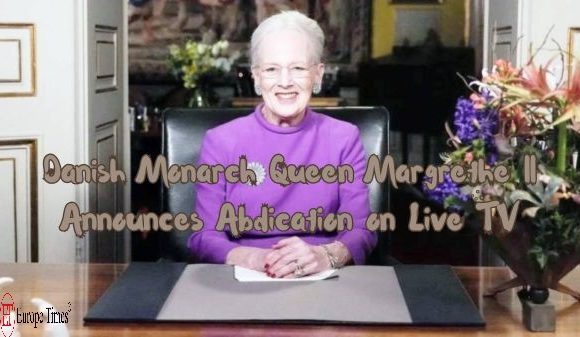
The Danish Royal Court has revealed that the Queen of Denmark tested positive for Covid-19 a second time this year. After receiving her prognosis on Tuesday night, Queen Margrethe II cancelled all of her appointments for this week. 2,000 people attended Queen Elizabeth II’s state funeral on Monday, including the 82-year-old monarch.

After the passing of the British monarch, she has been the head of state for the longest in Europe. She and Queen Elizabeth, who both descended from Queen Victoria, were third cousins. The most recent positive test for Queen Margrethe’s Covid immunity occurred in February of this year, when she displayed moderate symptoms.

She would be getting well at Fredensborg Palace, which is located north of Copenhagen, according to a statement on the palace website.

She will be replaced in hosting a reception for members of the government, the Danish parliament, and Danish members of the European Parliament on Friday in Copenhagen by her son and heir, Crown Prince Frederik, and his wife Mary, the Crown Princess.

Queen Margrethe has recently been photographed at a number of memorial services in London for Queen Elizabeth II.

She and the crown prince paid their respects at the lying-in-state at Westminster Hall on Sunday, the day before the late Queen was to be buried. She sat in the same row as other European kings and queens the following day in Westminster Abbey, including King Philippe of Belgium, Prince Albert II of Monaco, and King Carl XVI Gustaf of Sweden.

She said of the late monarch: “She was a towering figure among European monarchs and a wonderful inspiration to us all” in a letter of condolence to King Charles. After her father, King Frederick IX, passed away in 1972, she ascended to the throne at the age of 32.

Picture Courtesy: google/images are subject to copyright

News Trending

Greece won its battle to defend its ownership of the term “Feta” on Thursday when Europe’s top court censured Denmark for allowing local businesses to use the brand for sales outside of the European Union.
Due to its 6,000-year history of production, Greece counts feta as a component of its cultural heritage.

The Court of Justice of the European Union (CJEU), which has its headquarters in Luxembourg, concurred with this claim. The justices ruled that Denmark had broken its legal obligations by continuing to label cheese intended for export to foreign nations as “Feta.”

Denmark had contended that an export ban could be perceived as a barrier to commerce in the case launched by the European Commission and supported by Cyprus.

Since 2002, the EU executive has identified feta as a traditional Greek product, granting it legal protection throughout the 27-nation union. The label was approved by the CJEU in 2005. For Greece, which produces around 120,000 tonnes of feta annually, the issue goes beyond simple national pride.

Picture Courtesy: Google/images are subject to copyright

News Trending

As per the sources from 2012 to 2014 Denmark’s secret service helped the US spy on European politicians including German Chancellor Angela Merkel.

According to DR, the alleged set-up, said in the report to have been codenamed “Operation Dunhammer”, allowed the NSA to obtain data using the telephone numbers of politicians as search parameters.

The Defence Intelligence Service (FE) collaborated with the US National Security Agency (NSA) to gather information, confirming to Danish public service broadcaster DR. Intelligence was allegedly collected on other officials from Germany, France, Sweden and Norway.

In 2013 similar allegations was emerged. They were not aware of Danish involvement until the DR report, which was shared with other European media over the weekend said German President Frank-Walter Steinmeier and a spokesperson for Angela Merkel.

Pic Courtesy: google/ images are subject to copyright
News Trending

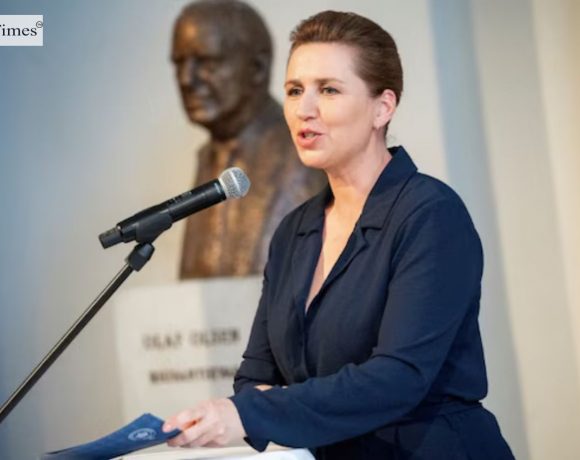
Mette Frederiksen – the Prime Minister of Denmark – has postponed her wedding ceremony to attend a crucial meeting called by the European Union to discuss the topic of recovery fund.

It is not the first time her wedding has been postponed. Before this, similar cancellation has happened at least two times. This is the third time her wedding has been postponed.

The summit on Covid-19 recovery fund will happen on 17 and 18 July. It is the first meeting that leaders will attend since the commencement of the lockdown period.

Ms. Frederiksen was set to marry her partner, Bo Tengberg, on 18 July.

In a statement she has given through her online handle, she has said that she had to protect the interest of the country.

Denmark is not in favour of the fund. It along with Sweden and Austria wants a different arrangement. It wants the fund offered to be repaid eventually.

Earlier, some experts opined that if the support was not offered to the struggle countries by the European Union the decades old economic union will collapse miserable.

Italy and Spain are in dire need of the fund. The economies of these countries have almost collapsed completely due to the crisis.

Photo Courtesy: Google/ images are subject to copyright 
News Trending

Museums, art galleries and zoos are back to normal in the European country of Denmark – which had been under lockdown until recently.

The resumption of the entertainment industry is a huge relief to those who are dependent on this industry.

The relaxation in Denmark has come at the time several UK producers have complained their government about the difficulty they have been facing during to the lockdown measures in the country. The UK entertainment industry has even requested their government to launch a rescue package.

Sonia Friedman was one of the producers who came up with a demand of rescue package.

Last day, Denmark released a set of guidelines to make sure the relaxation would not result to the rebirth of the virus outbreak in the country.

Denmark, which was once one of the worst affected country in the continent of Europe, is at present one of the safest country. No death has been reported in the country due to the Covid-19 outbreak any time in the near history.


Photo Courtesy: Google/ images are subject to copyright
News Trending

A day after the European country of Denmark opened up its schools to its children aged below eleven, the country has decided to bring in more relaxations like those they recently announced.

The country has decided to allow its beauty salons, hairdressers and tattoo parlours to resume their operations.

Denmark, the country which was one of the first countries to impose a restriction to control the coronavirus outbreak, has become one of the first countries to announce a wide range of relaxations for its citizens to bring back them to normal life.

All establishments which are entitled for the benefit of the relaxations announced by the government have been advised to respect the guidelines provided to prevent the spread of the virus outbreak.

The people of the country has been requested to respect the directives announced by the government to prevent the spread of the outbreak.

Denmark is not a seriously affected country. It seems that the country will walk back to normal in few days.

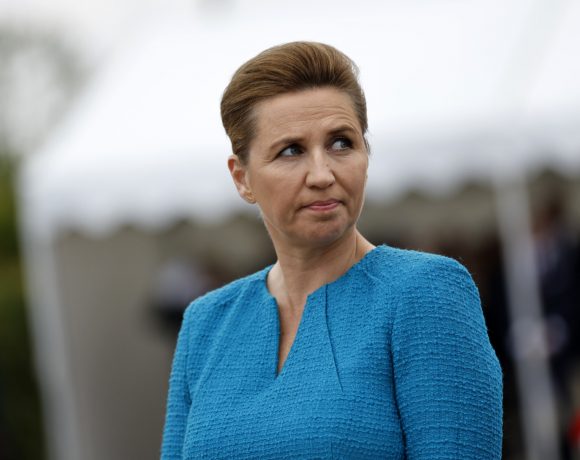
“No-one wants to keep Denmark closed a day more than is absolutely necessary,” Prime Minister Mette Frederiksen says.

“But we mustn’t go ahead faster than we are able to keep the epidemic under control,” he adds.


Photo Courtesy: Google/ images are subject to copyright
News Trending

The European country of Denmark has become the first country in the continent to allow the relaxation of the restrictions imposed to prevent the spread of coronavirus.

The country has allowed its schools to resume its operations, paving the way for the return of children up to the age of 11 back to their schools.

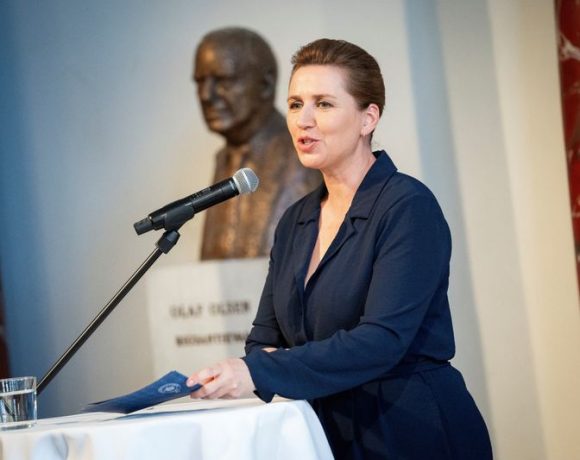
Denmark Prime Minister Mette Frederiksen has welcomed children as they have reached back to their schools in the capital Copenhagen.

Denmark is one of the first countries in the country which has imposed a lockdown to prevent the spread of the virus.

Meanwhile, some experts have warned the country about the risk it has taken through its decision to reopen its schools.

The government has given some strict directions regarding the matter of personal hygiene to the schools which have opened their gates for their students.

The Denmark experiment is being observed closely by several countries across the world.

The Denmark’s move has come shortly after the European Commission directed its member countries to create a road map to remove the restriction imposed to prevent the spread of the virus.

Denmark is not a seriously affected country. With its latest move, it has taken a serious risk. It is yet to be seen whether it will be proved beneficial in the long run.


Photo Courtesy: Google/ images are subject to copyright