
News Trending


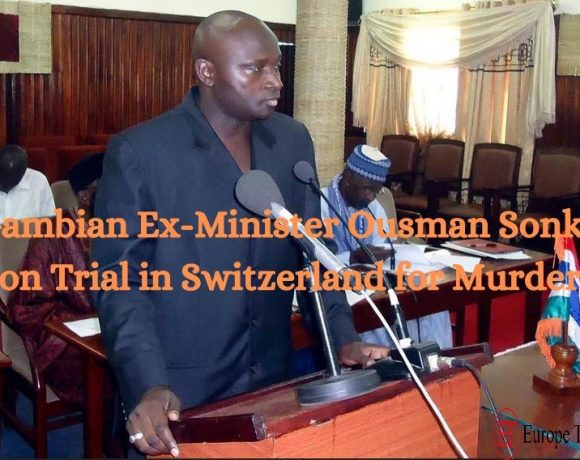
A former interior minister from The Gambia, Ousman Sonko, is facing trial in Switzerland on charges of crimes against humanity. Sonko fled to Switzerland in 2016, just before the fall of Gambian President Yahya Jammeh’s repressive regime. He is accused of involvement in killings, rape, and torture, with evidence presented by NGOs leading to his arrest. Sonko’s defense argues that he was not responsible, claiming the National Intelligence Agency was behind the alleged crimes and was not under his authority.

Switzerland is utilizing universal jurisdiction to prosecute the case, allowing countries to try individuals for crimes committed elsewhere. Sonko is the highest-ranking government official in Europe to be prosecuted under this principle. The trial is seen as a potential warning to repressive governments, emphasizing that they can be held accountable even outside their borders. The extensive charges against Sonko include ordering killings, torture, and rape against political opponents, potentially constituting crimes against humanity under Swiss law.

Swiss investigators gathered evidence in The Gambia, interviewing numerous victims and witnesses. The trial marks only the second instance of Switzerland using universal jurisdiction for crimes against humanity. Human rights groups believe it serves as a precedent for accountability. Sonko, who was a key figure in Jammeh’s regime, fled to Switzerland and claimed asylum, leading to his arrest after Trial International provided details of his alleged abuses. The trial is expected to last a month, with a verdict scheduled for March. Other countries are also pursuing cases against members of Jammeh’s regime, contributing to efforts for accountability in the face of widespread abuses during his rule.

Picture Courtesy: Google/images are subject to copyright
News Trending

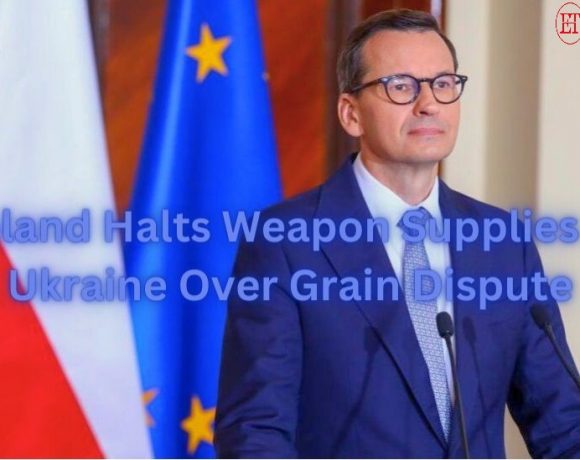
One of Ukraine’s steadfast supporters, Poland, has declared that it will cease its weapon supplies to its neighboring country, Ukraine, citing a diplomatic dispute regarding Ukraine’s grain exports as the primary reason. Prime Minister Mateusz Morawiecki emphasized that Poland’s current focus is on bolstering its own defense capabilities with more modern weaponry.

Poland had already provided Ukraine with significant military assistance, including 320 Soviet-era tanks and 14 MiG-29 fighter jets. However, their willingness to continue such support has dwindled, coinciding with escalating tensions between the two nations.

The recent diplomatic rift was triggered when Poland, along with Hungary and Slovakia, extended a ban on Ukrainian grain imports. Ukrainian President Volodymyr Zelensky’s comments at the United Nations, characterizing their actions as political theater, added fuel to the fire. Poland viewed these remarks as unjustified, given their longstanding support for Ukraine.

In his interview, Prime Minister Morawiecki underlined that while Poland remains committed to assisting Ukraine in its struggle against Russian aggression, it could not allow its own markets to be destabilized by Ukrainian grain imports. He pointed out that Poland was already replacing its depleted military hardware, which had been significantly reduced through transfers to Ukraine, with modern Western-produced equipment.

While arms exports to Ukraine will not cease entirely, only previously agreed deliveries of ammunition and armaments, including those from existing contracts with Ukraine, will be fulfilled. This decision reflects Poland’s commitment to its own security and stability, while the future of its assistance to Ukraine remains uncertain.

The ongoing grain dispute arises from Ukraine’s need to find alternative overland routes for grain exports due to Russia’s full-scale invasion, which nearly closed the main Black Sea shipping lanes. Consequently, large quantities of grain flowed into Central Europe, leading the European Union to temporarily ban grain imports into several countries. Despite the EU lifting the ban, Poland, Hungary, and Slovakia have maintained it, leading to Ukraine’s WTO lawsuits against these nations. Poland has signaled its intention to uphold the ban, while also hinting at the possibility of expanding the list of banned products should Ukraine escalate the grain dispute. However, diplomatic channels remain open, with discussions ongoing to seek a mutually beneficial solution.

Picture Courtesy: Google/images are subject to copyright
News Sports Trending

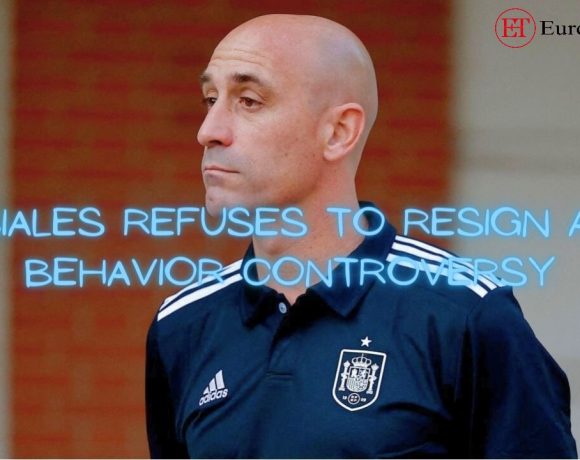
Luis Rubiales, the president of the Spanish football federation, has declined to step down from his position despite controversy surrounding his behavior at the Women’s World Cup final.

After Spain’s 1-0 victory over England, Rubiales kissed forward Jenni Hermoso on the lips and made a crotch-grabbing gesture during celebrations. He addressed an extraordinary general assembly convened by the federation, stating that he would not resign and calling the situation a “social assassination.”

Rubiales apologized for the incidents and expressed his readiness to defend his ideals, asserting that he didn’t deserve the criticism he was facing. Despite calls for his resignation, Rubiales defended the kiss as a spontaneous, mutual, and consensual gesture, stating that he would fight against the backlash.

While some criticized his actions, including Spain’s Prime Minister and a union representing Hermoso, others, including Hermoso herself in a later statement, came to his defense.

Picture Courtesy: Google/images are subject to copyright