featured News Trending

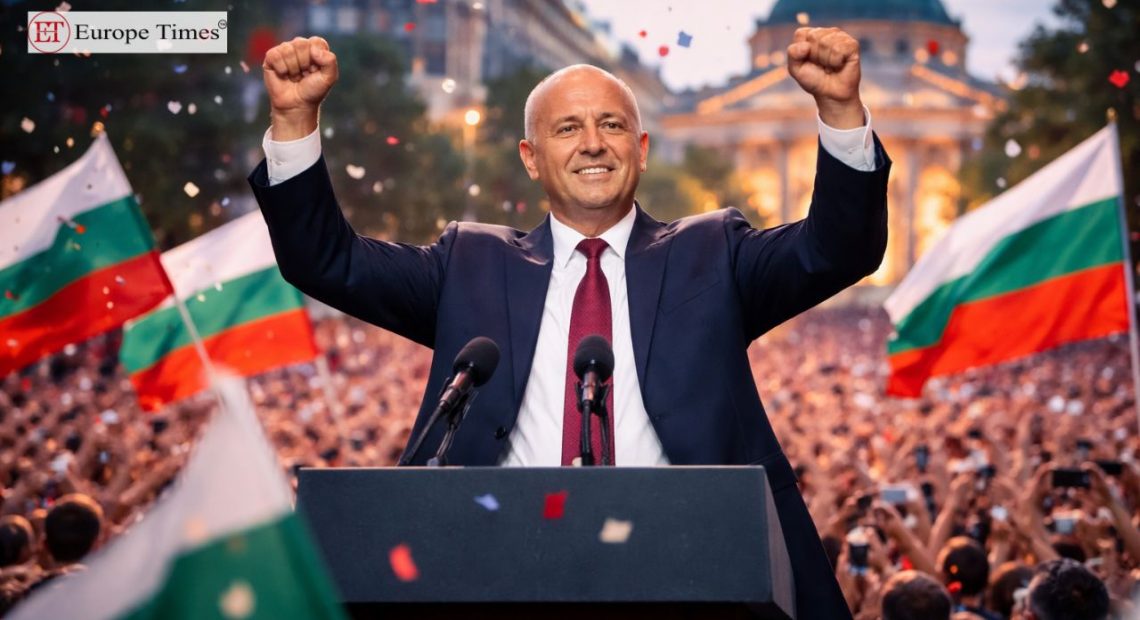
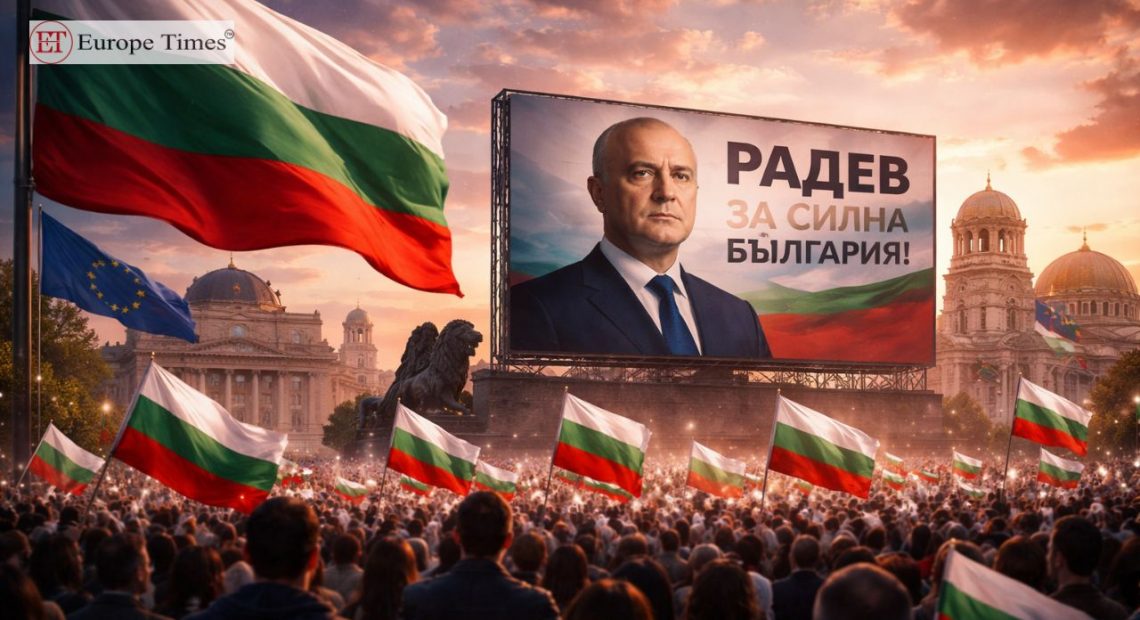
Rumen Radev has secured a sweeping victory in Bulgaria’s parliamentary election, paving the way to lead the country’s first single-party government in nearly 30 years. The former president capitalised on widespread public frustration with corruption, political instability, and rising living costs, following years of repeated elections and fragile coalitions.

Radev, a former fighter pilot often viewed as sympathetic to Russia, positioned himself as an anti-establishment figure promising reform. His win also dealt a major blow to traditional parties, including those led by Boyko Borissov. Despite his rhetoric and past criticism of EU policies, analysts believe he is unlikely to risk jeopardising crucial European Union funding or dramatically shift Bulgaria’s geopolitical alignment.

The new government faces significant domestic challenges, including tackling corruption, stabilising the economy, and restoring public trust in institutions. While some voters remain concerned about his perceived pro-Russian stance, many see his decisive mandate as an opportunity to bring stability after years of political turmoil.

Pic courtesy: google/ images are subject to copyright

featured News Trending

Former Bulgarian president Rumen Radev is leading opinion polls ahead of the April 19 parliamentary election, campaigning on an anti-corruption platform and promising stability after years of political turmoil. Backed strongly by rural and older voters, Radev has positioned himself as a reformer determined to dismantle what he calls an entrenched oligarchic system.

The vote comes after repeated elections and fragile coalitions that failed to address graft and economic concerns. While Radev’s Progressive Bulgaria party holds a clear lead, it is unlikely to secure a majority, making coalition-building essential. Potential partners include pro-European groups, which could moderate his policies, especially on foreign relations.

Radev’s perceived pro-Russian stance has raised concerns within the European Union, particularly regarding Bulgaria’s position on Ukraine and broader EU alignment. Despite this, many voters prioritize domestic issues like corruption, economic inequality, and governance, viewing Radev as a chance for decisive leadership in a politically unstable landscape.

Pic courtesy: google/ images are subject to copyright

featured News Trending

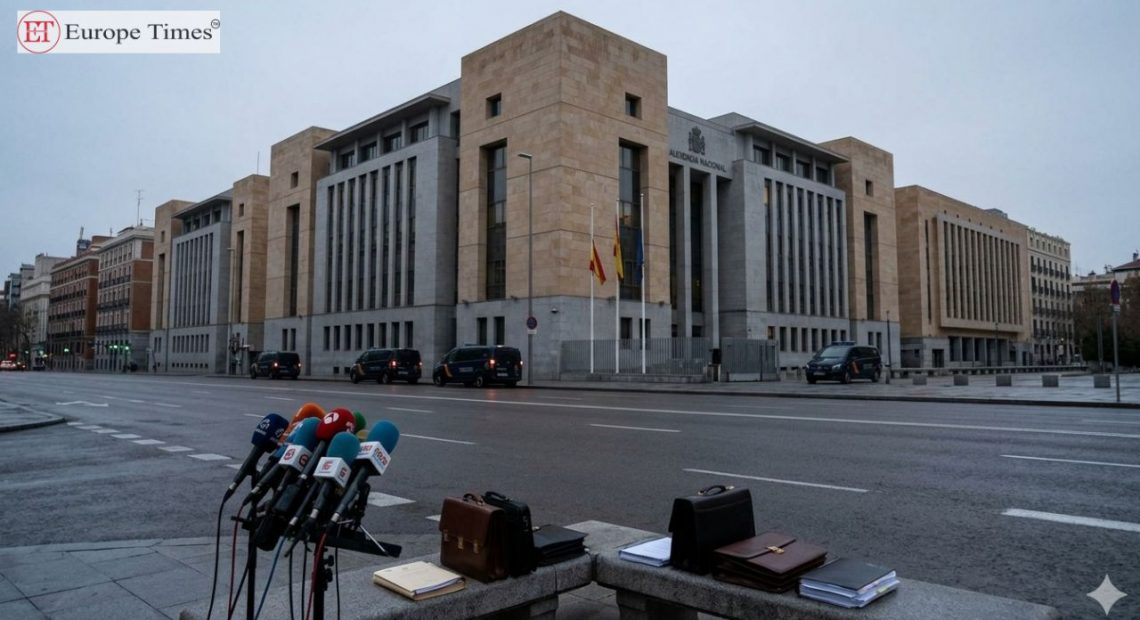
Begoña Gómez, the wife of Spanish Prime Minister Pedro Sánchez, has been formally charged with embezzlement, influence peddling, and misappropriation of funds following a two-year criminal investigation. The charges center on allegations that Gómez leveraged her position to advance her career, specifically regarding a master’s degree directorship at Madrid’s Complutense University. Judge Juan Carlos Peinado, who launched the probe in early 2024, highlighted Gómez’s alleged lack of relevant qualifications for the post as a key point of interest in the case.

The legal action stems from a complaint filed by the anti-corruption group Manos Limpias, which the Prime Minister has characterized as a far-right “harassment strategy” designed to destabilize his coalition government. Sánchez previously suspended his public duties for five days to reflect on his future in office, citing the political “mud-slinging” directed at his family. Despite the charges, Gómez denies all wrongdoing, and the couple proceeded with a scheduled official visit to China as the ruling was made public.

This legal development adds to a growing list of scandals surrounding the Prime Minister’s inner circle. Sánchez’s brother, David Sánchez, is currently under investigation for alleged influence peddling, while former transport minister José Luis Ábalos recently went to trial over pandemic-era kickbacks. It is now up to the Spanish courts to review the evidence and determine if Gómez will face a formal trial, a decision that carries significant weight for the country’s political stability.

Pic courtesy: google/ images are subject to copyright

featured News Trending

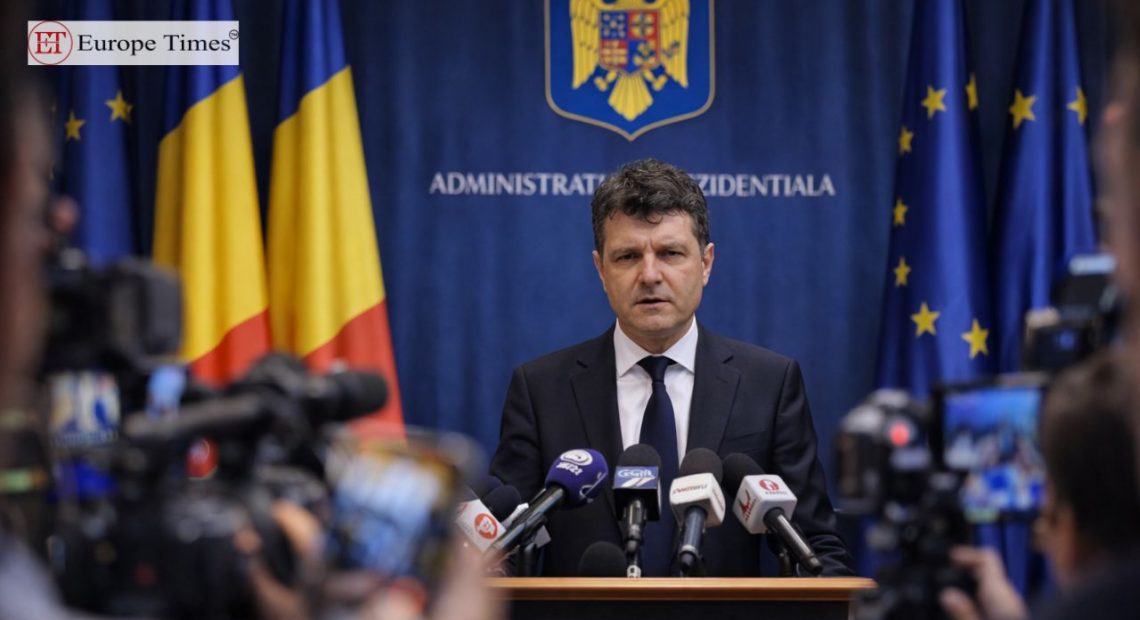
Nicusor Dan appointed seven chief prosecutors and deputies despite opposition from civil society groups and the country’s top judicial regulator. The move has raised concerns about the direction of Romania’s anti-corruption efforts, especially as the regulator had declined to endorse the nominees.

Romania, often ranked among the more corrupt countries in the European Union, has seen scrutiny over its justice system even after special EU monitoring ended in 2023. Critics say the pace of anti-corruption investigations has slowed, with recent high-profile acquittals adding to fears that enforcement is weakening.

Among the appointments, Cristina Chiriac was named prosecutor general, alongside key roles in anti-corruption and organized crime units. While the president defended his choices as necessary, critics—including former justice minister Stelian Ion—warned that ignoring the regulator’s negative opinion could undermine judicial independence and public trust.

Pic courtesy: google/ images are subject to copyright

featured News Trending

Ukrainian anti-corruption investigators have accused former prime minister and opposition leader Yulia Tymoshenko of bribery, alleging her involvement in a vote-buying scheme, a source familiar with the case said on Wednesday. The accusation comes as part of a widening anti-graft crackdown that has shaken Ukraine’s political establishment. The National Anti-Corruption Bureau of Ukraine (NABU) said it had served bribery charges to an opposition party leader without naming Tymoshenko directly.

According to NABU, the investigation uncovered a “systemic” scheme in which lawmakers allegedly received payments in exchange for voting instructions or abstentions. The bureau said the plan was not a one-off arrangement but a long-term mechanism involving advance payments and coordinated parliamentary behavior. Tymoshenko, a prominent figure of the 2004 Orange Revolution, denied all allegations and said in a social media post that she would defend herself in court.

The probe forms part of a broader anti-corruption drive that has ensnared senior officials and lawmakers across the political spectrum, amid Ukraine’s push to meet European Union standards. Tackling corruption is central to Kyiv’s EU accession ambitions, though recent high-profile cases have underscored the scale of the challenge. Tymoshenko, who served as prime minister in 2005 and from 2007 to 2010, now leads a smaller parliamentary faction, with her political influence having waned in recent years.

Pic courtesy: google/ images are subject to copyright

featured News Trending

Protests erupted in Tirana, Albania, as demonstrators hurled petrol bombs at the government building housing Prime Minister Edi Rama’s office. The unrest follows the indictment of Deputy Prime Minister Belinda Balluku on allegations of corruption, accused of using state funds to favor certain companies in major infrastructure projects.

Balluku, who also leads the Ministry of Infrastructure, dismissed the accusations in parliament as “mudslinging, insinuations, half-truths and lies,” and pledged full cooperation with the judiciary. The Special Prosecution Office has requested that parliament lift her immunity to allow for her arrest, though no vote date has been confirmed.

Police in riot gear protected the government building but did not actively confront protesters. Citizens expressed outrage over alleged theft of tens or hundreds of millions of euros, demanding Balluku’s resignation amid escalating political tensions.

Pic courtesy: google/ images are subject to copyright

featured News

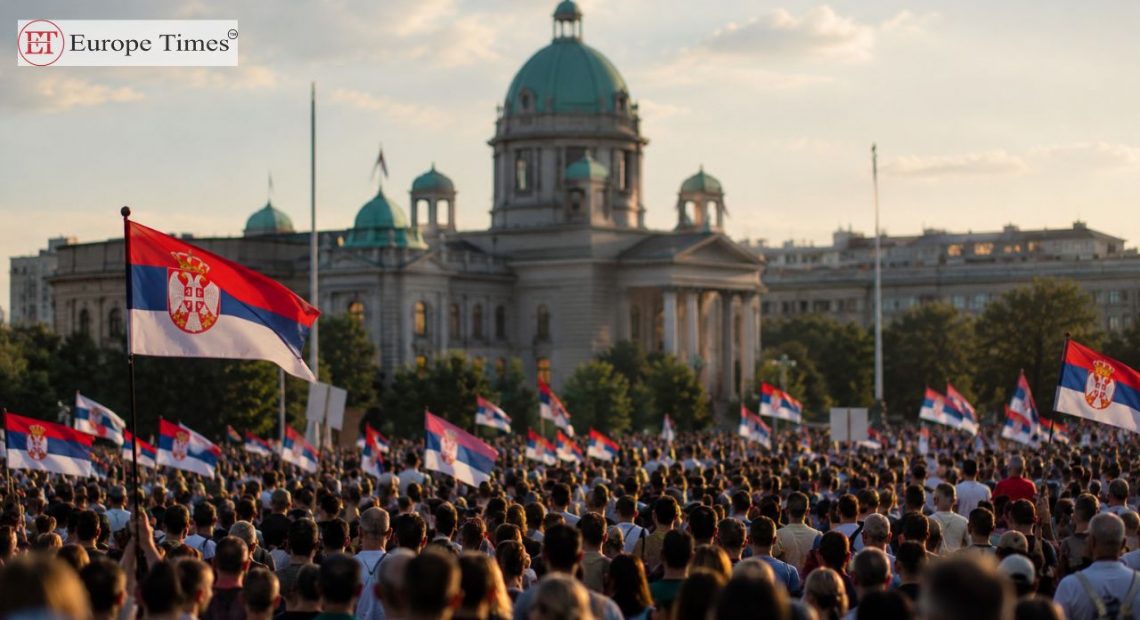
Thousands of Bulgarians gathered once again across Sofia and several other cities, demanding the resignation of Prime Minister Rosen Zhelyazkov’s minority government. Demonstrators accuse the leadership of failing to address widespread corruption and mismanaging key national issues as the country prepares to adopt the euro on January 1. Protesters projected messages like “Resignation” and “Mafia Out” onto the parliament building, signalling growing public frustration.

Despite the government’s decision to withdraw its 2026 draft budget—originally planned in euros—protests have intensified. Critics say the budget would have raised social security contributions and taxes on dividends to fund increased state spending. With Bulgaria experiencing deep political divisions and seven national elections in four years, many citizens insist that true reform must begin with fixing the judicial system.

The pressure mounts ahead of a no-confidence vote in parliament, the sixth attempt to challenge the government since January. Political leaders remain divided: while ruling coalition members vow to stay until eurozone entry, opposition groups say Bulgaria can join the euro even if the government steps down. Protest organisers argue it is time for the country to break free from oligarchic influence and restore normalcy to its political landscape.

Pic courtesy: google/ images are subject to copyright

featured News Trending

France’s former first lady, Carla Bruni-Sarkozy, has been charged in connection with a 2007 election funding scandal involving cash from then Libyan dictator, Col Muammar Gaddafi. French media reports that Bruni-Sarkozy, 56, faces charges of hiding evidence and associating with wrongdoers to commit fraud. She has been placed under judicial control and is prohibited from contacting other accused individuals except her husband, Nicolas Sarkozy. Additionally, she is suspected of concealing witness tampering and attempting to bribe Lebanese judicial personnel, among other violations.

Bruni-Sarkozy’s lawyers told AFP that she is determined to challenge what they describe as an “unfounded decision.”

Nicolas Sarkozy, France’s president from 2007 to 2012, is scheduled to go on trial next year over allegations that he received money from Gaddafi to fund his successful election campaign. He faces charges of corruption, illegal campaign financing, benefiting from embezzled public funds, and membership in a criminal conspiracy, all of which he denies.

The investigation began in 2013, two years after Gaddafi’s son, Saif al-Islam, accused Sarkozy of accepting millions of euros from his father for campaign funding. In 2014, Lebanese businessman Ziad Takieddine supported these claims, stating he had proof of Tripoli’s financial support for Sarkozy’s campaign, amounting to €50 million (£43 million). Takieddine claimed that he personally delivered suitcases filled with cash to Sarkozy and his chief of staff, Claude Guéant. Although Takieddine retracted this statement in 2020, raising suspicions of bribery, Guéant denied the allegations.

In June, Bruni-Sarkozy was found to have deleted messages exchanged with a French businesswoman questioned by police over witness tampering accusations. Since his defeat in the 2012 presidential election, Sarkozy has faced multiple criminal investigations. In 2023, he received a suspended prison sentence for attempting to bribe a judge, and earlier this year, he was found guilty of illegally funding his 2012 re-election campaign.

Carla Bruni-Sarkozy, an Italian-born former supermodel and singer, married Nicolas Sarkozy in 2008, and they have a daughter, Giulia, born in 2011.

Picture Courtesy: Google/images are subject to copyright

News Trending

The United States has accused Russia of violating international laws by allegedly deploying chemical weapons as a method of warfare in Ukraine. Specifically, they claim that Russia used the chemical agent chloropicrin to gain battlefield advantages over Ukrainian forces. These accusations, according to US officials, are not isolated incidents and would breach the Chemical Weapons Convention, to which Russia is a signatory.

However, the Kremlin has rejected these accusations as baseless, asserting that Russia adheres to its obligations under the Chemical Weapons Convention. The Organisation for the Prohibition of Chemical Weapons defines a chemical weapon as a substance used to cause intentional harm through its toxic properties, and chloropicrin falls under this category. The use of chloropicrin in warfare is explicitly prohibited under the Chemical Weapons Convention.

Additionally, there are claims that Russia has also used riot control agents, such as tear gas, during the conflict in Ukraine. President Joe Biden has previously warned Russia against the use of chemical weapons, stating that there would be severe consequences if such actions were taken.

Despite warnings, there have been reports of chemical attacks, with Ukrainian troops reportedly facing increasing instances of exposure to toxic gases. The US has sanctioned individuals and entities linked to Russia’s biological and chemical weapons program in response to these allegations.

There have also been concerns about Russia’s compliance with the Chemical Weapons Convention, with accusations of incomplete declarations of its stockpile. Previous incidents, such as the Salisbury attack and the poisoning of Alexei Navalny, have raised doubts about Russia’s adherence to international agreements.

Amidst these allegations, Russian forces continue their advance in eastern Ukraine, with ongoing fighting around strategic locations. Ukrainian President Volodymyr Zelensky has taken action against allegations of corruption within the Ukrainian Security Service, while Human Rights Watch has called for a war crimes investigation into alleged executions of surrendering Ukrainian troops by Russian forces.

Picture Courtesy: Google/images are subject to copyright

News Trending

Spanish Prime Minister Pedro Sánchez has put his public duties on hold to contemplate whether he should continue leading the government. This decision comes after a court initiated a preliminary inquiry into allegations against his wife, Begoña Gómez. The allegations, raised by the anti-corruption group Manos Limpias, suggest influence peddling and corruption. However, these claims are based on online news articles, prompting doubts about their validity.

Sánchez expressed his intention to make a decision regarding his political future next Monday. He denounced what he perceives as a concerted effort to undermine him politically and personally, particularly targeting his wife. The specific accusations against Begoña Gómez relate to her connections with private companies that received government funds or contracts, including a sponsorship deal involving Globalia and a foundation she was involved with.

The situation is politically charged, with Sánchez’s coalition government relying on support from Catalan separatist parties. This support was secured in exchange for concessions such as an amnesty covering the banned Catalan referendum in 2017. The opposition, particularly the conservative Popular Party, has demanded explanations, but Sánchez maintains his belief in justice despite the mounting pressure.

The situation reflects a complex political landscape in Spain, with implications for both national and regional politics, including the upcoming European Parliament elections and Catalonia’s regional elections.