
featured News Trending

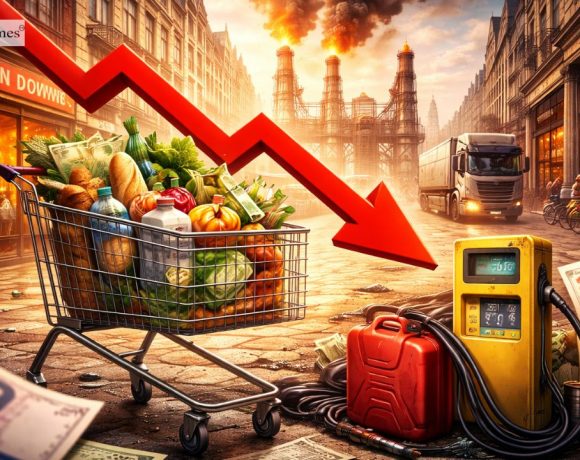
Europe’s retail industry is bracing for renewed pressure as rising energy prices linked to the ongoing U.S.-Israeli conflict with Iran threaten to push operating costs higher. Retail stocks, including Zara owner Inditex and Britain’s Marks & Spencer, fell as investors warned that higher fuel and gas prices could hurt an already fragile sector. The industry has barely recovered from the inflation shock caused by soaring energy costs following Russia’s invasion of Ukraine, while consumer demand across the euro zone and the UK remains weak.

Retailers are particularly vulnerable because energy costs directly affect supply chains and store operations. Transport expenses, which account for about 5% to 10% of a retailer’s operating costs, are expected to rise as fuel prices climb. Supermarkets and shopping centres also face higher electricity expenses for refrigeration, heating, air conditioning and lighting. At the same time, rising oil prices are pushing fertiliser costs higher, adding further pressure on food producers and ultimately driving up prices across the supply chain.

Analysts warn that the sector may struggle to pass on higher costs to consumers because household spending power has already been weakened by years of inflation. Clothing retailers could be especially exposed, as fashion spending is often the first to be cut when essential costs rise. With Europe’s retail and consumer goods sector already among the most financially distressed industries, industry groups are calling on governments to limit additional inflationary pressures and protect consumers from further cost increases.

Pic courtesy: google/ images are subject to copyright

featured News

Black Friday 2025 saw a major shift in shopping behaviour as Americans increasingly chose to shop online rather than line up outside stores in the cold. According to Adobe Analytics, shoppers spent $8.6 billion online by early Friday, with total Black Friday online sales expected to reach nearly $12 billion. The traditional rush outside malls and electronics stores faded, replaced by mid-morning online buying spikes and evening surges. Many shoppers who did venture out said they were more budget-conscious due to a softening labour market and lingering inflation.

Deep discounts and extended online promotions have blurred the boundaries between Black Friday and the rest of Cyber Week. Retailers are spreading deals across multiple days, making online platforms the top hub for bargain hunting. Cyber Monday is expected to set a new record with an estimated $14.2 billion in online spending. At the same time, higher prices driven by inflation and tariff impacts have made shoppers more selective. Data from Salesforce shows average selling prices in the U.S. rising faster than the global average, partly due to tariffs and retailers protecting their margins.

Despite cautious spending, affluent consumers continue to drive strong sales in luxury and high-end categories. Meanwhile, the usual early-morning crowds were noticeably thinner at stores like Walmart and Target, with some offering freebies to draw foot traffic. Labour unrest also shaped the day, with strikes at Amazon warehouses in Germany, protests in Spain, and expanded Starbucks walkouts in the U.S. Overall, Black Friday 2025 reflected a retail landscape where online shopping dominates, consumer behaviour shifts, and economic uncertainty plays a growing role.

Pic Courtesy: google/ images are subject to copyright