featured News Trending

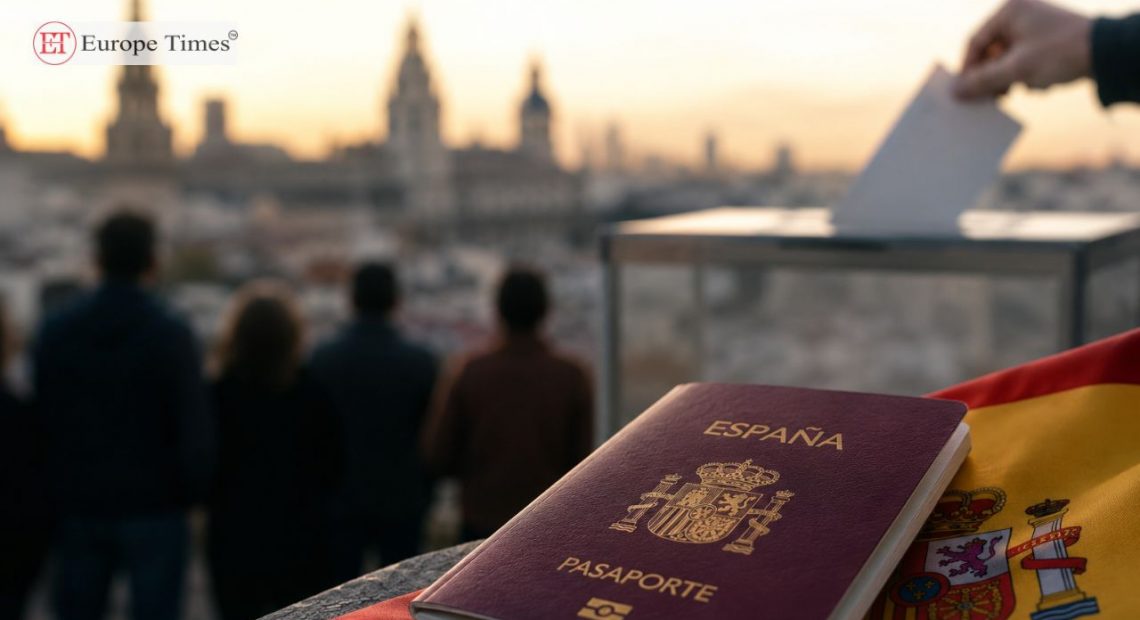
Spain’s citizenship law granting nationality to descendants of Spaniards exiled during the Civil War and the Franco dictatorship has become the center of a political dispute ahead of the country’s next general election. Since the law was expanded in 2022, more than 544,000 people have obtained Spanish citizenship, with over 306,000 registering to vote, while hundreds of thousands of applications are still awaiting approval.
Opposition parties, including the conservative People’s Party (PP) and far-right Vox, have accused Prime Minister Pedro Sánchez’s government of using the citizenship process to influence future election results. They allege, without providing evidence, that the government is strategically processing applications and voter registrations. The government has firmly denied the claims, calling them irresponsible and stating it has no control over where new citizens choose to register to vote.

The legislation extends earlier reparations measures by allowing more descendants of Spanish exiles, as well as people affected by historical discrimination, to claim citizenship. Similar ancestry-based citizenship laws exist in several European countries. While overseas voting has traditionally been low, the growing number of new citizens has intensified debate over the potential political impact of Spain’s expanding diaspora electorate.

Pic courtesy: google/ images are subject to copyright

featured News Trending

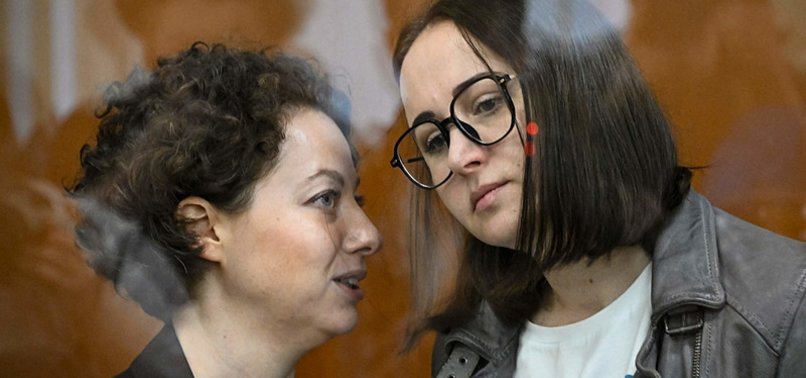
A Russian playwright and a theatre director have been convicted of “justifying terrorism” by a Moscow military court. Director Yevgenia Berkovich and playwright Svetlana Petrichuk received six-year sentences for their play, The Brave Falcon Finist. The play, loosely inspired by real events, depicts Russian women traveling to Syria during the civil war to marry Islamic State fighters.

Their defense lawyer has pledged to appeal the verdict. The trial, held partially behind closed doors, has raised concerns about artistic freedom in Russia. In addition to their prison sentences, both women are barred from “administering websites” for three years post-release. They have been in custody since May 2023 and will now be sent to a penal colony, as reported by RBC.

Prosecutors argued that the play conveyed a positive view of IS, with prosecutor Yekaterina Denisova highlighting “signs of justification of terrorism” in the content. At the trial’s outset, Berkovich, 39, and Petrichuk, 44, stated that they created the play to oppose terrorism, expressing strong condemnation of terrorists. Berkovich emphasized her lack of affiliation with any form of Islam, particularly radical forms.

Throughout the trial, both women asserted their innocence. Defense lawyer Ksenia Karpinskaya condemned the trial as “absolutely illegal” and “unfair,” committing to appeal despite having “little hope.” She emphasized the innocence of both women.

Supporters suggest Berkovich’s prosecution may be linked to her critical poems about Russia’s military actions in Ukraine. Since the 2022 invasion of Ukraine, Russia’s artistic community has faced growing pressure from the Kremlin. Notable Russian figures, including newspaper editor Dmitry Muratov and actress Yulia Peresild, have expressed support for Berkovich and Petrichuk.

The Brave Falcon Finist, which debuted in 2020, won two Golden Mask Theatre Awards for best playwright and best costumes. Recently, Russia has experienced deadly Islamist militant attacks in Moscow and Dagestan, with the Kremlin making unproven claims of Ukraine’s involvement.

Picture Courtesy: Google/images are subject to copyright

News Trending

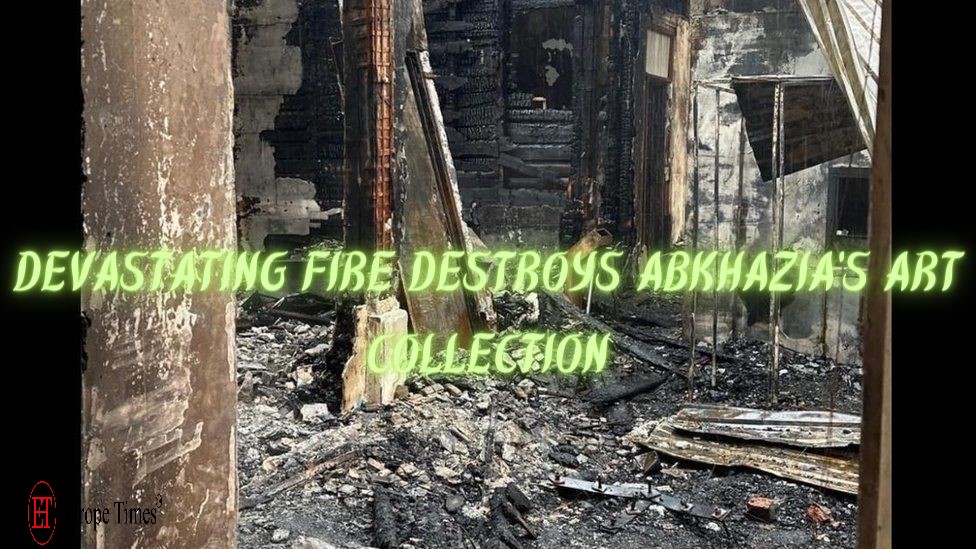
A devastating fire has ravaged the majority of Abkhazia’s art collection in the National Art Gallery in Sukhumi, the capital of the breakaway region controlled by Russia. The blaze, which destroyed over 4,000 paintings, is suspected to have originated from an electrical short circuit in the early 20th-century wooden building that housed the valuable collection. Among the lost artworks were 300 pieces by the renowned artist and stage designer Alexander Chachba-Shervashidze. The gallery’s director, Suram Sakanya, lamented the irreparable loss, emphasizing that the collection had withstood Abkhazia’s civil war with Georgia in the 1990s.

Local artists had long advocated for a more suitable storage location, and a video before the fire revealed cramped rooms with insufficient protection for the paintings. Abkhazia, receiving support from Moscow, is situated in the north-western corner of Georgia and shares a border with Russia. Despite the region’s declaration of independence in 1999 after a war of secession with Georgia, it lacks widespread international recognition. Following the Georgian-Russian war in 2008, Moscow recognized Abkhazia as an independent state, while Georgia contends that Russia occupies the region.

Georgian President Salome Zourabichvili expressed sorrow over the tragedy, attributing it to the neglect of cultural identity by both the de facto leadership and Russian occupants. Russia has pledged to dispatch specialists to Sukhumi to aid in the restoration of the surviving 150 paintings rescued from the fire.

Picture Courtesy: Google/images are subject to copyright