featured News Trending

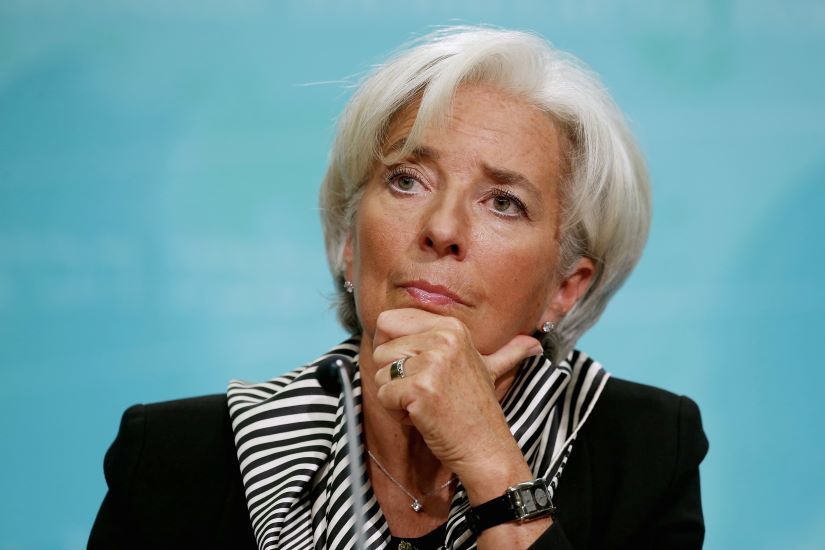
European Central Bank (ECB) President Christine Lagarde has said she cannot completely rule out leaving her position before the end of her term in October 2027 if she decides to play a role in French politics. In an interview with French newspaper Les Échos, Lagarde said it was “possible” she could depart early, adding that she believes a strong European voice should be part of France’s presidential debate.

However, Lagarde dismissed suggestions that she is preparing to run in France’s presidential election next spring. When asked whether she would support a candidate or become one herself, she initially joked that she would “reflect on it” before clarifying that such a move is “not currently on the agenda.” She emphasized that her priority would be to contribute a European perspective to France’s political discussions rather than pursue elected office.

Lagarde reiterated the importance of France remaining firmly anchored within Europe, arguing that the country’s economic future depends heavily on its role within the European Union. She said she would speak with both a French and European voice, stressing that France must play a decisive role in shaping the continent’s economic future while maintaining strong European cooperation.

Pic courtesy: google/ images are subject to copyright

featured News Trending

U.S. Federal Reserve Chair Kevin Warsh made his first major international appearance at the European Central Bank’s annual forum in Sintra, Portugal, joining ECB President Christine Lagarde, Bank of England Governor Andrew Bailey and Bank of Canada Governor Tiff Macklem. The discussion focused on the shared challenge of bringing inflation under control, while also highlighting differing views among central banks on issues such as climate change and central bank independence.

Warsh, who assumed office in late May, has adopted a hawkish stance on inflation, keeping U.S. interest rates unchanged during his first policy meeting while reaffirming the Federal Reserve’s commitment to its 2% inflation target. His comments raised expectations that the Fed could consider another rate hike later this year. Unlike previous Fed leaders, Warsh has also reduced the use of forward guidance, arguing that markets should rely less on central bank signals and more on economic data.

The event also drew attention to broader policy differences between the Federal Reserve and its global counterparts. While European and Canadian central bankers continue to consider climate change as an important financial risk, Warsh has argued that the Fed should avoid expanding beyond its core mandate. The panel also came amid renewed debate over the Federal Reserve’s independence following recent legal developments involving Fed Governor Lisa Cook, although Warsh has largely avoided commenting publicly on the issue.

Pic courtesy: google/ images are subject to copyright

featured News Trending

European Central Bank President Christine Lagarde is reportedly considering an early departure from her post, potentially before France’s 2027 presidential election. The move, cited by the Financial Times, would allow outgoing President Emmanuel Macron to have a say in selecting her successor, as a far-right victory next year could complicate the choice. ECB officials, however, insist Lagarde remains focused on her current term and has made no final decision.

France, as the eurozone’s second-largest economy, traditionally plays a major role in appointing ECB leadership, with Germany also influencing the selection. Potential successors include Klaas Knot, Pablo Hernández de Cos, and Joachim Nagel, all mainstream central bankers expected to maintain policy continuity. Lagarde’s early exit could also accelerate appointments for other key ECB executive roles, including chief economist Philip Lane and market operations head Isabel Schnabel.

The news follows the early resignation of François Villeroy de Galhau, enabling Macron to influence domestic central bank appointments. Despite political maneuvering, markets remain calm, with inflation stable and interest rates neutral, making the ECB’s current policy environment relatively stable and predictable. Analysts warn, however, that attempts to preempt a far-right government could have unintended political consequences.

Pic courtesy: google/ images are subject to copyright

News Trending

The European Union has become the second major economy this week to reduce its lending rate, indicating progress in addressing inflation. The European Central Bank (ECB) cut its main interest rate from a record high of 4% to 3.75%, following Canada’s decision to lower its official rate on Wednesday. This decision coincides with EU-wide elections, reflecting public discontent over living costs.

ECB President Christine Lagarde stated that the inflation outlook has significantly improved, allowing for the rate cut. However, she cautioned that inflation would likely remain above the 2% target “well into next year,” averaging 2.5% in 2024 and 2.2% in 2025. Lagarde emphasized that the ECB would maintain a restrictive interest rate policy as needed to achieve the 2% target, without committing to a specific rate trajectory.

Lindsay James, investment strategist at Quilter Investors, noted that the rate cut was anticipated but still a relief for European consumers and businesses. She mentioned that the ECB’s move precedes potential cuts by the Bank of England and the US Federal Reserve, providing needed economic stimulus.

Despite a slight increase in inflation in May to 2.6% from 2.4% in April, the ECB decided to reduce rates. This follows Canada’s reduction from 5% to 4.75% after their inflation fell to 2.7%. Sweden and Switzerland have also made similar rate cuts.

Lagarde provided a positive economic outlook for the eurozone but warned of challenges such as geopolitical tensions and climate-related risks that could impact growth. Katherine Neiss, chief European economist at PGIM, expressed confidence in further ECB rate cuts over the summer or autumn, potentially lowering eurozone rates to 3.5% or less by year-end. She cited sluggish economic recovery, slowing inflation, and easing wage growth as justification for additional cuts.

In the UK, speculation exists that the Bank of England might reduce rates as early as this month, with inflation down to 2.3% from its peak over 11% in late 2022. The International Monetary Fund recommended cutting UK rates from 5.25% to 3.5% by year-end. However, George Godber from Polar Capital suggested that the upcoming UK election could complicate the Bank’s rate decision on June 20, as political considerations might influence the outcome.

The US Federal Reserve is also expected to reduce rates soon, with the current US inflation rate at 3.4%. Godber predicted that the Fed would act before the November election.

Picture Courtesy: Google/images are subject to copyright

News Trending

The G7 finance ministers are set to discuss whether Ukraine can receive an additional €30 billion loan from seized Russian assets totaling €270 billion. This proposal has sparked division within the G7, particularly between the US and Germany. While some advocate for full asset seizure, others, including Christine Lagarde, ECB president, raise legal and economic concerns.

The US and UK propose mobilizing the frozen assets to provide a substantial loan to Ukraine, with interest paid from the profits of the seized Russian assets. They argue this approach avoids the need for asset confiscation, which could disrupt the international legal order and financial stability.

Belgium, holding the largest share of Russia’s frozen assets within the G7, has already generated significant investment income from these assets. It has agreed to allocate a portion of this profit to a joint G7 fund for Ukraine.

Critics argue that using the assets as collateral for a loan effectively amounts to confiscation. However, some legal scholars suggest that under the doctrine of state countermeasures, seizure may be justified.

Overall, there is contention over whether to provide Ukraine with a substantial loan using the seized assets, with concerns about legal implications and potential repercussions for financial stability and international relations.

Picture Courtesy: Google/images are subject to copyright