
featured News Trending

European industrial companies have warned that proposed changes to the European Union’s Emissions Trading System (ETS) could weaken incentives for businesses that have invested heavily in low-carbon technologies. Firms including SSAB, Heidelberg Materials, and Rockwool argue that easing carbon pricing or expanding free emissions permits would unfairly benefit higher-polluting competitors and reduce the value of early investments in cleaner production.
The European Commission is expected to present its revised ETS proposal on July 15 as part of efforts to align climate policies with the EU’s 2040 emissions targets. However, several political leaders have pushed for a softer approach, citing rising energy costs and concerns over industrial competitiveness. Companies such as BASF, ArcelorMittal, and thyssenkrupp have urged policymakers to address mounting carbon costs while maintaining a balanced approach.

Industry leaders and investors caution that weakening the ETS could undermine confidence in Europe’s climate strategy and discourage future investment in green technologies. They argue that long-term policy stability is essential for financing low-carbon innovation, warning that changes to the carbon market will not solve broader challenges such as high energy prices, infrastructure shortages, and global competition.

Pic courtesy: google/ images are subject to copyright

featured News Trending

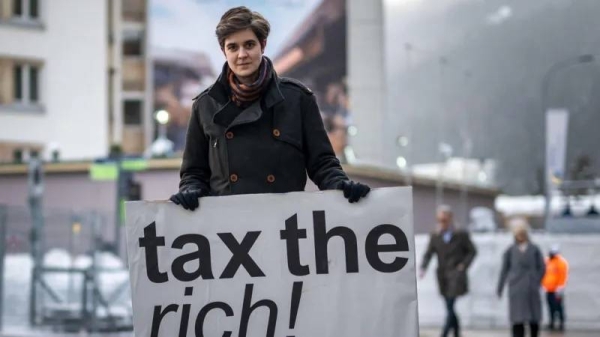
A citizens’ group has decided how to distribute the fortune of Marlene Engelhorn, an Austro-German heiress. Earlier this year, Engelhorn established a panel of 50 individuals to determine how to allocate the millions she inherited from her grandmother. The funds will benefit 77 organizations, including social and climate groups, as well as notable left-wing entities.

Marlene Engelhorn, 32, gained attention in January for announcing her intention to donate €25 million (£21 million), the majority of her inheritance. As a descendant of Friedrich Engelhorn, the founder of the German chemical and pharmaceutical giant BASF, Engelhorn is a vocal proponent of wealth redistribution. She selected a panel, chosen by a pollster to reflect Austrian society, to decide the fate of her inheritance.

From March to June, the group convened over six weekends in Salzburg to devise a plan for the money. They decided it should be distributed to 77 various organizations, charities, and think tanks, addressing issues like environmental protection, education, integration, health, social matters, poverty, homelessness, and affordable housing in Austria. Donations range from €40,000 (£33,400) for climate change data-based reporting to €1.6 million for the Austrian Nature Conservation Federation. A million euros were allocated to the left-wing Momentum Institute and Attac Austria, an opponent of neoliberal economic policies and deregulated financial markets. Religious charities, including projects by the Catholic aid organization Caritas, also received funds. In most cases, the donations will be distributed over several years.

The youngest panel member, 17-year-old student Kyrillos Gadalla from Vienna, expressed that he had “learnt a lot” from the experience. In her statement, Engelhorn emphasized that her inherited wealth, which gave her unearned power, contradicts democratic principles and has now been redistributed according to democratic values.

Engelhorn inherited millions following the death of her grandmother, Traudl Engelhorn-Vechiatto, in September 2022. Traudl’s wealth was estimated by Forbes at $4.2 billion (£3.3 billion; €3.8 billion). Even before her grandmother’s passing, Engelhorn declared her intention to donate a substantial portion of her inheritance. While the exact amount she retains is unknown, she previously stated in 2021 that she planned to give away at least 90% of her wealth, as she had not earned it and merely benefited from a “birth lottery.” Engelhorn has also advocated for the reinstatement of inheritance tax in Austria, which was abolished in 2008, making Austria one of the few European countries without such a tax.

Picture Courtesy: Google/images are subject to copyright

News Trending

Marlene Engelhorn, a 31-year-old Austro-German heiress residing in Vienna, is taking a unique approach to wealth redistribution. Inheriting a substantial fortune from her grandmother, Traudl Engelhorn-Vechiatto, who was valued at $4.2 billion, Marlene aims to address the inequality exacerbated by the absence of inheritance tax in Austria since 2008. Motivated by a sense of responsibility, she has initiated the Good Council for Redistribution, inviting 10,000 randomly selected Austrians over 16 to participate in deciding how €25 million of her inheritance should be allocated.

The Good Council for Redistribution seeks to assemble a diverse group of 50 individuals, spanning various age groups, federal states, social classes, and backgrounds. This citizen-led initiative, supported by the Foresight Institute, aims to foster inclusivity and collaborative decision-making. Participants will engage in a series of meetings held in Salzburg from March to June, where they will work with academics and civil society organizations to explore and develop solutions beneficial to society as a whole.

The unique aspect of this initiative lies in its commitment to inclusivity and fairness. The meetings will be barrier-free, offering childcare and interpreters as needed. Participants will receive financial compensation of €1,200 for every weekend they attend, recognizing the value of their contributions. Marlene Engelhorn emphasizes that she is entrusting her assets to the chosen council without holding veto rights, demonstrating a genuine commitment to involving citizens in the decision-making process.

Despite the initiative’s noble intentions, Austria’s stance on inheritance tax remains a contentious issue. The abolished tax, in place for 16 years, has drawn criticism, with the Social Democrats advocating for its reinstatement. However, the conservative People’s Party, currently the senior partner in Austria’s coalition government with the Greens, rejects this proposal, emphasizing their commitment to reducing taxes and increasing citizens’ net income. The future of wealth redistribution in Austria, both through citizen initiatives and potential policy changes, remains a topic of ongoing debate.

Picture Courtesy: Google/images are subject to copyright