
featured News Trending

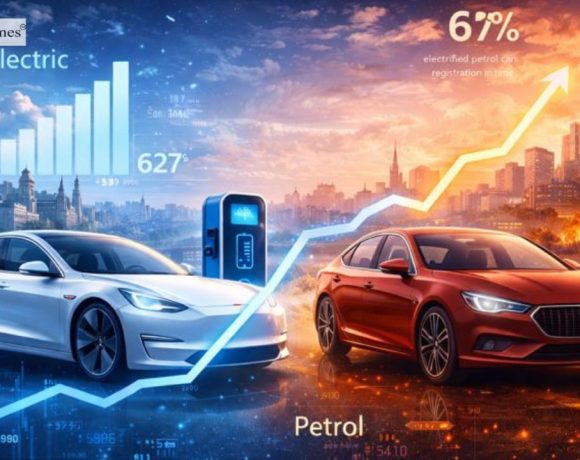
Sales of fully electric cars in the European Union surpassed petrol vehicle sales for the first time in December, according to data from industry body ACEA. Battery-electric vehicle registrations also exceeded petrol sales across the wider European market, including Britain and Norway, as overall car sales posted a sixth consecutive month of year-on-year growth. Electrified vehicles—including battery-electric, plug-in hybrid and hybrid models—accounted for 67% of all EU registrations during the month.

The shift comes amid intensifying competition from Chinese automakers such as BYD, Geely and Changan, which are rapidly expanding their presence in Europe, challenging domestic manufacturers like Volkswagen and BMW. At the same time, EU policymakers have proposed easing emissions rules, including plans announced in December to drop an effective 2035 ban on combustion-engine cars, responding to pressure from carmakers facing profitability challenges and global trade headwinds.

Despite regulatory uncertainty, analysts and industry leaders expect electric vehicles to continue gaining market share. European brands are rolling out more affordable EV models, supported by fresh national incentive schemes. While analysts note that some decline in petrol sales reflects reclassification into mild hybrids, experts say the milestone signals a turning point, even if it may still take several years for pure electric cars to fully overtake combustion-engine models across Europe.

Pic courtesy: google/ images are subject to copyright
featured News Trending

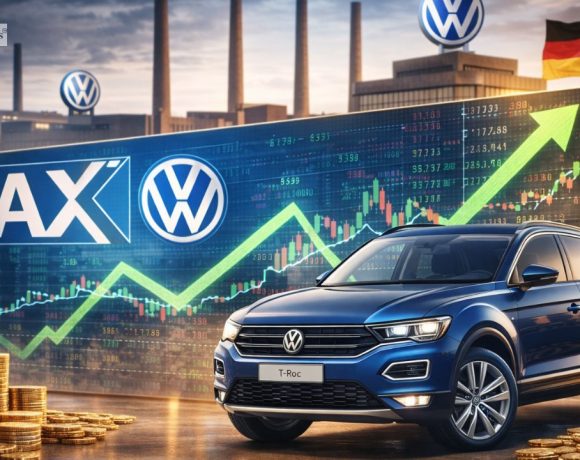
Volkswagen shares climbed to the top of Germany’s DAX index on Thursday after the carmaker reported stronger-than-expected automotive cash flow for 2025. Europe’s largest automaker said its automotive division generated net cash flow of about 6 billion euros, well above its own forecast of around zero, boosting investor confidence and driving the stock up 4.6% in morning trading.

The result marked a 1 billion-euro improvement from the previous year and exceeded market expectations, with analysts noting that while management had hinted at possible upside, the scale of the beat was a surprise. Broader sentiment toward the sector was also supported by easing trade concerns after U.S. President Donald Trump stepped back from threats of tariffs against European allies, reducing near-term risks for exporters.

Despite the upbeat performance, Volkswagen cautioned that challenges remain. The company expects pricing conditions to stay tight and profits from its China joint venture to decline in 2026 before recovering in 2027. Shares across the European auto sector rose in sympathy, while Volkswagen is set to publish its full-year 2025 results and 2026 outlook on March 10.

Pic courtesy: google/ images are subject to copyright
featured News

Wingtech Technology, the Chinese parent company of Dutch chipmaker Nexperia, has invited the court-appointed custodians of Nexperia to discuss control of the company—seen as a potential first step toward easing months of internal tensions. The rift between Nexperia’s European management and its Chinese parent deepened after the Dutch government intervened in September, leading to a court ruling that removed Wingtech founder Zhang Xuezheng as CEO over concerns he intended to shift production to China.

Although both sides have signaled interest in dialogue, they disagree on the agenda. Nexperia says it wants talks focused on restoring normal supply chain operations, which have been hit by wafer shipment stoppages, unpaid invoices and growing chip shortages that have affected global automakers. Wingtech, however, insists discussions must first address the restoration of its ownership rights and lawful control over the company.

Court-appointed custodian Arnold Croiset van Uchelen confirmed receiving Wingtech’s invitation but declined to share details of any upcoming meeting. Meanwhile, Nexperia’s Chinese packaging arm has declared itself independent and is seeking Chinese-made wafers, while the European unit has halted shipments to China. With dwindling chip inventories, the auto industry fears fresh shortages may emerge as early as January.

Pic courtesy: google/ images are subject to copyright
featured News

Semiconductor maker Nexperia has restarted some chip deliveries after weeks of disruption caused by a dispute between the Netherlands and China over technology transfers. German officials welcomed the signs of “de-escalation,” expressing hope that temporary permits would soon restore supply to Europe’s major automotive industry.

Germany’s Aumovio has secured exemptions from Chinese export controls, becoming the first supplier to confirm resumed access to Nexperia chips. Honda also reported progress, saying shipments in China had begun and production at affected plants in North America could restart as early as next week, though uncertainty remains.

Nexperia, which is Chinese-owned but headquartered in the Netherlands, produces essential components for car electronics. Suppliers had warned they might furlough workers if shortages continued. While Nexperia expects product flows to normalize soon, European automakers like Volkswagen remain cautious, warning that chip constraints could still threaten output into 2025.

Pic Courtesy: google/ images are subject to copyright