
News Trending War

EU leaders have urged the establishment of “corridors and pauses” to ensure the delivery of crucial humanitarian aid to Gaza. Following lengthy discussions in Brussels, the leaders issued a joint statement emphasizing the necessity of safe and unimpeded access. Disagreements among member states had previously centered on the duration and structure of these pauses, with some advocating for a longer, singular cessation of hostilities.

In response to Hamas’s attack that led to significant casualties, Israel initiated airstrikes and imposed blockades on essential supplies, exacerbating the humanitarian crisis. The health system in Gaza, operated by Hamas, has been strained to the brink, with a large number of casualties and a shortage of functioning medical facilities.

Although the aid reaching Gaza has been limited, the recent statement from the EU leaders represents a compromise among the diverse views of the 27 member states. The use of “humanitarian pauses” as brief intervals aims to allow the EU to work with regional partners to provide essential resources without being exploited by terrorist organizations, as clarified in the statement.

The decision to use the term “pauses” rather than “pause” was a result of delicate negotiations. The former was considered less likely to imply a permanent ceasefire, thereby acknowledging Israel’s right to self-defense. Notably, certain member states, including Hungary, Austria, the Czech Republic, and Germany, which holds a strong pro-Israel stance, played a significant role in shaping the statement’s wording.

While some countries expressed disappointment at the absence of a specific call for a ceasefire, there was approval for the addition of a new line supporting the organization of an international peace conference. The proposed conference aligns with the Spanish caretaker Prime Minister Pedro Sánchez’s earlier call for an international peace summit to address the long-standing conflict in the region.

Given that the EU lacks military authority, its influence is primarily diplomatic, focusing on diplomatic pressure and the provision of aid. Despite the EU’s efforts, Benny Gantz, a member of Israel’s war cabinet, asserted that Israel would continue to make autonomous decisions regarding its actions in Gaza, based on its national interests.

Picture Courtesy: Google/images are subject to copyright

News Trending

Austria’s former Foreign Minister, Karin Kneissl, known for her pro-Russian stance, is relocating to St. Petersburg, Russia, accompanied by her two ponies.

Karin Kneissl had previously been residing in Lebanon but left her government position amid a scandal involving the far-right Austrian party that appointed her.

She explained that her ponies were transported to St. Petersburg via a Russian military transport plane from Syria.

Ms. Kneissl disclosed that her decision to move to Russia was driven by her role in managing a think tank at St. Petersburg University, which she co-founded. She emphasized the dedication required for this work and her inability to carry it out remotely.

When asked about her move to Russia’s second-largest city, she declined to provide further comment. However, on social media, she mentioned that her stay in Lebanon had been temporary “to survive” while she commuted to Russia for teaching.

Ms. Kneissl is renowned for her love of animals and cited sanctions against Syria and the security situation there as the reasons for using a military transport plane to bring her ponies and belongings to Russia.

The Leningrad region’s veterinary department confirmed that the ponies had undergone examinations and were placed in quarantine.

Karin Kneissl served as Austria’s Foreign Minister from 2017 to 2019, appointed as an independent by Austria’s far-right Freedom Party, which has close ties to Russia.

She gained international attention in 2018 when she invited Russian President Vladimir Putin to her wedding in southern Austria, with photographs showing her dancing with him.

Ms. Kneissl announced her move to Russia while attending the Eastern Economic Forum in Vladivostok, an annual event aimed at encouraging investment in Russia’s far east. During the forum, she was seen appearing to fall asleep while listening to President Putin’s keynote speech.

Karin Kneissl is a regular commentator on the Russian state-backed news channel RT and served as a board member of the state-owned oil company Rosneft.

She left Austria in 2020, citing death threats and a de facto ban on working in the country.

Her departure followed the collapse of the government coalition between the conservatives and the far-right Freedom Party in 2019, triggered by a scandal involving FPÖ leader Heinz Christian Strache, who was filmed allegedly promising government contracts to a woman posing as a niece of a Russian oligarch at a villa in Ibiza.

Currently, the Freedom Party is in opposition but leads in opinion polls, making it a strong contender in upcoming elections. Its new leader, Herbert Kickl, has criticized EU sanctions against Russia, blaming them for the rising cost of living.

Peter Gridling, Austria’s former spymaster from 2008 to 2020, expressed concerns about the Freedom Party’s ties with Russia and warned that the party had not severed its connections with the Kremlin.

Vienna, Austria’s capital, has a longstanding tradition as a hub for espionage, which persists to this day.

Picture Courtesy: Google/images are subject to copyright

Food News Trending

In a small room near the Alps in northern Italy, millions of crickets are being processed to become food despite initial resistance. The crickets are frozen, boiled, dried, and pulverized to create a light brown flour used in various food products such as pasta, bread, energy bars, and even sports drinks. Italy, known for its culinary traditions, has traditionally resisted the idea of eating insects, with the government even taking steps to ban their use in pizza and pasta production. However, several Italian producers have been experimenting with cricket-based pasta, pizza, and snacks.

The shift towards insect consumption in Italy is driven by sustainability concerns. Insect farming requires significantly less water and land compared to traditional livestock farming, making it a more environmentally friendly option. Insects are also rich in vitamins, fiber, minerals, and amino acids, making them a nutritious superfood. However, the main challenge to widespread adoption of insect-based food is the price, as it remains more expensive than traditional alternatives.

In addition to cost, social acceptance plays a role in the resistance to insect food in Italy. The country prides itself on its Mediterranean diet, and some view insect products as a threat to Italian culinary traditions. Concerns about the potential health effects of consuming insects and the fear of deviating from established eating habits contribute to the opposition.

Italy is not the only country divided on the issue of insect food. Poland and other European countries have seen debates and political disputes surrounding the topic. However, countries like Austria, Belgium, and the Netherlands have shown more openness to insect consumption.

As the global population continues to grow, finding sustainable food sources becomes crucial. Insect consumption is seen as a potential solution to meet the rising demand while minimizing the environmental impact. With the recent approval of insect consumption by the EU, the insect food sector is expected to grow, leading to potential price reductions and increased availability.

Producers like Ivan Albano, who runs the Italian Cricket Farm, see insect farming as an environmentally friendly and sustainable practice that could play a role in addressing global food challenges. Despite initial resistance, more people are showing curiosity and ordering cricket-based products, indicating a shifting mindset towards insect consumption. The hope is that as awareness and acceptance increase, insect food will become a viable option to feed the growing population while minimizing ecological impact.

Picture Courtesy: Google/images are subject to copyright

News Trending

Central Europe, including Germany, Austria, and Switzerland, has been hit by severe storms and heavy rainfall, leading to significant damage and disruptions. Many towns and cities in the region have experienced torrential rain, causing floods and forcing the closure of numerous roads.

The rail traffic has also been affected, with the Hamburg-Berlin line and a major north-south line between Kassel and Goettingen being closed due to storm damage. Switzerland has also faced thunderstorms, resulting in numerous calls to the fire department.

Strong winds reaching speeds of up to 135 km/h have uprooted trees, damaged roofs, and street infrastructure, although no casualties have been reported. Austria has witnessed several landslides that have affected homes, and the state of Carinthia experienced large hailstones of up to 8 centimeters in diameter, causing significant damage to crops.

Videos circulating on social media show violent storms and flooded streets, including the complete submersion of the forecourt and road in front of the Kassel-Wilhelmshöhe ICE train station.

Picture Courtesy: Google/images are subject to copyright

News Trending

Austrian police have prevented an attack on Vienna’s annual Pride parade by apprehending three suspects believed to have ties to Islamic extremism. The individuals, aged 14, 17, and 20, are Austrian citizens of Bosnian and Chechen descent. According to Omar Haijawi-Pirchner from Austria’s State Protection and Intelligence Directorate (DSN), the suspects had become radicalized online and held sympathies for ISIS.

Haijawi-Pirchner emphasized that hate and terrorism have no place in a democratic society. Gerhard Pürstl, the state police president, highlighted that both Islamic and right-wing extremists pose a significant threat to the LGBTQ community. He referenced previous violent incidents during similar events worldwide and in Europe.

The DSN had prior knowledge of the suspects’ alleged plans and closely monitored them. The arrests were made before the parade by Austria’s Cobra special forces. The Interior Ministry’s statement assured the public that attendees were never in danger. Authorities conducted searches in Vienna and lower Austria, resulting in the confiscation of prohibited weapons.

The Rainbow Parade is a prominent part of Vienna Pride, Austria’s largest LGBTQ event, held annually from June 1 to 18. This year, the parade drew approximately 300,000 participants.

Picture Courtesy: Google/images are subject to copyright

News Trending

Authorities in Austria are investigating a 32-year-old woman for the alleged attempted murder and torture of her 12-year-old son. The shocking case came to light recently and has sparked widespread outrage in the country. The woman has been in pre-trial detention in Krems, located northwest of Vienna, since November.

The alarm was raised by a social worker, and when authorities arrived, they found the child comatose and suffering from hypothermia. The father, who lives separately, had reportedly tipped off the authorities. The boy, who had been subjected to months of torture, was severely malnourished and had a body temperature of just 26.8°C. He was immediately taken to the hospital, and the mother was arrested the following day.

According to police spokesman Johann Baumschlager, the woman is suspected of locking her son in a small dog cage, exposing him to sub-zero temperatures, and depriving him of food. She allegedly doused him with cold water multiple times a day while keeping the apartment’s windows open for several hours in freezing temperatures. The physical health of the boy has since improved, but he continues to suffer severe psychological trauma.

In late May, the Supreme Court of Justice rejected the woman’s complaint against her prolonged custody. The investigation is ongoing and is expected to continue until late summer, at which point a decision regarding an indictment will be made.

Picture Courtesy: Google/images are subject to copyright

News Trending

The Adelboden resort in Switzerland has been holding its breath as temperatures touched a record high of 20C on January 1st, the hottest recorded north of the Alps.  The normal snowy slopes were actually dirt and grass, raising concerns about whether the ski World Cup would go place the following weekend.

It was warm even at 2,000 metres (6,500 feet), which is above freezing. In the end, it was decided to use the renowned Chuenisbärgli piste for the major slalom competitions.

It required an army of snow cannons and a little drop in temperature at the top of the run to make it happen. However, they will be skiing on synthetic snow when the best male skiers in the world sprint across the finish line.

The start of the ski season has been seriously hampered by the extremely warm and rainy weather across the Alps.

It’s called a snow scarcity or Schneemangel in German. Additionally, there is a term for when there is an abundance of snow: das Weisse Gold, or white gold. It serves as a reminder of how many mountain communities rely on winter sports for their economic survival. They are being forced to reconsider in January.

The ski resorts near Salzburg last received snow in Austria a month ago. Due to a lack of water to feed them, the snow cannon at Chamonix, France, are not in service. Some resorts in Switzerland have even begun to expose their summer bicycle routes in lieu of attempting to offer winter sports. Others have simply stopped operating their ski lifts.

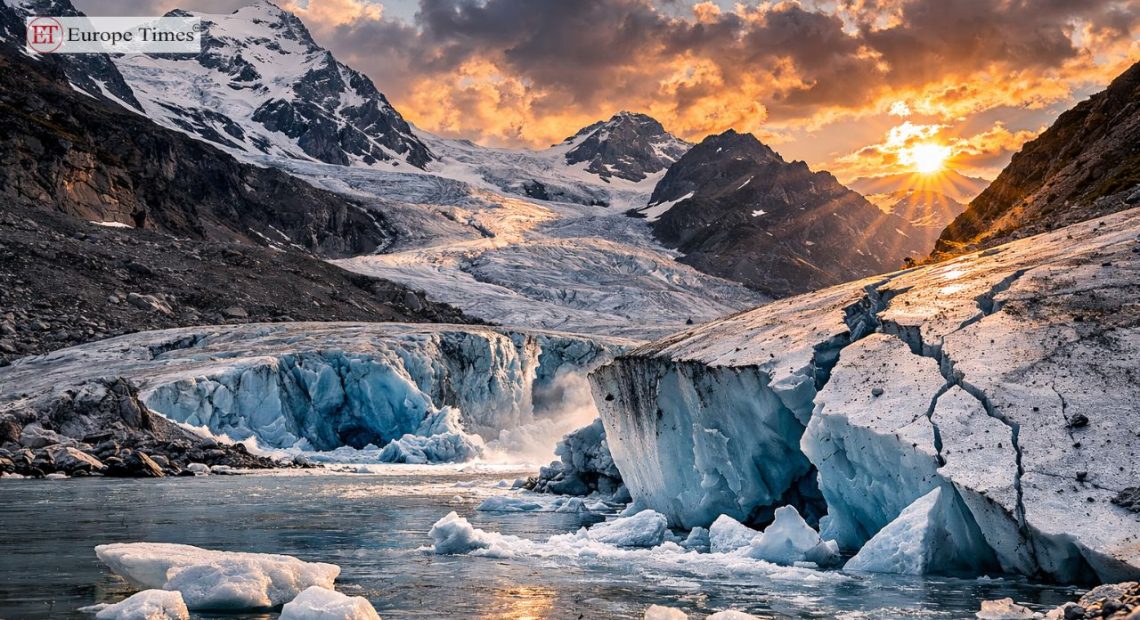
Experts on climate suggest that we shouldn’t be shocked by the weather this January. Winters will get warmer and wetter due to global warming, they have long predicted. The rate at which ski resorts lose their viability, however, appears to be increasing, much like the Alpine glaciers’ diminishing.

Picture Courtesy: Google/images are subject to copyright

News

The European country of Austria has admitted that it failed to follow up the warning given by Slovakia over the gunman who carried out a deadly terror attack in the city of Vienna.

The attack left as many as four people killed. It also left more than 23 people injured. The brutal attack occurred on Monday.

The attacker was killed few minutes after he had carried out the attack in the city of Vienna.

As per a statement released by Slovenia police, days before the gunman carried out the attack, he had travelled to Slovenia to purchase a gun.

According to the statement, he returned to Austria emptyhanded from the country as he could not purchase a weapon from the country.

Slovenia has strict gun laws.   

The gunman was just 20 years old.

The attack which took place in the city of Vienna was the most serious attack the city witnessed in recent past.

Photo Courtesy: Google/ images are subject to copyright 

News

The European country of Austria has issued serious travel warnings for the whole of the Western Balkans.

Meanwhile, in an unusual move, the European Union has added two of the six states in the same region to a safe list.

Notably, some Balkan states in the region are seeing a spike in cases.

As per a recent arrangement, the European Union has agreed to reopened its borders with Serbia and Montenegro.

The category-six warning affects all travel to the Western Balkans and recommends that Austrians return from the countries involved immediately.

Those coming back will either face a 14-day quarantine or must show proof of a negative Covid-19 test.

As per a latest report, the UK, Portugal, Sweden and Turkey are also subject to Austria’s highest warning level in Europe.

It remains unclear how the European Union and its member countries will react to the action taken by the Northern European country.

Photo Courtesy: Google/ images are subject to copyright 

News

The European country of Austria, in which the house of infamous dictator Adolf Hitler is located, has decided to turn his house into a police station.

It is an effort to eliminate the capability of the site to attract neo-Nazis and to prevent the transformation of the site as a meeting point of neo-Nazis.

The building was recently purchased by the Austrian government using a compulsory purchase order following a lengthy legal battle.

The transformation is expected to complete in few months itself. Probably in November, the inauguration of the proposed police station may happen.

As per a report published in an International media, an Austrian architecture firm will carry out the changes.

Hitler is one of the most fearful leaders the world has ever seen. Though the Nazi movement was stopped with the defeat of Germany in the Second World War, its supports still remain strong in certain pockets across Europe – particularly in Germany and Austria.

Photo Courtesy: Google/ images are subject to copyright