
featured News Trending

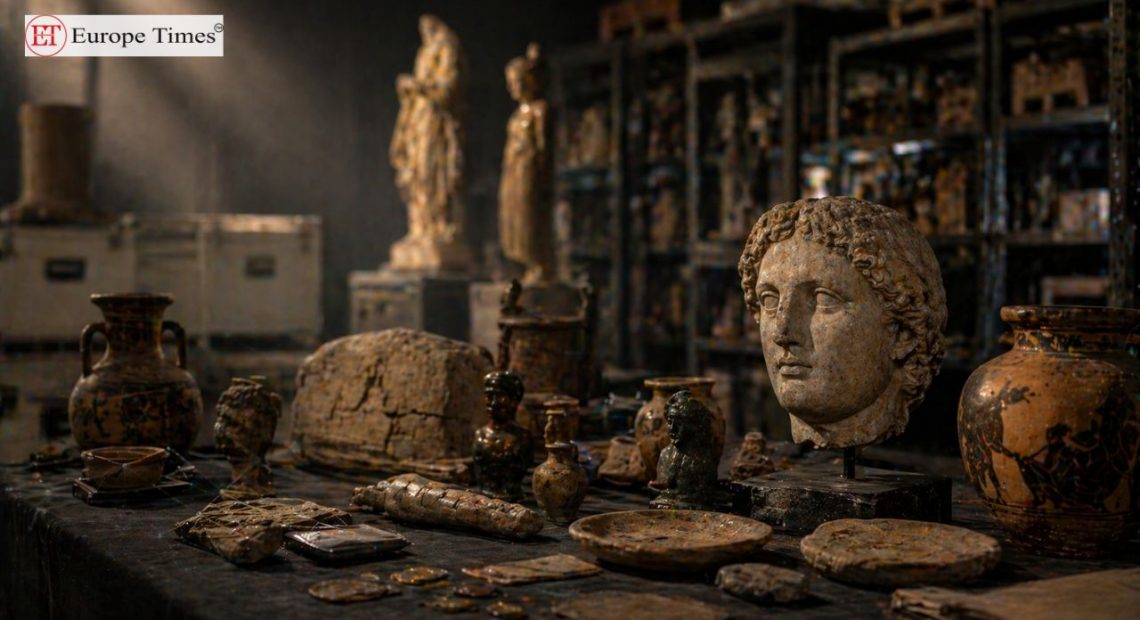
Italy has recovered 337 looted antiquities from the United States in one of the largest recent repatriations of cultural property, highlighting growing cooperation between the two countries. The artefacts, which include Roman, Greek, Etruscan, and Egyptian pieces, were returned following multiple investigations, many led by prosecutors in New York.

The recovered items span centuries of history, ranging from the fifth century BC to the third century AD. Among the most notable finds are a marble head of Alexander the Great, a bronze sculpture from Herculaneum, Egyptian statues, and various coins, jewellery, and ceramics. Officials said many of these objects were stolen from museums or unearthed through illegal excavations before entering the global art market.
Italian authorities credited improved technology, databases, and collaboration with U.S. agencies for the success of the operation. The artefacts will now be studied and, where possible, returned to their original locations across Italy, as part of ongoing efforts to protect cultural heritage and curb illicit antiquities trade.

Pic courtesy: google/ images are subject to copyright

News Trending

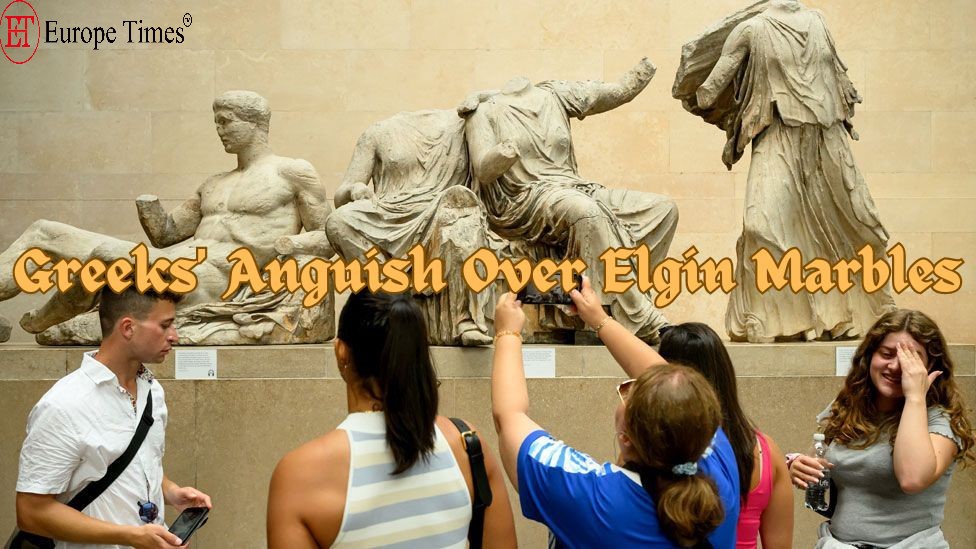
More than 200 years after their removal by Lord Elgin, the Elgin Marbles remain a contentious issue, symbolizing perceived injustice among the majority of Greeks. The British claim of ownership is widely rejected, and the sculptures, often referred to as the Parthenon Sculptures, are seen as stolen treasures, taken through imperial theft.

In central Athens, a consensus prevails among the people, regardless of age, asserting that the Parthenon and its sculptures rightfully belong to Greece. The argument that the British Museum ensures better preservation is dismissed, with anecdotes about issues like a leaking roof at the museum cited as evidence to the contrary.

At the foot of the Acropolis, a dedicated museum has been waiting for 14 years to showcase the missing marbles upon their return. While countries like Italy have expressed willingness to return Greek antiquities, the British government has not followed suit, maintaining a contentious stance on the issue.

The cancellation of a meeting between UK Prime Minister Rishi Sunak and Greek Prime Minister Kyriakos Mitsotakis has strained diplomatic relations. Cabinet minister Adonis Georgiadis, expressing a sense of offense, underscores the bipartisan unity in Greece, asserting that the return of the marbles is not merely a political stance but a matter of national and cultural significance.

Foreign Minister Giorgos Gerapetritis reinforces the claim, emphasizing the historical, just, and ecumenical cultural value attached to the sculptures. Despite the strained relations, there is a hope for a resolution, with Georgiadis expressing the wish for the British Museum to find a “reasonable way out” of a predicament seen as a “disgrace” by many Greeks.

Among the late-night shoppers in Athens, skepticism towards the British Museum’s motivations is evident, with some attributing the reluctance to financial concerns. The sentiment among Athenians is that the return of the marbles would not only make Greeks happy but also foster goodwill globally, promoting fairness and reasonability.

Picture Courtesy: Google/images are subject to copyright