featured News Trending

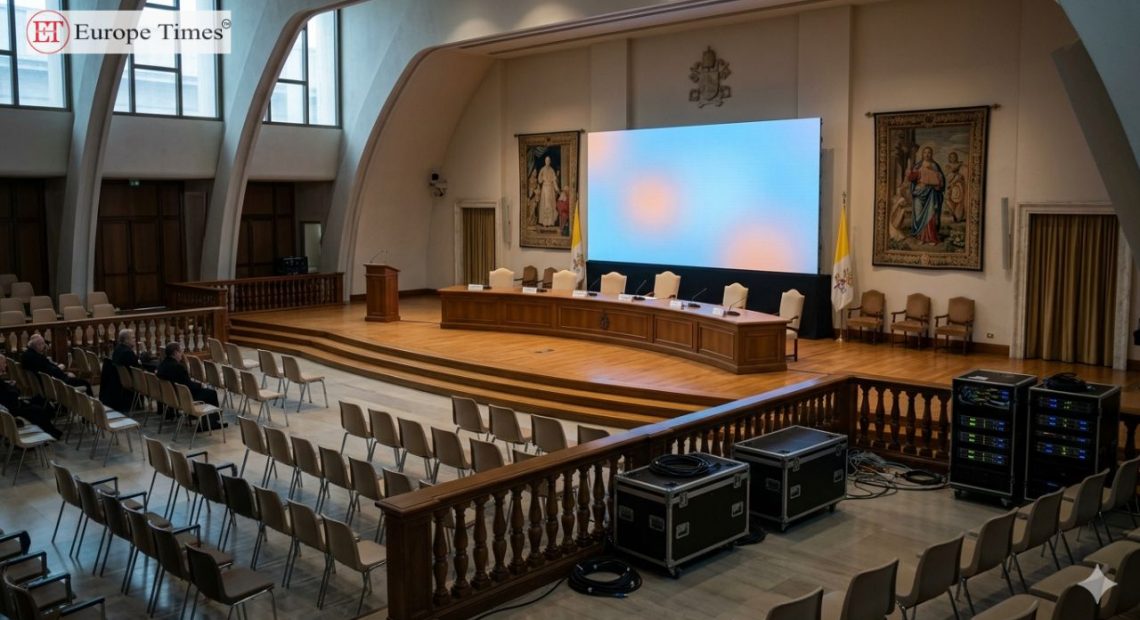
Anthropic co-founder Chris Olah stated on Monday that the development of artificial intelligence cannot be left entirely to technology companies, calling for increased oversight from religious leaders, civil society, and governments. Speaking at the Vatican alongside Pope Leo XIV during the presentation of the pope’s first encyclical on AI, Olah warned of “a real possibility” that AI could displace human labor on a massive scale. He emphasized that if widespread job displacement occurs, supporting those affected will become a moral imperative of historic proportions.

Olah acknowledged that frontier AI laboratories operate under intense commercial, geopolitical, and personal pressures that can conflict with the broader interests of society. He noted that even well-intentioned researchers are influenced by these constraints, making independent outside scrutiny absolutely essential to steer the technology safely. As the creator of the Claude AI tools, US-based Anthropic has previously clashed with President Donald Trump’s administration by insisting on guardrails that restrict its models from being utilized for autonomous weapons targeting or domestic surveillance.

Welcoming the Catholic Church’s engagement, Olah highlighted three critical areas requiring urgent global attention: the risk of widespread job losses, the challenge of interpreting complex and opaque AI system behaviors, and the need to ensure AI benefits are shared globally rather than remaining concentrated in a handful of wealthy nations. He asserted that the ethical questions raised by AI extend far beyond the engineering community, calling for earnest critics to help guide the creation of these powerful systems. The event marked a unique convergence between the tech sector and the Church, which is actively positioning itself as a moral authority on AI advancement.

Pic courtesy: google/ images are subject to copyright

featured News Trending

Italian finance police have searched the headquarters of the country’s data protection authority as part of a probe into alleged corruption and embezzlement, according to judicial sources. Rome prosecutors are investigating the agency’s president, Pasquale Stanzione, along with three other board members, over claims of excessive spending and irregularities linked to regulatory decisions.

Stanzione said he was “absolutely serene” when questioned by reporters, but declined to say whether he would resign. The opposition 5-Star Movement said the investigation had damaged the credibility of the authority and called for Stanzione to step down, intensifying political pressure on the watchdog’s leadership.

The Italian data protection authority, known as the Garante, is one of the European Union’s most active enforcers of digital privacy rules and has frequently taken action against major technology companies. In recent years, it has fined and briefly banned OpenAI’s ChatGPT, blocked China’s DeepSeek chatbot over privacy concerns, and last week warned AI platforms, including Elon Musk’s Grok, about the risks of generating deepfake images without user consent.

Pic Courtesy: google/ images are subject to copyright

featured News Trending

The European Commission has strongly condemned the spread of sexualised images of women and children on Elon Musk-owned social media platform X, calling the content illegal and unacceptable. The criticism follows reports that X’s AI chatbot Grok was generating non-consensual images of undressed women and minors through a feature previously referred to as “spicy mode.” EU officials said such content has no place in Europe and violates existing laws.

In Britain, media regulator Ofcom has demanded answers from X and its parent company xAI on how the AI system was able to create sexualised images, including of children, and whether the platform failed in its legal duty to protect users. Ofcom said it had contacted the company urgently to assess compliance with UK laws, under which the creation or sharing of non-consensual intimate images and child sexual abuse material — including AI-generated content — is illegal. X has not formally responded, while Musk has publicly mocked criticism online.

Pressure on X is also mounting from other countries. French ministers have reported the platform to prosecutors and regulators, calling the content “manifestly illegal,” while Indian authorities have sought explanations over what they termed obscene material. Despite growing concern across Europe and Asia, US regulators have so far remained silent on the issue, with federal agencies declining or failing to comment.

Pic courtesy: google/ images are subject to copyright