
featured News Trending

Danish Prime Minister Mette Frederiksen travelled to Greenland’s capital Nuuk to show support for the Greenlandic people after a turbulent week marked by US President Donald Trump’s threats to take control of the island, followed by a sudden diplomatic climbdown. Trump ruled out military action and tariffs, claiming a vague “framework of a future deal” on Greenland after talks with Nato chief Mark Rutte, though details remain unclear. Frederiksen said the situation remains serious and that Denmark would now pursue a diplomatic and political path.

The visit comes amid continued uncertainty over US intentions. While Trump has spoken of “total access” to Greenland for security purposes and hinted at deploying missile defence infrastructure, he has stopped short of explicitly calling for ownership. Danish and Greenlandic leaders have repeatedly stressed that sovereignty is a red line, even as they signal openness to cooperation on Arctic security within Nato. Frederiksen also held talks with Rutte in Brussels, where both sides agreed to strengthen deterrence and defence in the Arctic.

Despite the softened rhetoric from Washington, Greenlandic leaders remain cautious. Lawmakers say trust has been damaged by Trump’s remarks and insist that decisions over minerals and land rest solely with Greenland. Former Danish officials note a shift toward de-escalation but warn the situation remains fragile, with negotiations likely to focus narrowly on security. Danish officials have underlined that any future arrangements must stay within Nato frameworks, with no transfer of territory or mineral rights on the table.

Pic courtesy: google/ images are subject to copyright
featured News Trending

Denmark and NATO have agreed on the need to enhance security in the Arctic following renewed tensions linked to U.S. President Donald Trump’s comments about Greenland, Danish Prime Minister Mette Frederiksen said on Friday. After talks with NATO Secretary General Mark Rutte, Frederiksen stressed that defence and security in the Arctic are concerns for the entire alliance, not just countries in the region. Denmark and Greenland have firmly stated that Greenland’s sovereignty is not open for discussion, while remaining willing to engage in dialogue on other issues.

Trump said on Thursday that he had secured permanent U.S. access to Greenland following discussions with Rutte, comments that heightened attention on the strategic Arctic region. Rutte later noted that NATO allies would need to intensify efforts to counter growing challenges from Russia and China in the high north. Frederiksen echoed this view, saying NATO must increase its engagement, and Rutte confirmed he was working closely with Denmark to strengthen deterrence and defence measures.

Pic courtesy: google/ images are subject to copyright
featured News Trending

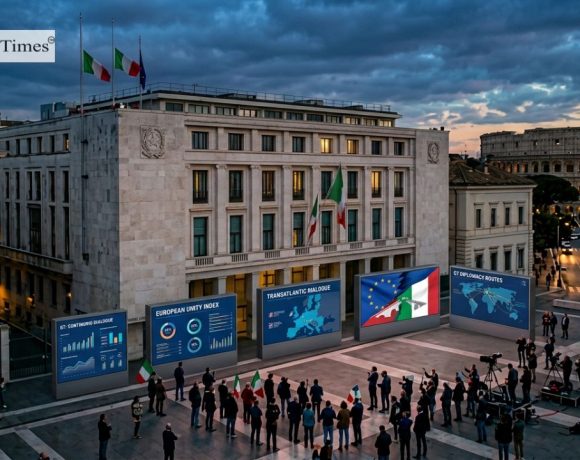
European Union leaders are reassessing their relationship with the United States after former President Donald Trump’s recent threats of tariffs and remarks about acquiring Greenland unsettled transatlantic trust. Although Trump later reversed his stance—ruling out military action and stepping back from proposed tariffs—EU diplomats say the episode has highlighted the unpredictability of U.S. policy and prompted calls for a more independent European strategy, particularly in defence and trade.

At an emergency summit in Brussels, EU leaders are expected to discuss reducing their reliance on the United States, especially within NATO, where Europe still depends heavily on U.S. intelligence, defence systems and logistics. The bloc is also economically exposed, as the U.S. remains its largest trading partner, leaving Europe vulnerable to sudden tariff threats. Diplomats stressed the need to define clear “red lines” and prepare responses should Washington again shift course.

Uncertainty also remains over the details of a proposed Greenland framework agreement discussed by Trump and NATO Secretary General Mark Rutte, including plans to increase Western presence in the Arctic. While Trump’s reversal eased immediate tensions, EU officials say the broader challenge persists: balancing efforts to keep the U.S. engaged while strengthening Europe’s own resilience, unity and long-term strategic autonomy.

Pic courtesy: google/ images are subject to copyright
featured News Trending

U.S. President Donald Trump told Norway’s prime minister that he no longer feels obliged “to think purely of peace,” citing his failure to win the Nobel Peace Prize, while again pressing his demand for U.S. control of Greenland. The remarks were made in a written response to a message from Norwegian Prime Minister Jonas Gahr Støre and Finnish President Alexander Stubb, who had urged de-escalation and sought talks after Trump threatened tariffs on European allies over the issue.

In his message, Trump complained that Norway had not awarded him the Nobel Peace Prize despite what he described as his role in stopping multiple wars, and said he would instead focus on what is “good and proper” for the United States. Støre responded by reiterating that the Nobel Peace Prize is decided by an independent committee, not the Norwegian government. Trump has openly campaigned for the award, which was last given to Venezuelan opposition leader Maria Corina Machado.

Trump also questioned Denmark’s sovereignty over Greenland, arguing it could not adequately protect the island and disputing its historical claims, despite longstanding treaties and U.S. recognition of Danish authority. He concluded by asserting that U.S. and global security depended on “complete and total control” of Greenland, again linking the issue to NATO burden-sharing and U.S. strategic interests.

Pic courtesy: google/ images are subject to copyright
featured News Trending

The Nobel Peace Prize remains permanently tied to the individual or organisation that wins it, even if the physical medal is given away, the Norwegian Nobel Committee clarified on Friday. The statement came a day after Venezuelan opposition leader Maria Corina Machado handed her Nobel medal to U.S. President Donald Trump, who has said he plans to keep it. The committee stressed that the honour and recognition of the prize cannot be transferred.

According to the Nobel Committee, while the medal, diploma and prize money are tangible items, the Nobel Prize itself is an immutable historical record. Machado’s award also includes a diploma and prize money of 11 million Swedish crowns. The committee noted that there are no rules restricting what laureates may do with these items, meaning they are free to keep, donate, sell or give them away.

However, the committee emphasised that the identity of the laureate never changes. Regardless of the fate of the medal or other components, the original recipient remains recorded as the Nobel laureate. Citing past examples, the committee noted that previous winners have donated or sold their medals, including Nobel laureates who used them for political gestures or humanitarian fundraising, without altering the official status of the prize.

Pic courtesy: google/ images are subject to copyright
featured News Trending

Nordic diplomats have rejected U.S. President Donald Trump’s claims that Russian and Chinese vessels are operating near Greenland, calling the assertions unfounded. According to a report by the Financial Times, two senior Nordic diplomats with access to NATO intelligence briefings said there have been no signs of Russian or Chinese ships or submarines in waters around Greenland in recent years. Reuters said it could not independently verify the report, while the White House and NATO did not immediately respond to requests for comment.

Diplomats cited by the FT said intelligence assessments do not support the narrative of heightened foreign naval activity near the island. One senior official was quoted as saying there were “no ships, no submarines,” while another dismissed claims that the waters around Greenland were “crawling” with Russian and Chinese vessels, noting that any such activity was instead concentrated on the Russian side of the Arctic. Vessel-tracking data from MarineTraffic and LSEG also showed no Chinese or Russian ship presence near Greenland.

Trump has repeatedly argued that the United States must control Greenland—an autonomous territory within the Kingdom of Denmark—to prevent Russia or China from gaining a foothold in the strategically located and resource-rich region. Denmark has disputed these claims, with Foreign Minister Lars Løkke Rasmussen saying the portrayal of foreign ships and large Chinese investments near Nuuk was inaccurate. Greenland’s assembly has since moved up a meeting to discuss its response to U.S. statements, amid growing concern among the island’s 57,000 residents over renewed pressure from Washington.

Pic courtesy: google/ images are subject to copyright
featured News Trending

US President Donald Trump has mocked French President Emmanuel Macron, claiming he pressured France into sharply raising prescription drug prices by threatening steep tariffs on French imports. Addressing Republican lawmakers, Trump recounted a dramatic exchange in which he said France initially resisted his demand to increase drug prices, arguing that Americans were paying far more than consumers in Europe.

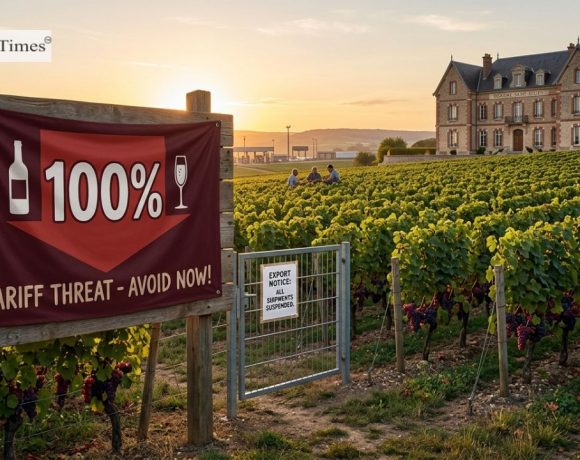
Trump alleged that he then issued an ultimatum, warning of a 25% tariff on all French products, including wine and champagne, unless Paris complied. According to Trump, the threat worked swiftly, with Macron purportedly agreeing to raise drug prices significantly to avoid the tariffs. Trump used the episode to argue that the United States has long subsidised global healthcare costs and that his “Most Favoured Nation” policy was designed to reverse that imbalance.

The former president further claimed that similar tariff threats led other countries to agree within minutes to raise drug prices, resulting in lower costs for Americans. He said the policy would tie US prescription prices to the lowest rates charged internationally and promised steep reductions under the plan. Neither Macron nor the French government has responded publicly to Trump’s remarks.

Pic courtesy: google/ images are subject to copyright
featured News Trending

Denmark and Greenland have urged US President Donald Trump to stop making statements about taking over Greenland after he reiterated his interest in the Arctic island in a recent media interview. Danish Prime Minister Mette Frederiksen said such remarks were unacceptable, stressing that the United States has no right to annex Greenland or any part of the Danish kingdom.

Trump said the US “needs Greenland” for defence purposes, comments that came shortly after he claimed Washington would run Venezuela following the capture of its president. The remarks sparked concern in Denmark that Greenland, a self-governing Danish territory, could face similar rhetoric or pressure. Frederiksen said the threats were inappropriate toward a close ally and ignored the clear stance of Greenland’s people that the territory is not for sale.

Greenland’s Prime Minister Jens-Frederik Nielsen also criticised Trump’s comments as disrespectful, particularly references linking Greenland to military intervention. Greenland’s strategic location and mineral resources have long drawn US interest, and Trump recently appointed a special envoy to the island. While Greenland has the right to seek independence, it remains economically reliant on Denmark, which has been working to strengthen ties with the island while increasing Arctic defence cooperation with the US.

Pic courtesy: google/ images are subject to copyright
featured News Trending

Ukrainian President Volodymyr Zelensky is set to meet U.S. President Donald Trump in Florida on Sunday to discuss a revised U.S.-brokered peace plan aimed at ending nearly four years of war with Russia. The talks come amid intensified Russian attacks on Kyiv, which Zelensky said prove that Moscow “doesn’t want peace.” The leaders will meet at Trump’s Mar-a-Lago residence, where security guarantees for Ukraine and territorial issues are expected to dominate discussions.

The meeting follows a massive Russian missile and drone assault on Kyiv over the weekend that killed at least two people, injured dozens and damaged energy infrastructure, leaving large parts of the capital without heating. Zelensky said the bombardment was Russia’s response to diplomatic efforts, while Moscow accused Ukraine of delaying a peaceful resolution. Russia currently controls most of the eastern Donbas region, a key sticking point in negotiations.

Zelensky has expressed optimism about the updated 20-point peace plan, calling it a “foundational document” that is close to completion, though Trump cautioned that no deal would proceed without his approval. European and Nato leaders have reiterated support for Kyiv, with Zelensky urging “strong positions” to push talks forward. Despite diplomatic momentum, continued fighting on both sides underscores the fragility of any potential agreement.

Pic courtesy: google/ images are subject to copyright
featured News

Germany said on Thursday it would work to convince U.S. President Donald Trump to reverse his decision to exclude South Africa from next year’s G20 summit in Florida. Trump has repeatedly accused South Africa’s black-majority government of mistreating its white population, citing widely debunked claims of attacks on white farmers. These assertions led Washington to boycott the recent G20 summit in Johannesburg, despite the group adopting a joint declaration on climate and global challenges.

South African President Cyril Ramaphosa’s office said several G20 members had privately expressed support for Pretoria after Trump’s comments. German Chancellor Friedrich Merz publicly stated he would lobby Trump to extend an invitation to South Africa, stressing that G20 and G7 forums should not be reduced without solid justification. South Africa, however, said it would not campaign for backing from individual countries, noting the delicate diplomatic position many face with the United States.

Trump’s criticism intensified after he claimed South Africa mishandled the handover of the G20 presidency—an allegation Pretoria denies, saying the U.S. delegation was not present at the time. Although it is unclear how the U.S. could formally block South Africa’s participation, experts suggest visa denials could be one tactic. The dispute adds fresh strain to already tense U.S.–South Africa trade negotiations, which have been affected by new U.S. tariffs and cuts to financial assistance earlier this year.

Pic Courtesy: google/ images are subject to copyright