featured News

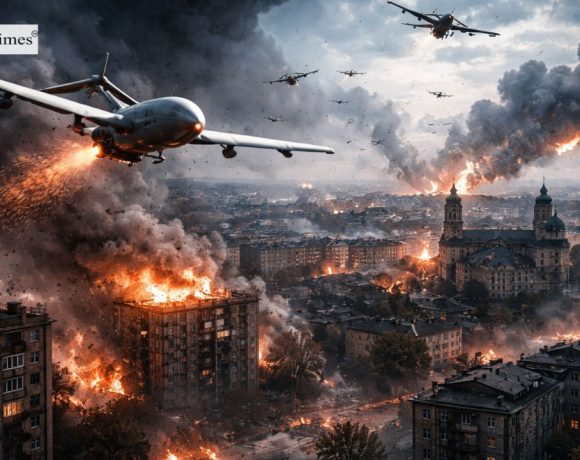
More than 600,000 people in Kyiv and surrounding areas were left without electricity after Russia launched a large-scale overnight attack targeting Ukraine’s energy infrastructure. Officials reported that over 36 missiles and nearly 600 drones were fired across multiple regions, leaving at least three dead and dozens injured. The majority of outages hit the capital, where emergency crews responded to fires and damaged residential buildings.

As winter sets in, Russia has intensified strikes on Ukraine’s energy grid, echoing previous years when civilians endured rolling blackouts. Kyiv Mayor Vitaly Klitschko confirmed that a 13-year-old was among the injured, while Dtek Energy said power had been restored to more than half of the affected households by Saturday afternoon. Ukraine’s Air Force reported intercepting 558 drones and 19 missiles despite the heavy bombardment.

The attack comes as Ukrainian and US officials prepare for talks on a revised peace plan backed by Washington. While President Zelensky has welcomed diplomatic efforts, he stresses Ukraine’s need to protect its sovereignty. Meanwhile, President Putin reiterated that Russia would only halt its offensive if Ukrainian forces withdraw from territory Moscow claims, as both sides brace for another harsh winter of conflict.

Pic Courtesy: google/ images are subject to copyright
featured News

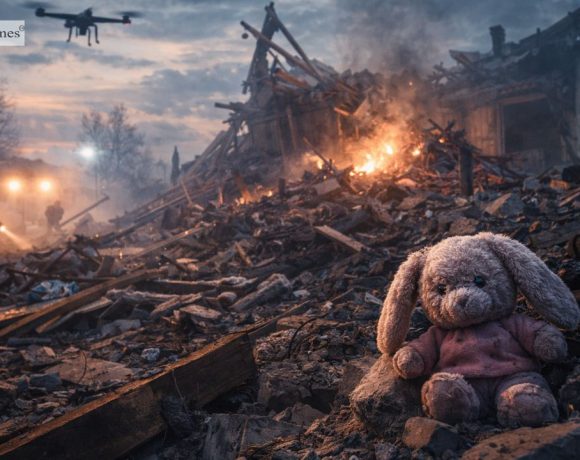
Frontline Ukrainian soldiers have reacted sharply to a leaked draft US peace proposal, expressing a mix of anger, defiance and reluctant acceptance. Speaking to the BBC via social media and email, several troops rejected the idea of conceding territory and limiting military strength. Yaroslav, serving in eastern Ukraine, said the plan “sucks… no one will support it,” while an army medic known as Shtutser called it an “absolutely disgraceful draft.” Another soldier, Matros, said the proposals undermine years of sacrifice and would “disregard the lives of fallen soldiers and civilians.”

One of the most contentious elements of the draft is the suggestion that Ukraine give up control of the entire Donbas region, parts of which it has defended since 2014. Snake, a soldier on the front line, argued that abandoned and devastated towns are no longer worth prolonged loss of life, saying “let them take it.” However, others insist surrendering territory would nullify everything the country has fought for. The proposal also suggests reducing Ukraine’s armed forces from more than 800,000 to 600,000 troops, a move some say could weaken national security, although others argue it is necessary for economic recovery and peace.

Security guarantees and political reforms remain key areas of debate. The draft rules out NATO membership but pledges US assurances if Russia launches another attack, while also proposing fresh elections within 100 days of war’s end. Some troops express mistrust in both Europe and the US, doubting their ability to protect Ukraine. Yet despite widespread frustration and dissatisfaction, one message is clear: many are exhausted by the prolonged conflict and would support any plan capable of ending the war. As soldier Andrii put it, “If it stops the war, then it works for me.”

Pic Courtesy: google/ images are subject to copyright
featured News

Ukrainian President Volodymyr Zelensky has said he is prepared to work with the United States on what he called “their vision” for ending the war with Russia, following reports of a leaked draft peace proposal shaped during meetings between US special envoy Steve Witkoff and Russian representative Kirill Dmitriev. The plan, which has drawn global attention, suggests Ukraine would cede parts of the Donetsk region still under its control, reduce the size of its military, and commit not to join NATO—terms Kyiv has previously rejected.

The White House insists Ukraine has been included in discussions, pushing back against criticism that negotiations happened behind its back. The draft emerged as Russia reported small territorial gains in eastern Ukraine and as Zelensky faces a domestic political crisis linked to a $100 million corruption scandal. In a televised address, Zelensky confirmed that US military officials had presented points of a peace proposal in Kyiv, stressing that Ukraine seeks a “real peace… one that will not be broken by a third invasion.”

The plan has triggered concern among European leaders, who say they were excluded from early talks. Germany’s foreign minister described the US proposal as only a “list of topics and options” rather than a complete agreement. While Washington claims the draft is balanced and acceptable to both sides, Kyiv maintains that any peace must protect Ukraine’s sovereignty and dignity. The debate unfolds as fighting continues, including recent deadly Russian attacks in Zaporizhzhia and Ternopil, and as the fourth anniversary of Russia’s full-scale invasion approaches.

Pic Courtesy: google/ images are subject to copyright
featured News

Russia launched one of its deadliest attacks on western Ukraine since the full-scale invasion, killing at least 16 people and injuring dozens in the city of Ternopil. Two residential blocks were hit by drones and missiles, with Ukrainian officials reporting that 14 children were among the 64 wounded. Strikes also targeted the regions of Lviv and Ivano-Frankivsk, while separate drone attacks in Kharkiv injured more than 30 people. Widespread power outages were reported across multiple regions.

President Volodymyr Zelensky said Russia fired more than 470 drones and 47 missiles, causing “significant destruction” and leaving many trapped under rubble. Videos from Ternopil showed one apartment block collapsed from the third to the ninth floor, with fires and heavy smoke visible across the area. Infrastructure, including energy and transport facilities, suffered severe damage in several regions as emergency workers continued rescue efforts through the night.

The strikes came a day after Ukraine confirmed firing US-supplied ATACMS missiles at targets inside Russia for the first time. In response, Russia accused Ukraine of launching missiles at Voronezh, all of which it claimed were intercepted. Meanwhile, tensions rose across the region, with Romania reporting a Russian drone entering its airspace and Poland scrambling jets following the attacks. Diplomatic movements also intensified, with Zelensky traveling to Ankara for talks as both sides remain deeply divided on any potential peace solution.

Pic Courtesy: google/ images are subject to copyright
featured News

Ukraine will begin importing US liquefied natural gas through Greece this winter, using the Trans-Balkan pipeline to help stabilise its energy supply amidst ongoing Russian attacks. The announcement followed a meeting in Athens between Ukrainian President Volodymyr Zelensky and Greek Prime Minister Kyriakos Mitsotakis, who emphasised Greece’s growing role in supplying American LNG to reduce regional dependence on Russian gas.

Zelensky said the first deliveries are expected in January, noting that Ukraine urgently needs external supplies to offset the damage inflicted on its domestic gas infrastructure. Kyiv has allocated close to €2bn—backed by European Commission guarantees and bank financing—to secure gas imports through March. The deal comes as the EU pushes toward a complete halt of Russian gas imports by 2027.

During his European tour, Zelensky also met French President Emmanuel Macron and signed a letter of intent for Ukraine to potentially acquire up to 100 Rafale fighter jets, along with air defence and radar systems. The visit highlighted Ukraine’s dual battlefronts—strengthening its military capabilities while preparing for a harsh winter as Russia intensifies attacks on energy facilities and multiple regions report continued casualties.

Pic Courtesy: google/ images are subject to copyright
featured News

A massive wave of Russian drone and missile strikes on Kyiv has left four people dead and dozens injured, President Volodymyr Zelensky confirmed. More than 430 drones and 18 missiles were launched, damaging high-rise buildings across nearly every district and leaving parts of the capital without heat as energy infrastructure took heavy hits. Emergency crews rescued more than 40 people from burning and collapsed structures.

The strikes also targeted several other Ukrainian regions, while Kyiv’s air defences intercepted multiple incoming threats. Fires, falling debris, and widespread destruction hit residential blocks, a hospital and administrative facilities, with some victims pulled from under rubble. Mayor Vitali Klitschko warned that parts of the city’s power, water and heating network had been disrupted.

In a parallel escalation, Ukraine struck Russia’s Black Sea port of Novorossiysk, igniting a major oil refinery and damaging ships and apartment buildings. Local authorities declared a state of emergency and halted oil exports. The attacks follow another deadly Russian barrage less than a week earlier, prompting Zelensky to urge Western allies to tighten sanctions on Russian energy amid stalled ceasefire talks.

Pic Courtesy: google/ images are subject to copyright

featured Trending

Kyiv would hold peace talks with Russia immediately if Moscow withdrew from all Ukrainian territories, according to President Volodymyr Zelensky. Speaking at the conclusion of a peace summit in Switzerland, Zelensky expressed skepticism about Russian President Vladimir Putin’s willingness to end the conflict, emphasizing the need to stop him by any means necessary, whether military or diplomatic. He acknowledged that Western aid alone was insufficient to secure victory but noted that the summit demonstrated sustained international support for Ukraine.

The summit ended with many countries reaffirming their commitment to Ukraine’s territorial integrity and adopting a document that attributed the war’s suffering and destruction to Russia. However, some attendees, including India, South Africa, and Saudi Arabia, did not sign the document. The summit aimed to gather broad backing for efforts to end the war, attracting over 90 countries and international organizations. Notably, Russia and its ally China were absent, casting doubt on the summit’s effectiveness. Some participants, like Saudi Arabia and Kenya, were not Ukraine’s staunchest supporters.

The final document called for Ukrainian control over the Zaporizhzhia nuclear power plant, currently occupied by Russia, and referred to the conflict as a “war,” a term Moscow rejects. It also demanded the exchange of all prisoners and the return of children abducted by Russia. Contentious issues, such as the status of territories under Russian occupation, were deferred for future discussion.

After the summit, Zelensky thanked the attendees for their independence in attending despite Russian pressure. He reiterated that Ukraine had always sought peace and that Russia could start negotiations by withdrawing from Ukrainian territories. He also clarified that China was not Ukraine’s enemy and called on Beijing to engage seriously in peace efforts.

Dutch Prime Minister Mark Rutte highlighted the unity among attendees in seeking peace, despite differing opinions on achieving it. He emphasized shared principles, such as opposing invasions, child abductions, manipulation of food supplies, and threats to nuclear safety.

While there was an expectation for unanimous condemnation of Russia’s invasion, Austrian Chancellor Karl Nehammer indicated that not all delegations supported the final statement. Zelensky stated that the summit’s results would be communicated to Moscow, aiming for a conclusive peace agreement at a subsequent summit.

Russia dismissed the Swiss event as unproductive. Putin proposed a ceasefire if Ukraine withdrew from four regions claimed by Russia, but this was strongly rejected by Western leaders, with Italian Prime Minister Giorgia Meloni calling it propaganda and UK Prime Minister Rishi Sunak accusing Putin of spinning a false narrative. Kremlin spokesman Dmitry Peskov later mentioned that Putin did not rule out talks with Ukraine but insisted on guarantees for their credibility, excluding Zelensky as a participant.

Picture Courtesy: Google/images are subject to copyright

News Trending

Ukraine’s President, Volodymyr Zelensky, has removed the head of his personal security unit following the detention of two high-ranking officials in connection with an alleged assassination plot. Serhiy Rud, who has overseen the president’s security since 2019, was dismissed without explanation, according to a presidential decree.

The state guard administration (UDO), responsible for safeguarding not just the president but also other key figures and their families in Ukraine, saw two colonels detained over suspicions of ties to a Russian FSB-run agent network. Despite Zelensky’s previous claims of Russian assassination plots against him, this recent revelation implicates members of his own circle, including military intelligence chief Kyrylo Budanov and SBU head Vasyl Malyuk.

Reports indicate that the plot aimed to target Zelensky through kidnapping and assassination, while Budanov was to be attacked with various weapons including rockets, drones, and anti-tank grenades.

Though Serhiy Rud’s dismissal was announced, there’s no indication of his involvement in the alleged plot. However, one of the detained colonels, Andriy Huk, was reportedly a close acquaintance from their time studying together.

Maj Gen Rud, who has a long military career focused on state security, has seen numerous attempts on Zelensky’s life, notably during the early stages of the Russian invasion in 2022.

Zelensky’s frequent replacements of key security figures have been noted, with the recent removal of special forces commander Col Serhiy Lupanchuk being another example. Additionally, Gen Valerii Zaluzhnyi, who previously led Ukraine’s defense during the invasion, was replaced and subsequently appointed as Ukraine’s ambassador to the UK, receiving the title “Hero of Ukraine.”

Picture Courtesy: Google/images are subject to copyright

News Trending

Ukrainian President Volodymyr Zelensky has approved a legislation reducing the military mobilization age from 27 to 25, aiming to bolster Ukraine’s armed forces amid heavy losses in the ongoing conflict with Russia. The decision, which was previously passed by MPs in May 2023 but awaited Zelensky’s signature, comes amid concerns over potential Russian offensives in the coming months.

Zelensky had expressed the need for an additional 500,000 soldiers, and this move is seen as a step towards replenishing reserves, especially as volunteer numbers had declined. The intention behind the law’s enactment now may be linked to strategic preparations against possible Russian advancements.

The conflict between Ukraine and Russia has reached a stalemate, with Ukrainian forces unable to make significant territorial gains due to Russian military superiority and formidable defenses. Furthermore, Ukraine’s military operations have been constrained by a reduction in foreign aid, particularly from Western sources, which have been hindered by political disputes.

The casualty figures on both sides remain contentious. While Russian President Vladimir Putin has not disclosed the number of Russian military personnel casualties, a US intelligence report estimated significant losses among Russian forces. Likewise, Ukrainian casualties have been substantial, with conflicting reports on the exact numbers of soldiers killed and injured.

Overall, Zelensky’s approval of the bill reflects Ukraine’s determination to bolster its defenses in the face of ongoing conflict and potential future escalations with Russia.

Picture Courtesy: Google/images are subject to copyright

News Trending

Hungary, led by Prime Minister Viktor Orban, has blocked €50 billion in EU aid for Ukraine, a move that comes just hours after EU leaders reached an agreement to begin membership talks. Orban, known for maintaining close ties with Russia, announced the veto, citing opposition to additional financial support for Ukraine. While the EU leaders unanimously agreed on aid and wider budget proposals, Hungary’s objection led to the postponement of aid negotiations until early next year. Despite Hungary’s stance, the EU proceeded with granting membership talks to Ukraine, Moldova, and candidate status to Georgia.

The decision to block aid raises concerns for Ukraine, which heavily relies on EU and US funding in its ongoing struggle against Russian forces. This setback comes at a time when Ukraine is also seeking approval for a $61 billion US defense aid package, facing delays due to disagreements among US lawmakers. The potential implications for Ukraine’s counter-offensive against Russian forces, especially with the arrival of winter, heighten anxieties about the country’s ability to resist the occupation.

President Zelensky of Ukraine expressed gratitude for the EU’s decision on membership talks, despite the aid block. The EU’s move to include Ukraine and Moldova in accession talks was celebrated as a “victory” by Zelensky, who emphasized the importance of the decision for both countries. Moldova’s President Maia Sandu also welcomed the development, acknowledging the shared path to EU accession with Ukraine. Germany’s Chancellor Olaf Scholz praised the decision as a “strong sign of support,” highlighting that both Ukraine and Moldova belonged to the “European family.”

Prime Minister Orban, in a video message on Facebook, distanced himself from his EU counterparts, labeling Ukraine’s membership as a “bad decision” and reiterating Hungary’s opposition to providing substantial funds to Ukraine. The EU’s decision to open accession talks does not guarantee immediate membership for Ukraine, as the process involves passing numerous reforms and adhering to EU standards, a journey that can span several years. Despite the challenges, the EU’s commitment to engaging in talks signals a significant step toward fulfilling Ukraine’s Euro-Atlantic aspirations.

Picture Courtesy: Google/images are subject to copyright