
featured News Trending

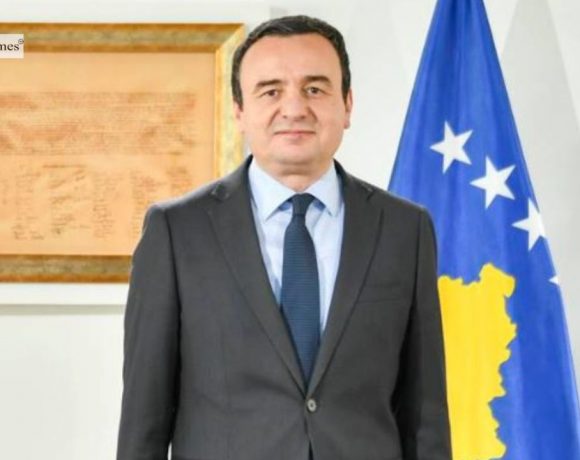
Kosovo Prime Minister Albin Kurti has vowed to quickly form a new government after his Vetevendosje Party secured nearly half of the votes in Sunday’s snap parliamentary election. The victory could end a year-long political deadlock that stalled parliament and delayed crucial international funding. Kurti emphasized the need for swift action to certify results, constitute parliament, and move forward without delay.

Kurti’s party received 49.3% of votes with 99% counted, while the main opposition parties, the Democratic Party and the Democratic League, garnered 21% and 13.6% respectively. Analysts note that Kurti may need support from smaller Albanian or minority parties to form a stable government, as conditional votes and those from the diaspora have yet to be tallied. Supporters celebrated in Pristina, waving party flags and lighting fireworks despite sub-zero temperatures.

The prolonged political impasse threatens key EU and World Bank loans totaling €1 billion, as well as the election of a new president in April. Kurti’s government faces criticism over his handling of relations with Western allies and Kosovo’s ethnically divided north. To appeal to voters, he has promised increased public sector salaries, capital investment of €1 billion annually, and a new anti-organised crime prosecution unit, aiming to address poverty and instability in the Balkan country.

Pic courtesy: google/ images are subject to copyright
News Trending War

The World Bank has warned that the conflict in Ukraine will result in the “largest commodity shock” since the 1970s.

According to a new forecast, the conflict’s disruption will result in massive price increases for goods ranging from natural gas to wheat and cotton. According to Peter Nagle, a co-author of the report, the price hike is “starting to have very large economic and humanitarian effects.” “Households all over the world are experiencing a cost-of-living crisis,” he said.

“We’re especially concerned about the poorest households because they spend a larger percentage of their income on food and energy, making them particularly vulnerable to this price spike,” the World Bank’s senior economist added.

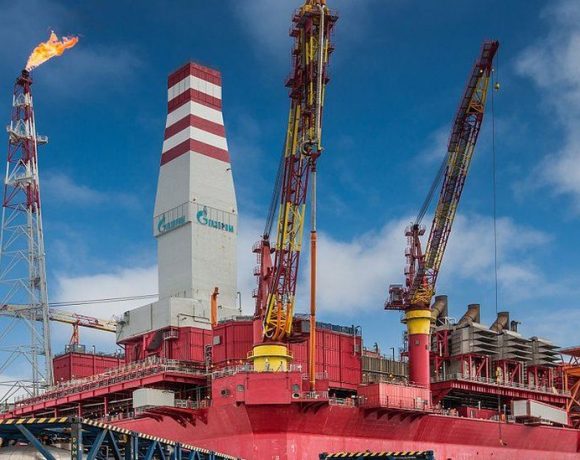
According to the World Bank, energy prices are expected to rise by more than 50%, increasing household and business bills.

The most significant increase will be in the cost of natural gas in Europe, which is expected to more than double. Prices are expected to decline next year and in 2024, but they will still be 15% higher than last year.

According to the World Bank, “the largest 23-month increase in energy prices since the 1973 oil price hike,” when tensions in the Middle East sent prices soaring, occurred between April 2020 and March this year.

Similarly, oil prices are expected to remain high into 2024, with a barrel of Brent Crude, the benchmark measure, expected to average $100 this year, resulting in widespread inflation.

Russia produces about 11% of the world’s oil, the third largest share, but “disruptions resulting from the war are expected to have a lasting negative effect,” according to the report, as sanctions force foreign companies to leave and access to technology is limited.

Although Russia currently supplies 40% of the EU’s gas and 27% of its oil, European governments are working to wean their countries off of Russian supplies. This has aided in the rise of global prices by increasing demand for supplies from other countries.

Picture Courtesy: Google/Images are subject to copyright