
featured News Trending

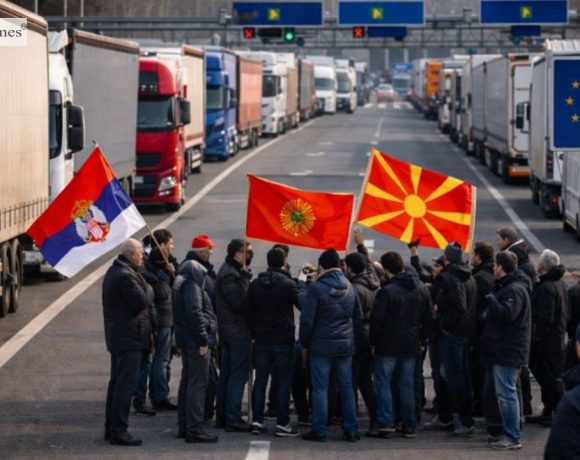
Truck drivers across the Western Balkans continued blocking cargo terminals at European Union borders for a fourth straight day, as regional governments urged Brussels to ease new rules they say are crippling trade. Drivers in Bosnia, Montenegro, North Macedonia and Serbia began protests this week against stricter enforcement of the EU’s entry-exit system, which they say risks detention or deportation for breaching Schengen stay limits.

Despite the EU saying it is working on a new visa strategy for highly mobile professions such as truck drivers, protests persisted on Thursday. At the Batrovci crossing between Serbia and EU member Croatia, long lines of trucks blocked access to cargo terminals, disrupting a key transport corridor linking the EU with Turkey and the Middle East. Truckers said they would continue demonstrations until concrete solutions are offered.

Serbia’s Chamber of Commerce said nearly all exports from the four countries were halted, causing losses of about 92 million euros a day, with EU-based companies also affected. Montenegro’s president has appealed to EU officials to consider the needs of regional transporters, while Serbia is seeking talks with the European Commission on options such as special visas or permits. Some blockades have eased, including at Montenegro’s port of Bar, but pressure remains high for a swift compromise.

Pic courtesy: google/ images are subject to copyright
News Trending

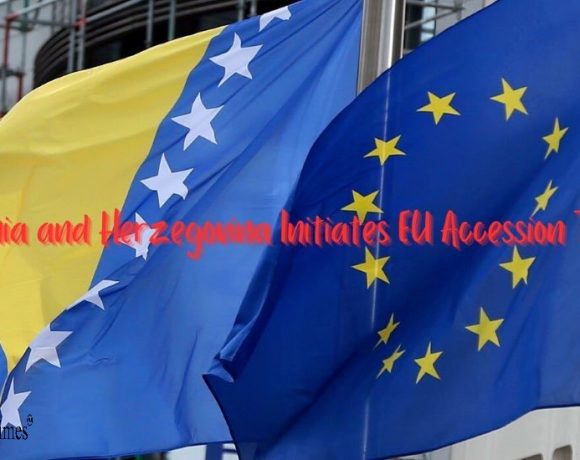
Bosnia and Herzegovina is set to begin negotiations for EU membership, marking a significant milestone eight years after the formal application was submitted. Following a recommendation from the European Commission last week, EU leaders have approved the initiation of talks. European Council President Charles Michel extended congratulations to Bosnia and Herzegovina’s leaders, affirming their place within the European family. He emphasized the importance of continued efforts for progress, a sentiment echoed by Borjana Krišto, Chairwoman of the Council of Ministers of Bosnia and Herzegovina, who expressed gratitude for achieving the necessary compliance with EU requirements.

The approval for Bosnia’s EU talks has been welcomed as a positive development by leaders across Europe. German Chancellor Olaf Scholz hailed it as a good message for the entire region, while Croatia’s Prime Minister Andrej Plenković described it as a historic day for Bosnia and Herzegovina.

The road to EU membership has been long for Bosnia, with the country formally obtaining candidate status in 2022 after applying for membership in 2016. In the past year, Bosnia has made strides in passing laws aligned with EU priorities, particularly focusing on areas such as democracy, the rule of law, fundamental rights, and public administration reform.

Despite progress, Bosnia remains ethnically and politically divided, a legacy of the 1992-95 war. Further economic and democratic reforms will be necessary before formal EU accession can occur.

The EU’s commitment to the Western Balkans has been underscored by recent events, particularly in light of the conflict in Ukraine. Other countries in the region, including Albania, Georgia, Kosovo, Moldova, Montenegro, North Macedonia, Serbia, Turkey, and Ukraine, are also at various stages of the EU application process.

Picture Courtesy: Google/images are subject to copyright