featured News Trending

Facing a severe demographic decline worsened by Russia’s full-scale invasion, Ukraine is funding a programme that allows serving soldiers to freeze sperm and eggs free of charge. Introduced after private clinics began offering cryopreservation in 2022, the scheme was later regulated and financed by the state to help troops preserve the chance of having children if they are injured or killed. Lawmakers say the policy is both a personal safeguard for soldiers’ families and a small step toward protecting the nation’s future population.

The war has intensified an already serious crisis: large numbers of young men have been killed at the front, while millions—mostly women—have left the country as refugees. Clinics in Kyiv report that pregnancies have dropped sharply since the invasion, with stress, displacement and constant missile and drone attacks causing many couples to postpone having children. Officials argue that preserving fertility for military families is vital as Ukraine struggles with long-term population loss.

The programme has not been without controversy. Early rules required sperm samples to be destroyed if a donor died, prompting public outrage after widows were denied the right to use their husbands’ frozen material. Amendments now allow samples to be kept for several years after death with prior consent, though families still report legal and bureaucratic hurdles. Despite these challenges, supporters say open discussion of fertility and wider participation by soldiers could help ensure that the children of those killed in the war still have a chance to be born in the country their parents died defending.

Pic courtesy: google/ images are subject to copyright

featured News Trending

A Russian drone attack in Bohodukhiv, Kharkiv region, killed three young children and their father, while injuring the pregnant mother, local officials reported. The victims were twin boys Ivan and Vladyslav, aged two, and their one-year-old sister Myroslava, along with their 34-year-old father, Hryhoriy. The mother, Olha, 35, sustained minor burns but survived. The family had recently relocated from a town near the Russian border, seeking refuge from ongoing shelling.

The attack marks a renewed wave of Russian strikes following a short pause, with the Kharkiv region under near-daily assaults. Regional authorities described the incident as “brutal,” noting that tens of thousands of residents face severe power outages and lack of heating, worsened by Moscow targeting energy and transport infrastructure.

In parallel, Russian forces hit other areas including Slovyansk, causing further casualties, while Ukraine launched retaliatory drone attacks on Volzhsky in Russia’s Volgograd region. Ukrainian President Volodymyr Zelensky emphasized the continued strain on civilians and noted ongoing international efforts, including upcoming U.S.-hosted talks, to end the war that began in February 2022.

Pic courtesy: google/ images are subject to copyright

featured News Trending

Ukrainian President Volodymyr Zelensky announced that the US aims to end the war with Russia by June, inviting both sides to hold talks in the United States next week, likely in Miami. Zelensky confirmed Ukraine’s participation but noted that difficult issues, including territorial concessions, remain unresolved. For the first time, leaders may be involved in trilateral discussions, though preparatory steps are required before this can happen.

Meanwhile, Russia continues to target Ukraine’s energy infrastructure, causing widespread blackouts amid freezing temperatures. More than 400 drones and 40 missiles struck power plants, substations, and transmission lines, affecting regions such as Lviv, Ivano-Frankivsk, and Rivne. Thousands of Ukrainians remain without electricity, forcing many to take shelter in metro stations. Ukraine has also retaliated with strikes on Russian military and industrial facilities in Tver and Saratov regions.

Since Russia’s full-scale invasion nearly four years ago, more than 55,000 Ukrainian soldiers have been killed, with nearly 160,000 Russian military casualties confirmed. Zelensky emphasized that Moscow should not be allowed to leverage the harsh winter to pressure Ukraine. Despite ongoing diplomacy, the conflict continues to inflict severe humanitarian and infrastructural damage.

Pic courtesy: google/ images are subject to copyright

featured News Trending

Russian forces launched attacks on Ukraine’s two largest cities, Kyiv and Kharkiv, early Saturday, resulting in one confirmed death and at least 15 injuries. In Kyiv, Mayor Vitali Klitschko reported fires in multiple districts along the Dnipro River, as power, heating, and water supplies were disrupted. Both drones and missiles were used in the assault, damaging a medical facility among other buildings.

In Kharkiv, approximately 30 km from the Russian border, Mayor Ihor Terekhov said 25 drones struck several districts over a two-and-a-half-hour period, hitting a dormitory for displaced persons, a hospital, and a maternity ward. At least 11 people were injured during the attacks. Emergency services continued working to restore essential utilities in freezing overnight temperatures.

The strikes came shortly after Ukraine, Russia, and US negotiators concluded the first day of talks in the UAE aimed at resolving the nearly four-year conflict. Despite ongoing diplomatic efforts, the attacks underscore the continuing volatility and human toll in the conflict zones.

Pic courtesy: google/ images are subject to copyright

News Trending War

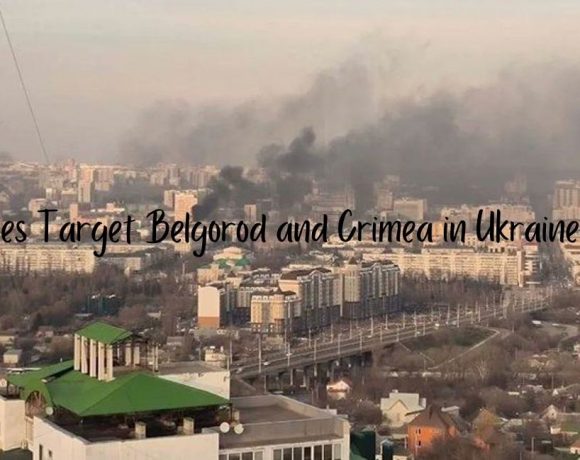
Russian authorities claim to have thwarted a Ukrainian attempt to attack a border city as the ongoing aerial conflict between the two nations escalates. They reported intercepting a dozen missiles targeting Belgorod, where 25 people lost their lives on Saturday. Ukraine has not provided a response.

This development follows Russia’s largest aerial bombardment on Ukraine, with President Volodymyr Zelensky stating that Russia deployed around 300 missiles and 200 drones over five days. The renewed attacks began last week, prompting a Ukrainian counterattack on Belgorod that resulted in over 100 injuries.

Zelensky revealed in a broadcast that Russia fired nearly 100 strategically chosen missiles on Tuesday, and Ukrainian forces successfully shot down 10 hypersonic ballistic missiles on that day alone. Ukrainian officials reported over 130 casualties from Tuesday’s attacks, including major cities like Kharkiv and Kyiv.

In response, Russia’s air defense system intercepted 12 missiles targeting Belgorod overnight, causing one fatality and five injuries in the region. Explosions were also heard in Sevastopol, the largest city in Russian-occupied Crimea, where a missile was shot down over the port with no reported casualties or damage.

Ukrainian Ambassador to the US, Oksana Markarova, expressed that Ukraine anticipated Russia’s recent bombardment but stressed the need for more weapons to effectively respond and send a clear message to Russia to halt its actions.

Russian President Vladimir Putin has pledged to increase strikes in retaliation for Ukraine’s recent attacks on Belgorod.

Picture Courtesy: Google/images are subject to copyright

News Trending War

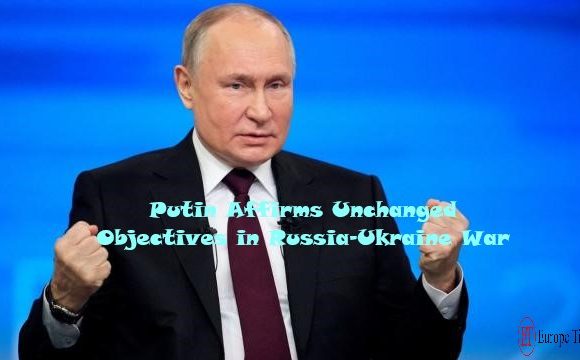
Russian President Vladimir Putin, during his first major news conference since launching a full-scale invasion of Ukraine in February 2022, stated that peace with Ukraine would only happen when Russia achieves its objectives.

He combined the event with his annual “direct line” phone-in and discussed the “special military operation in Ukraine,” emphasizing Russian sovereignty and a strong economy despite the war. Putin listed the objectives as “denazification, demilitarization, and its neutral status” for Ukraine. He revealed that Russia has 617,000 troops in Ukraine, with additional voluntary recruits, and mentioned losses without providing specific numbers.

Putin addressed Ukraine’s recent military success near the Dnipro River, attributing it to a last-ditch attempt to reach Crimea. He suggested Russian forces withdrew to wooded areas to protect soldiers and claimed Ukraine’s motives were politically driven to seek more military funding from the West. NATO Secretary General Jens Stoltenberg warned that if Putin succeeds in Ukraine, further aggression might follow.

Putin asserted that Russian forces have the upper hand on the front line in Ukraine, despite economic sanctions and political isolation. He expressed confidence in Russia’s ability to “move forward” despite these challenges.

Picture Courtesy: Google/images are subject to copyright

News Trending War

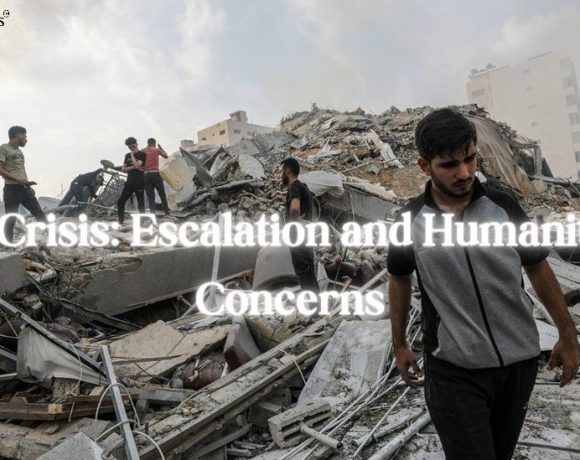
On Saturday morning, there were celebrations in Gaza as Hamas launched thousands of rockets into Israel and carried out deadly cross-border attacks. However, the situation took a grim turn the following day. Israeli shelling continued relentlessly throughout the night and into Sunday morning, driving people indoors as explosions rocked the area. Gaza was shrouded in clouds of black smoke as Israeli strikes hit 150 targets, including military positions, Hamas leaders’ homes, and banks. Among the significant targets was the Watan Tower, a vital hub for internet providers in Gaza.

The retaliatory Israeli air strikes have resulted in more than 400 casualties, severely straining Gaza’s already dire humanitarian situation. Power and water supplies have been disrupted, leaving most areas without electricity. Rubble obstructed roads in Gaza City, where shops were shuttered, except for a few bakeries with long queues.

Gaza’s hospitals, ill-equipped even in peaceful times, are overwhelmed, with desperate appeals for blood donors. According to Mahmoud Shalabi of the charity Medical Aid for Palestinians, the main hospital resembled a “slaughterhouse,” with an influx of casualties and overwhelmed medical staff.

Later on Sunday, the Israeli army sent SMS messages to Gaza City residents, advising them to seek shelter ahead of strikes. Over 20,000 people headed to United Nations sites in the area.

Hamas, in control of Gaza for 17 years, was seemingly prepared for such massive retaliation, having declared readiness for war with Israel. Despite the blockade, the group claims to have smuggled weapons and developed its arsenal. While some Gazans celebrated Hamas’ rocket attacks, many are apprehensive about the prolonged violence and uncertain future.

Picture courtesy: Google/images are subject to copyright

News Trending War

Moscow’s atmosphere is heavily influenced by Russia’s imperial history. The imposing Kremlin walls and towers create a sense of insignificance among visitors on Red Square.

A similar feeling arises five miles away at Victory Park, a vast complex of museums and memorials honoring the Soviet Union’s triumph over Nazi Germany. Its centerpiece, a colossal square with a 141.8-meter obelisk, pays tribute to each day of World War Two.

During my visit, the National Day of the Russian Flag is celebrated, marked by the unfolding of a massive tricolor flag, reportedly the nation’s largest. Ringed by Russian soldiers, the flag unfurls to the tune of patriotic music. The museum director’s speech underscores the unifying power of such events.

In the wake of the full-scale invasion of Ukraine, the Kremlin has actively promoted such patriotic gatherings.

Inside the Victory Museum, an exhibition glorifies the “heroes” of the “special military operation,” likening Russian involvement in Ukraine to the Soviet efforts in WW2.

Andrei Afanasiev, a pro-Kremlin blogger and academic, believes that patriotism gains importance during wartime, asserting that Russia is facing a Western-led conflict that necessitates self-reliance and unity. He maintains that patriotism has surged and that the Russian people are mobilized and united by the war.

Russian state TV portrays “successes” and “progress,” but the actual situation contrasts starkly. A military analyst reveals that the Russian military acknowledges being in a tough spot, having lost territory and with morale low due to their unpreparedness for modern warfare.

The analyst indicates that information about the battlefield situation is distorted as it moves up the chain of command, including to the president.

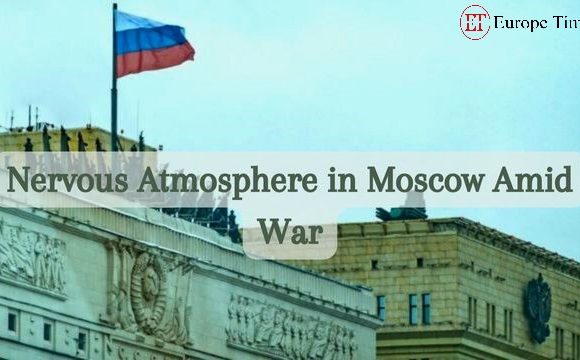
The overall atmosphere in Moscow exudes apprehension. Recent events, such as Yevgeny Prigozhin’s mutiny and the devaluation of the ruble, contribute to a sense of unease. The city’s skyline is juxtaposed with an anti-aircraft system atop the Russian Defence Ministry, symbolizing the coexistence of beauty and apprehension.

While individuals might not be perturbed by individual occurrences, there’s a prevailing sentiment of concern about the present and fear for the future.

In Gorky Park, a picturesque scene unfolds, with families enjoying the surroundings. Nearby, the Russian Defence Ministry stands, topped by an anti-aircraft system. This contrast doesn’t alarm locals, with some expressing approval for the military stance.

Fear has taken root in Moscow. Opposition activists convene in inconspicuous spaces, with Yulia Galyamina leading the meeting. She laments the frequent arrests of activists but remains committed to her cause. Other activists, using pseudonyms due to fear, underscore the presence of anti-war sentiment in Russia and their dedication to the cause.

Despite the challenges, they believe in humanity’s ultimate triumph and vow to persevere.

Picture Courtesy: Google/images are subject to copyright

News Trending

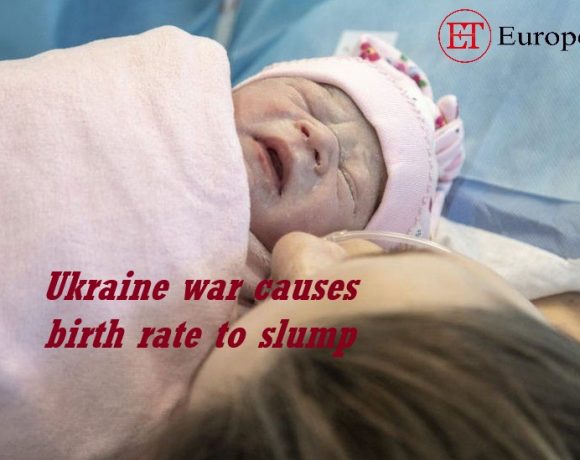
According to official statistics, the war in Ukraine has led to a significant decline in the country’s birth rate, with a decrease of 28%. In the first six months of 2023, only 96,755 children were born, compared to 135,079 in the same period in 2021. This drop is the most substantial decrease in birth rates since Ukraine gained independence in 1991.

Even before the conflict, Ukraine’s birth rate had been steadily declining over the past decade. However, the war has exacerbated the situation, resulting in the largest decline in births on record. The ongoing conflict has also had a severe impact on the country’s population, with nearly six million people fleeing, according to the United Nations.

Data collected by the Ukrainian data analytics website Opendatabot aligns with the observations of demographic experts, who have noticed similar declines in birth rates during previous wars. The US-based Population Reference Bureau states that fertility rates typically drop by up to one-third during civil conflicts but tend to rebound quickly after the fighting ends.

Before the invasion by Russia, Ukraine used to witness around 23,000 monthly births, but this number has now fallen to approximately 16,000. However, the decline in birth rates has not caused a significant imbalance between male and female births. In the first half of 2023, the number of boys born was 49,626, while girls accounted for 47,129.

The last time Ukraine experienced such a significant drop in birth rates was in 2014 when Russia invaded and annexed Crimea. During that period, the number of babies born decreased by 12%.

Picture Courtesy: Google/images are subject to copyright
News Trending War

Head of Wagner Mercenary Group, Yevgeny Prigozhin, announced in an audio message released by a Wagner-linked Telegram account that the group will continue its operations in Africa and Belarus but is currently not actively recruiting new fighters. Prigozhin stated that the majority of Wagner fighters are currently on leave due to a period of intense work. The group is in the process of determining its future objectives, which will be undertaken for the benefit of Russia.

While the group remains operational in Africa and maintains training centers in Belarus, Prigozhin did not provide specific details. Wagner is known for its presence in various African regions and its involvement in training Belarusian territorial defense forces. However, he emphasized that they do not plan to recruit new personnel at present. Nonetheless, if the country requires a new group to safeguard its interests, Wagner will initiate recruitment.

Prigozhin also mentioned that some fighters from the group have opted to transfer to other Russian power structures, a move that the group does not restrict. In June, Wagner fighters participated in a short-lived mutiny against Russia’s military leadership, and in the aftermath of the failed mutiny, President Vladimir Putin invited non-participating Wagner fighters to sign contracts with the Russian defense ministry.

In recent developments, on Monday morning, four people were killed in Kryvyi Rih, Ukraine, following Russian missile strikes. A drone attack was also reported in Russia’s border region of Bryansk, with a police station being hit. Moscow Mayor Sergei Sobyanin accused Ukraine of the drone attack on the Russian capital, resulting in damage to two office blocks. In response, Ukrainian President Volodymyr Zelensky warned that war was returning to Russia, and attacks on Russian territory were a natural consequence of the ongoing conflict between the two countries.

Picture Courtesy: Google/images are subject to copyright