featured Interview

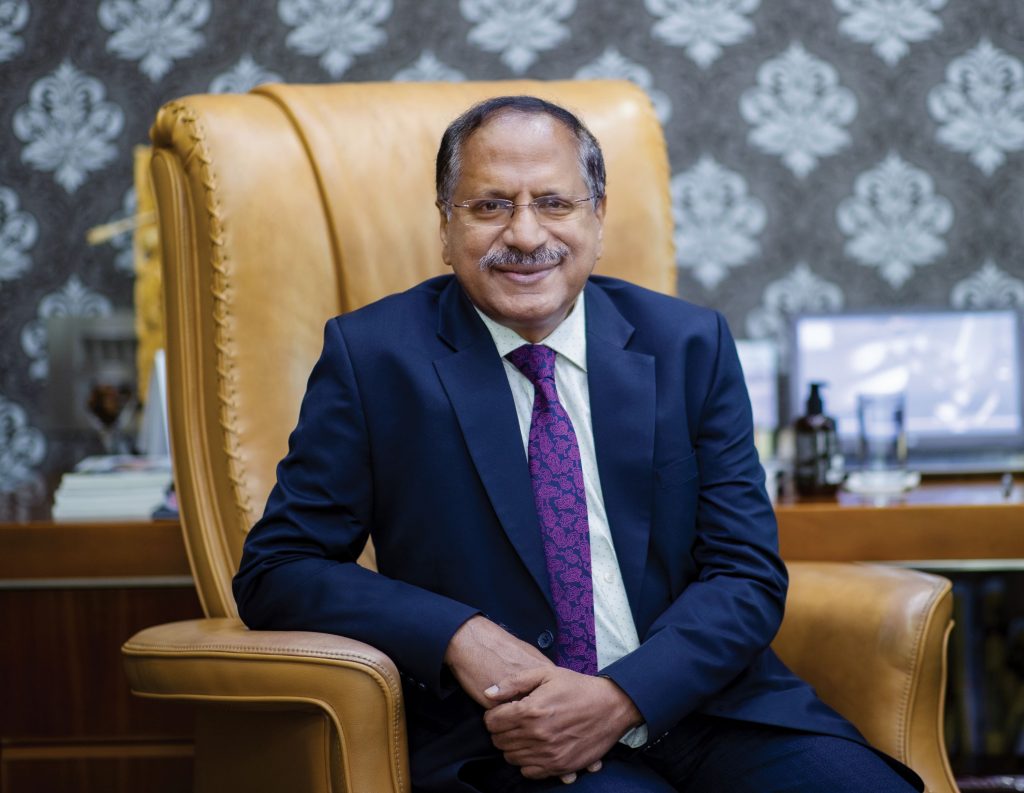
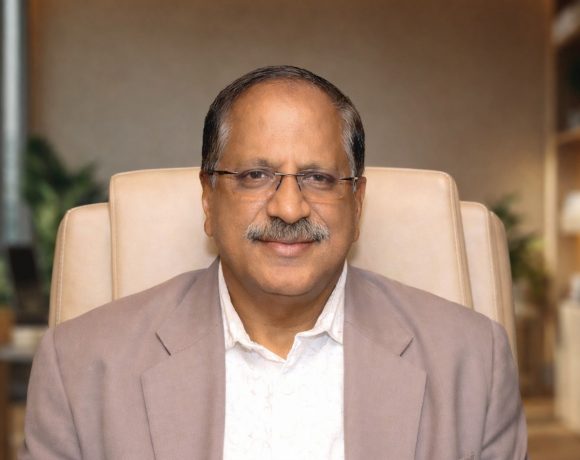
– By Shri. V.P. Nandakumar (Chairman & MD, Manappuram Finance Ltd)

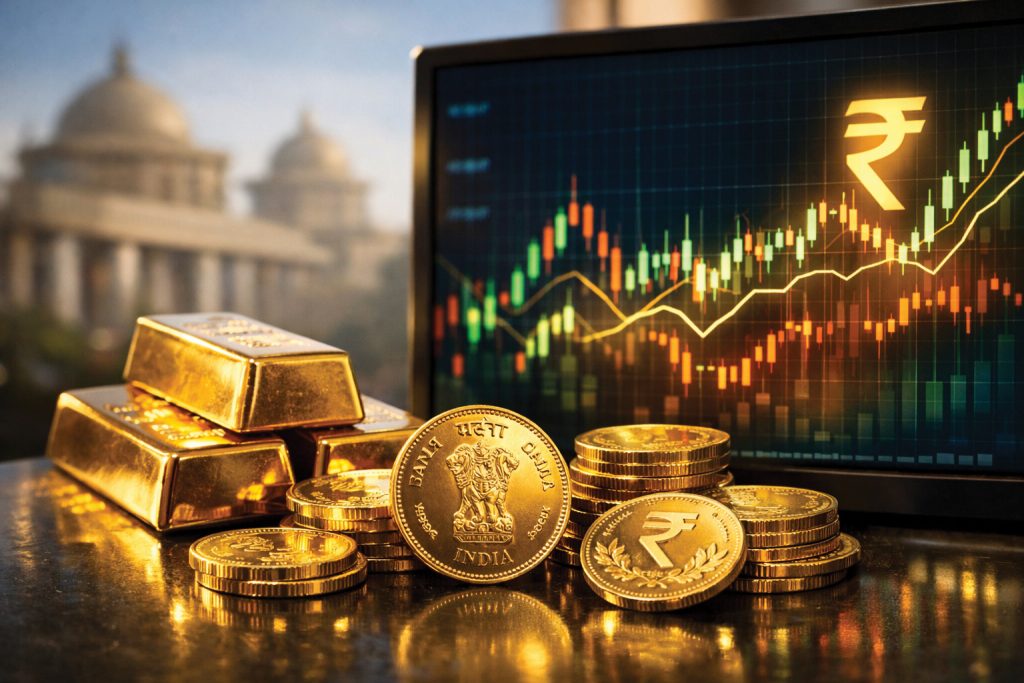
Gold had a blockbuster year in 2025, delivering returns in the range of 70–75% in rupee terms and setting multiple all‑time highs in both international and domestic markets. The rise in price far outpaced what most analysts had pencilled in a year earlier. As investors look ahead to 2026, the balance of strong safe‑haven demand, central‑bank buying and a broadly bullish commodities backdrop suggests further gains are likely, albeit at a more moderate pace than in 2025.
2025: A Year That Surprised Everyone

Most analysts entered 2025 expecting a good year for gold, but few anticipated the scale of the rally that eventually unfolded. Forecasts published in late 2024 typically clustered between 2,300 and 2,700 dollars an ounce for 2025, with even bullish scenarios stopping short of the levels ultimately reached. After all, gold went on to surge past 4,000 dollars an ounce at its October peak, with domestic prices in India approaching  ₹1.4 lakh per 10 grams as the year drew to a close.

For Indian investors, this translated into calendar‑year returns of roughly 70–75%, making gold one of the best‑performing mainstream asset classes of 2025. The magnitude of the move was such that even long‑time gold bulls were forced to revise up their targets as the year progressed.

Why the Meteoric Rise

Two structural forces were central to gold’s stellar performance: sustained central‑bank accumulation and easy global liquidity conditions, particularly in the United States. A recent analysis of official‑sector activity shows that annual central‑bank net purchases averaged about 473 tonnes between 2010 and 2021, then jumped to 1,136 tonnes in 2022, 1,051 tonnes in 2023 and 1,045 tonnes in 2024, with 2025 recording 950 tonnes of purchases. This extraordinary appetite reflects a desire among many reserve managers to diversify away from the US dollar at a time of heightened geopolitical risk and concerns about the long‑term sustainability of developed‑market fiscal positions.

India’s own central bank has been an active participant in this trend. The Reserve Bank of India’s gold reserves rose to about 880 tonnes by the third quarter of 2025, up significantly from earlier years, and a larger proportion of these holdings is now kept domestically rather than overseas. These additions underscore gold’s growing role in India’s external balance‑sheet resilience and send a powerful signal to domestic investors about the metal’s strategic importance.

On the macro side, persistently loose fiscal and monetary policy in the United States has been a powerful tailwind. Large fiscal deficits, rising public debt and a stop‑start approach to tightening have kept real interest rates contained and revived fears of long‑term dollar debasement. With markets increasingly pricing in further rate cuts into 2026, non‑yielding assets such as gold have benefited from a lower opportunity cost of carry.
The Broader Commodities Boom

Gold’s outperformance in 2025 did not occur in isolation; it was part of a broader upswing across the commodities complex. Silver, the traditional high‑beta counterpart to gold, almost tripled in domestic terms, with some estimates placing its annual gain at around 150–170%, supported by both safe‑haven flows and surging industrial demand from sectors such as electronics, solar and electric vehicles.

Base metals also joined the party. Copper prices on Indian exchanges delivered returns of more than 60% in 2025, while aluminium and other industrial metals posted strong double‑digit gains on the back of tightening supply, energy‑transition investment and restocking in key manufacturing hubs. This synchronous rally across precious and base metals suggests that investors were not only seeking safety, but also positioning for a new capex cycle and a world increasingly constrained by resource bottlenecks.

2026 Outlook: Tailwinds, Headwinds, and Forecasts

Looking ahead, consensus projections still point to upside for gold, but from a much higher base and with greater dispersion in views. Major investment banks now see gold averaging somewhere in the mid‑4,000s per ounce in 2026, with some calling for targets as high as 4,900–5,000 dollars under benign conditions that do not assume a full‑blown crisis.

On the tailwind side, three factors stand out:
* Ongoing central‑bank demand, particularly from emerging markets seeking to diversify reserves.
* Expectations of further monetary easing in advanced economies, which would keep real yields low and support non‑yielding assets.
* Elevated geopolitical tensions and “fragmentation risk”, which sustain safe‑haven flows into gold and other real assets.
* Set against these are some potential headwinds. A sharper‑than‑expected slowdown in global growth could dampen jewellery and industrial demand, especially in Asia. A strong rebound in the US dollar, perhaps triggered by a more hawkish Federal Reserve path, could also cap dollar‑denominated gold prices even if local‑currency prices remain firm in emerging markets. Finally, after the extraordinary gains of 2025, there is always the risk of intermittent profit‑taking as leveraged players rebalance portfolios.

Taken together, these forces argue for a more measured performance in 2026: gold is unlikely to repeat the fireworks of the previous year, but the fundamental backdrop still appears supportive of an upward drift rather than a reversal. The fact that silver, copper and aluminium have all outpaced gold in percentage‑return terms reinforces the view that a broader commodities cycle is under way, with gold acting as both anchor and barometer of investor sentiment.

Where Might Gold Be by End‑2026?

Forecasting precise price levels is always hazardous, more so after a year as exceptional as 2025. Nonetheless, looking at the prevailing central‑bank buying patterns, projected interest‑rate cuts and the continued churn in global geopolitics, it is reasonable to expect gold to finish 2026 modestly higher than current levels rather than meaningfully lower. Many institutional forecasts cluster around a further 10–15% upside over a two‑year horizon, implying that by December 2026, international prices could be broadly in line with the 4,500–4,900‑dollar‑per‑ounce range, with domestic prices in India adjusting accordingly based on currency movements and local demand.

A December 2025 commodities outlook note from Goldman Sachs forecasts gold at 4,900 dollars per ounce by the end of 2026, supported by strong central‑bank demand and expected US Federal Reserve rate cuts. JP Morgan’s late‑2025 outlook calls for gold to average about 5,055 dollars per ounce in the fourth quarter of 2026, one of the more optimistic projections among major banks. The bank cites persistent central‑bank purchases (around 566 tonnes per quarter) and a Fed easing cycle, alongside worries about stagflation and currency debasement, as key supports for this higher path.

For investors and policy‑makers alike, the key message is that gold’s role as a strategic hedge has been reaffirmed, not diminished, by its recent outperformance. Central‑bank purchases, including those of the Reserve Bank of India, underline the metal’s importance as a reserve asset, while households have been reminded once again of its ability to protect real wealth in an era of loose monetary and fiscal policies aggravated by geopolitical flux. The most prudent base case, therefore, is for a continued, moderate appreciation in gold over 2026, with volatility along the way but with its safe‑haven status firmly intact.

Pic Courtesy: Pegasus Photography/ images are subject to copyright

News Trending

Dr Sumitha Nandan, the newly-appointed Executive Director of Manappuram Finance, brings to the table oodles of energy and a fresh worldview – By Sujit Chandra Kumar

Dr Sumitha Nandan’s earliest memories about her growing-up years in Valapad revolve around her grandfather, the late Mr V.C. Padmanabhan. Says Dr Sumitha, the newly-appointed Executive Director of Manappuram Finance, which has its headquarters in Valapad: “I was his favourite grandchild, perhaps because I was the eldest. Whenever I took a fancy for something, I would run to him rather than my dad.”
The most poignant and painful of all the memories surrounds the passing away of her granddad who founded the Manappuram group of companies. “It was all so sudden. None of us among kids could figure out what was happening. We saw the ambulance arrive and all our favourite people in mourning. Then, I had to take leave from school for the ceremonies,” she reminisces.

The year was 1986 and Sumitha was then in the third standard. It was the same year when her dad Mr V.P. Nandakumar took over his father’s single-room business at Valapad. The rest, as they say, is corporate history. Says Dr Sumitha: “Manappuram has always been dad’s first child. He eats, drinks and breathes Manappuram.”

In those days, life was a lot different in the sleepy hamlet tucked away in Thrissur, she observes. “On Sundays, we would go to the beach and have a running race for which dad would join too. We would then run from one part of the beach to another where a stream joins the ocean. On our way back on late evenings, we would meet all the members of our extended family. Dad is very emotionally connected to his extended family and our neighbours and so he would make us interact with all of them.”

After her seventh standard, she moved to Bangalore to join the Bishop Cotton Girl’s School. “Every time I returned, I would be struck by the greenery, the pristine village environs and the close connectivity of the people, as opposed to the city’s hustle and bustle,” she says. Today, Valapad has blossomed into a self-contained township thanks to the ‘Manappuram effect’, a far cry from the days when Dr Sumitha, her brothers and cousins would play in the open fields, pluck cashew fruits and have their mouth full of almonds.

After Bangalore, she moved to Kodaikanal for her Plus Two and then made the biggest career choice of her life when she joined the Sidhartha Medical College in Tumkur. “This may come as a surprise to many but medicine was not at all in my list of choices. I grew up watching my dad lead Manappuram from strength to strength and did not want to pursue any career other than business. But then, the prevailing trend was for parents to push their kids to do either medicine or engineering after the twelfth. My parents were no different and I had to go by their wish,” she says. “In fact, it was during my house surgency at the Jubilee Mission Medical College and Research Institute in Thrissur that I really became interested in the medical field and woke up to its myriad possibilities.” Subsequently, she worked at the Vijaya Hospital in Chennai for a year before enrolling for her postgraduation in gynecology at the Ramachandra Medical College in Chennai.

Meanwhile, she got married and moved to Kochi where she had stints with leading hospitals such as the Thrikkakkara Cooperative Hospital, the Indira Gandhi Cooperative Hospital and KIMS. But the desire to be an entrepreneur pulled her back and made her join Manappuram Finance as Senior Vice President first and then as Executive Assistant to MD & CEO. During her three-and-a-half-year stint, she handled many key assignments including the one as the CEO of Online Gold Loan division. “It was a new concept then and I had a young team and we were able to make a lot of headway,” she recalls.

In 2018, she felt that she hadn’t done full justice to her training and talent as a medical professional. “I did miss my profession and I am someone who likes to listen to people’s problems and solve them,” says Dr Sumitha, who went back to being a doctor. Initially, she taught at the Amritha Institute of Medical Sciences in Kochi but was determined to do something unique and specialised in Cosmetic Gynecology, a new sub branch that was little-known in Kerala. “I practised it at the CIMAR hospital in Kochi and I am still the only one to handle this discipline in the state,” she says. “To give an example, for a problem like stress urinary incontinence, there was only the option of invasive surgery where you put a sling or a mesh. But if detected early, you can now tackle it with a couple of sittings of laser and I have over 95 per cent rate of success in this line of treatment. There are also solutions to many other conditions which women hesitate to open up about.”

Life came full circle for Dr Sumitha when she rejoined Manappuram Finance as Executive Director in January this year. She has her task cut out as the head honcho of an NBFC with a network of 5,200 branches that crisscross the country and a workforce of 45,000 employees. She realises that the challenge is to take the company to the next level and she has no doubt that her exposure to other fields would be a distinct advantage. “Whether you are in the healthcare sector or finance sector, business is all about people management. When you are a doctor, you tend to be a little more compassionate and this would be a plus when it comes to managing people and managing change,” she says. “There is already a well-established system in place at Manappuram. The task is to bring a certain cohesion so that it runs like a well-oiled machine. One cannot achieve anything all by oneself but only through team building and the right kind of leadership. In my view, success comes to those companies that manage to do things a little better than their competitors.”

She goes on to add that without innovation and readiness to change, no business or industry can hope to succeed. “Going digital is no longer an innovation but an absolute necessity. Post Covid, everything has become digital because people have tasted convenience. Shopping is the best example. Even in the medical field, people turned to online consultation in an industry that always believed in one-on-one consultation. But Covid has proved to be the biggest disruptor. Even people who were resistant to change were forced to embrace the online mode,” she says.

She cites the example of how in her previous stint at Manappuram, a lot of time and effort was spent on making the office go paperless. “We even hired a senior official to facilitate the process but it did not help much. But Covid ensured what humans couldn’t and the office is now paperless. Unless there is an adversity, people are not willing to imbibe change because change is always painful,” she explains.
Even as she maintains a hectic schedule at work, Dr Sumitha takes care to spend quality time with her two daughters, Anushka and Aashirya, whenever she can. “Ours is the only generation that had to listen to our parents as well as our kids,” jokes Dr Sumitha, who radiates an effervescent nature.

“Today’s generation will not simply accept whatever you tell them but will have a million questions. But I am fortunate to have kids who are very adjusting, perhaps because I have always been a working woman. My Sundays are mostly devoted to them. I feel it is important to have open conversations with your children. You need to be a friend and inspire confidence in them so that they share their joys as well as disappointments with you,” she says. “Yes, you have to monitor them but at the same time give them the space that they require. You have to allow them to have their privacy, the freedom to take their own decisions and the chance to fail and learn from mistakes.”

A trained Bharatnatyam dancer, Dr Sumitha unwinds by listening to melodies, enjoying classical art forms and watching videos on self-improvement. Her day starts with an hour of chanting and meditation. “It is important to differentiate between religion and spirituality. While religion is restrictive, spirituality is liberating,” she signs off.

Picture Courtesy: Pegasus Photography/images are subject to copyright