
featured News Trending

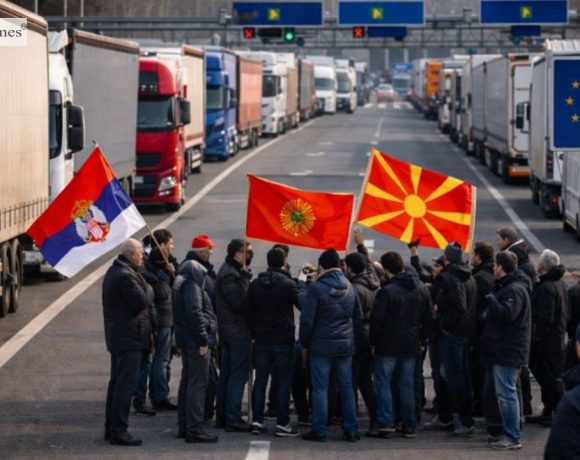
Truck drivers across the Western Balkans continued blocking cargo terminals at European Union borders for a fourth straight day, as regional governments urged Brussels to ease new rules they say are crippling trade. Drivers in Bosnia, Montenegro, North Macedonia and Serbia began protests this week against stricter enforcement of the EU’s entry-exit system, which they say risks detention or deportation for breaching Schengen stay limits.

Despite the EU saying it is working on a new visa strategy for highly mobile professions such as truck drivers, protests persisted on Thursday. At the Batrovci crossing between Serbia and EU member Croatia, long lines of trucks blocked access to cargo terminals, disrupting a key transport corridor linking the EU with Turkey and the Middle East. Truckers said they would continue demonstrations until concrete solutions are offered.

Serbia’s Chamber of Commerce said nearly all exports from the four countries were halted, causing losses of about 92 million euros a day, with EU-based companies also affected. Montenegro’s president has appealed to EU officials to consider the needs of regional transporters, while Serbia is seeking talks with the European Commission on options such as special visas or permits. Some blockades have eased, including at Montenegro’s port of Bar, but pressure remains high for a swift compromise.

Pic courtesy: google/ images are subject to copyright
News Trending

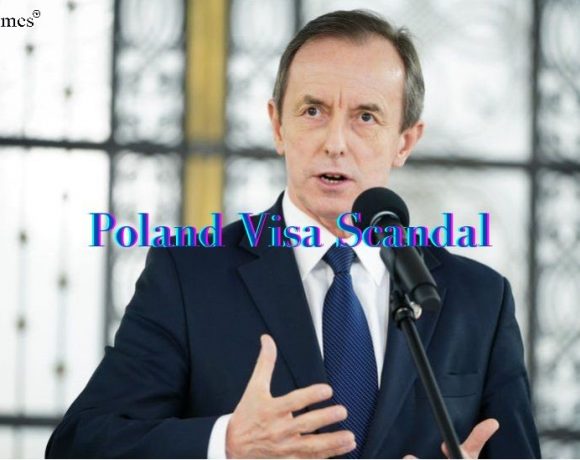
The Speaker of Poland’s upper house of parliament, Tomasz Grodzki, has urged the government to disclose its knowledge regarding an escalating scandal involving cash for visas. Grodzki expressed concern that the issue was damaging Poland’s international image as a responsible democracy.

Reports suggest that migrants paid substantial sums, up to $5,000 (£4,000) each, to expedite their work visa applications. While seven individuals have been charged in connection with the scandal, none of them are public officials.

The Deputy Foreign Minister of Poland, Piotr Wawrzyk, was dismissed last week in the wake of these allegations. His removal coincided with a search of the foreign ministry conducted by Poland’s Anti-Corruption Bureau (CBA). The director of the ministry’s legal service was also terminated.

In response to the scandal, the foreign ministry announced the termination of all contracts with outsourcing companies responsible for handling visa applications since 2011. Opposition MPs allege that as many as 250,000 visas for individuals from Asia and Africa were irregularly issued through these outsourcing companies, a claim disputed by the government, which maintains that only several hundred were involved.

Donald Tusk, the leader of the opposition Civic Platform party, criticized the government’s migration policy, stating that anyone seeking to travel from Africa to Poland could easily obtain a visa at the embassy. Prime Minister Mateusz Morawiecki dismissed these allegations, asserting that there is no widespread issue.

Speaker Grodzki characterized the scandal as the most significant Poland has faced in the 21st century, with corruption reaching the highest levels of government, posing a direct threat to the country. Justice Minister Zbigniew Ziobro downplayed the scale of the problem in an interview with state-run news channel TVP Info.

The Anti-Corruption Bureau (CBA) became aware of the matter in July 2022 and has been conducting investigations since then. This scandal has the potential to cast a shadow over the Law and Justice party’s (PiS) anti-immigration stance ahead of parliamentary elections scheduled for the next month. While PiS currently leads in polls, it remains uncertain whether they can secure the outright majority required to continue governing for a third term.

Picture Courtesy: google/images are subject to copyright