News Trending

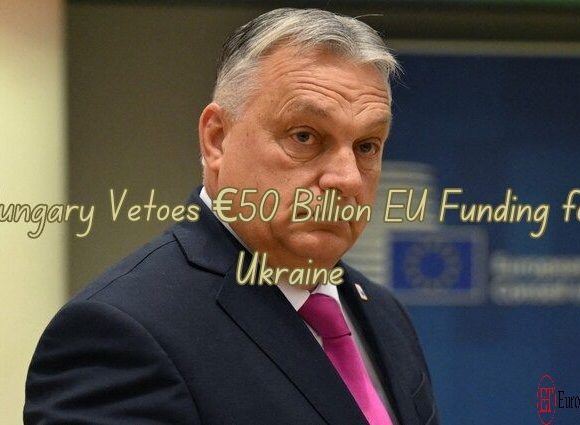
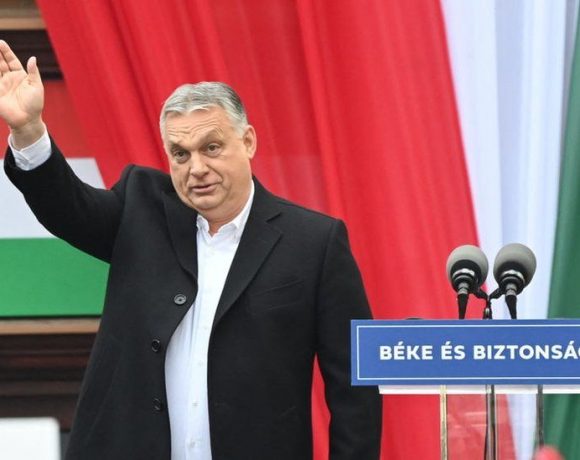
Hungary, led by Prime Minister Viktor Orban, has blocked €50 billion in EU aid for Ukraine, a move that comes just hours after EU leaders reached an agreement to begin membership talks. Orban, known for maintaining close ties with Russia, announced the veto, citing opposition to additional financial support for Ukraine. While the EU leaders unanimously agreed on aid and wider budget proposals, Hungary’s objection led to the postponement of aid negotiations until early next year. Despite Hungary’s stance, the EU proceeded with granting membership talks to Ukraine, Moldova, and candidate status to Georgia.

The decision to block aid raises concerns for Ukraine, which heavily relies on EU and US funding in its ongoing struggle against Russian forces. This setback comes at a time when Ukraine is also seeking approval for a $61 billion US defense aid package, facing delays due to disagreements among US lawmakers. The potential implications for Ukraine’s counter-offensive against Russian forces, especially with the arrival of winter, heighten anxieties about the country’s ability to resist the occupation.

President Zelensky of Ukraine expressed gratitude for the EU’s decision on membership talks, despite the aid block. The EU’s move to include Ukraine and Moldova in accession talks was celebrated as a “victory” by Zelensky, who emphasized the importance of the decision for both countries. Moldova’s President Maia Sandu also welcomed the development, acknowledging the shared path to EU accession with Ukraine. Germany’s Chancellor Olaf Scholz praised the decision as a “strong sign of support,” highlighting that both Ukraine and Moldova belonged to the “European family.”

Prime Minister Orban, in a video message on Facebook, distanced himself from his EU counterparts, labeling Ukraine’s membership as a “bad decision” and reiterating Hungary’s opposition to providing substantial funds to Ukraine. The EU’s decision to open accession talks does not guarantee immediate membership for Ukraine, as the process involves passing numerous reforms and adhering to EU standards, a journey that can span several years. Despite the challenges, the EU’s commitment to engaging in talks signals a significant step toward fulfilling Ukraine’s Euro-Atlantic aspirations.

Picture Courtesy: Google/images are subject to copyright
News Trending War

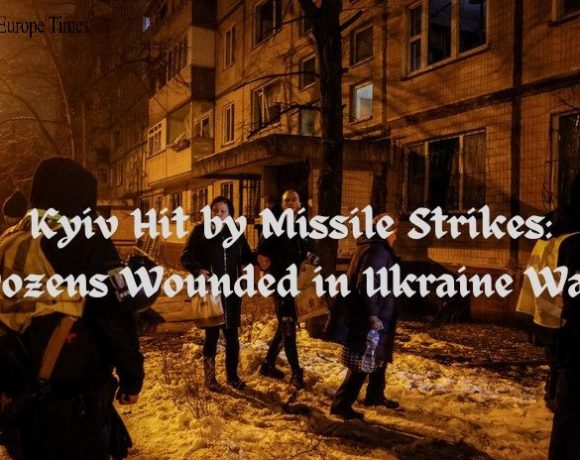
Dozens of people were injured in a series of missile strikes on the Ukrainian capital, Kyiv, overnight, with 53 people, including six children, harmed, according to Mayor Vitali Klitschko. The attacks occurred after President Volodymyr Zelensky’s plea for increased military aid in the US yielded little progress. Ten Russian ballistic missiles were reportedly shot down, damaging kindergarten and hospital buildings. Zelensky, who left the US prior to the strikes, vowed a response and criticized Russia for targeting residential areas. The EU is set to discuss further aid for Ukraine, and Zelensky arrived in Norway for additional support talks.

The attack on Kyiv followed the use of cruise missiles by Russia, ending a 79-day hiatus in missile attacks. Ukraine’s air force claimed to have intercepted all 10 incoming missiles. The projectiles were identified as Iskander-M ballistic missiles and S-400s, designed for air defense but also used against ground targets. A major cyberattack on Ukraine’s largest mobile network operator, Kyivstar, disrupted operations, impacting millions of people relying on air raid alerts. Additionally, the port city of Odesa faced drone attacks, causing injuries and damage.

Zelensky’s efforts to secure more military aid in the US faced challenges, with President Joe Biden warning Republicans about giving Russia a “Christmas gift” if aid was not increased. Zelensky and Biden agreed to enhance air defense systems for Ukraine. Meanwhile, a summit of European leaders discussed Ukraine’s potential accession to the EU, but Hungarian Prime Minister Viktor Orban opposed opening accession talks, emphasizing the need for support without full membership.

Hungary has previously clashed with EU partners over its stance on Russia’s invasion of Ukraine. EU Commission President Ursula von der Leyen stressed Ukraine’s fight as crucial for Europe and urged support for its inclusion in the European family.

Picture Courtesy: Google/images are subject to copyright
News Trending War

The headline in the tabloid Metropol, distributed to morning commuters flocking through Budapest’s Western Station, screams, “Peace or War.” In the box next to the “peace” option, there’s a nice blue cross.

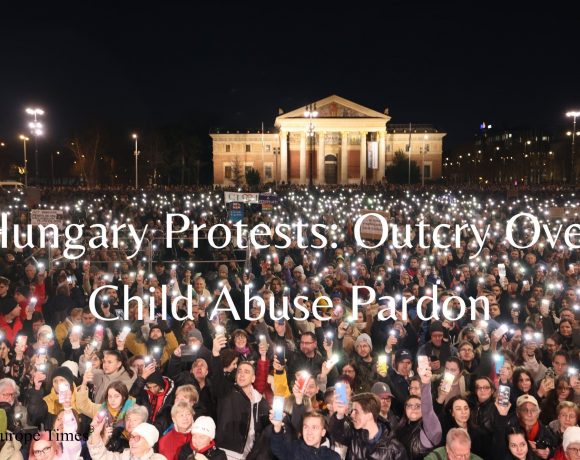
That is Viktor Orban’s Fidesz party’s campaign slogan as it seeks a record fourth consecutive term in office in Sunday’s elections. After 12 years in power, they are facing their first serious challenge from a coalition of six opposition parties led by Peter Marki-Zay. The race has been accelerated by Russia’s war in Ukraine.

Hungary shares a border with Ukraine and has so far taken in more than 500,000 refugees. Mr. Orban insists that the only way to keep Hungary out of the war is for him to help the people while refusing to supply weapons to Ukraine. Although his party’s slogan of “peace or war” is simplistic, it is effective. And it’s broadcast, printed, and illuminated in large letters everywhere in Hungary.

It disrupts any music you’re listening to on YouTube, as well as videos featuring international coverage of the Ukraine conflict. According to a group of critical monitoring organisations, the government has spent eight times more on its campaign than all of the opposition parties combined.

The fact that the ruling party enjoys the support of a largely compliant media also helps. On the other hand, the opposition’s catchphrase is “Orban or Europe.”
Their candidate, Peter Marki-Zay, proposes that Hungary join Poland, the United Kingdom, and others in providing arms to Ukraine. Should consider sending troops if called upon, but only within a Nato framework.

Picture Courtesy: Google/images are subject to copyright