featured News

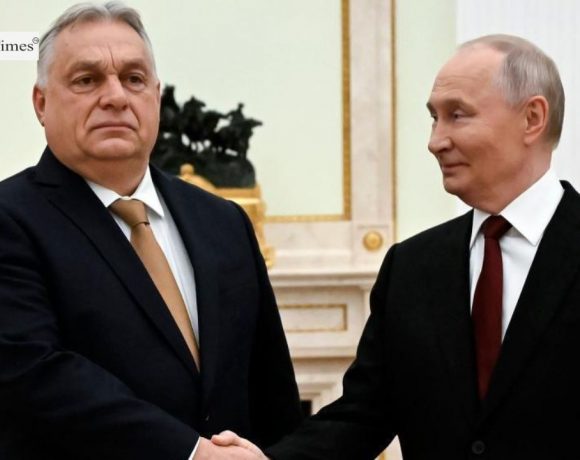
Hungarian Prime Minister Viktor Orban has once again broken ranks with his EU and NATO partners by meeting Russian President Vladimir Putin in Moscow, just days before US-Russia discussions on the Ukraine war. Orban, one of Putin’s closest allies in Europe, has consistently opposed European efforts to isolate Russia, and his latest visit drew sharp criticism from EU leaders. Germany’s Chancellor Friedrich Merz said Orban was acting without any European mandate, calling his diplomacy “nothing new.”

During the meeting, Putin thanked Orban for offering Budapest as a venue for a potential Trump-Putin summit and praised Hungary’s “balanced position” on Ukraine. Hungarian Foreign Minister Peter Szijjarto said the visit secured guarantees for Russian oil and gas supplies and confirmed continued work on Hungary’s Paks nuclear plant. The atmosphere, however, appeared tense, with reports of awkward interactions and suggestions from Hungarian media of mistranslated remarks meant to paint a friendlier picture.

Orban, facing a tough parliamentary election next April, is seen as using these high-profile diplomatic moments to strengthen his political standing. He continues to champion Trump’s proposed peace plan for Ukraine while accusing EU leaders of warmongering. Despite pressure from Brussels to cut dependence on Russian energy by 2027, Hungary still relies heavily on Russian oil, gas, and nuclear fuel. As Putin openly supports Orban’s re-election, both leaders appear aligned in leveraging the visit for political advantage.

Pic Courtesy: google/ images are subject to copyright

featured News

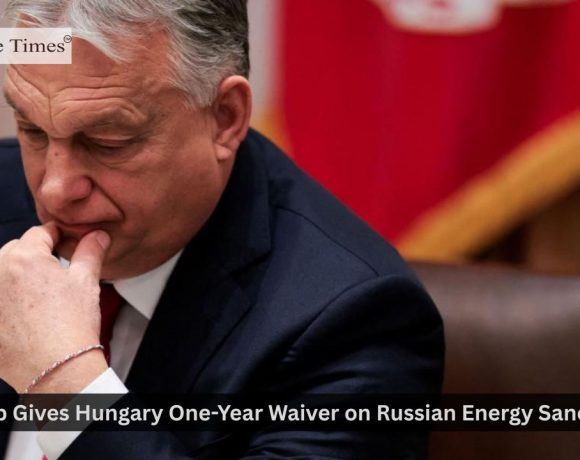
President Donald Trump has granted Hungary a one-year exemption from US sanctions on Russian oil and gas imports, marking a diplomatic win for Hungarian Prime Minister Viktor Orban. The decision, confirmed by a White House official, follows Orban’s visit to Washington, where he argued that his landlocked nation faced severe energy supply challenges without Russian imports. Trump acknowledged Hungary’s unique position and noted the difficulty of finding alternative sources of oil and gas.

The exemption comes just weeks after the US imposed harsh sanctions on major Russian energy companies, warning of penalties for nations continuing trade with them. As part of the deal, Hungary agreed to purchase several hundred million dollars’ worth of US natural gas, though the arrangement is expected to unsettle many European capitals critical of Orban’s pro-Russia stance. The move underscores the close personal and political ties between Trump and Orban, who share similar right-wing populist views.

During their meeting, the two leaders also discussed the ongoing war in Ukraine, with Trump hinting at future peace talks involving Russian President Vladimir Putin. Orban reiterated his belief that Ukraine cannot win the conflict without a “miracle,” arguing that only the United States and Hungary genuinely seek peace. Despite tensions with the European Union, Trump praised Orban as a strong and pragmatic leader and urged Europe to accord him greater respect.

Pic Courtesy: google/ images are subject to copyright

featured News

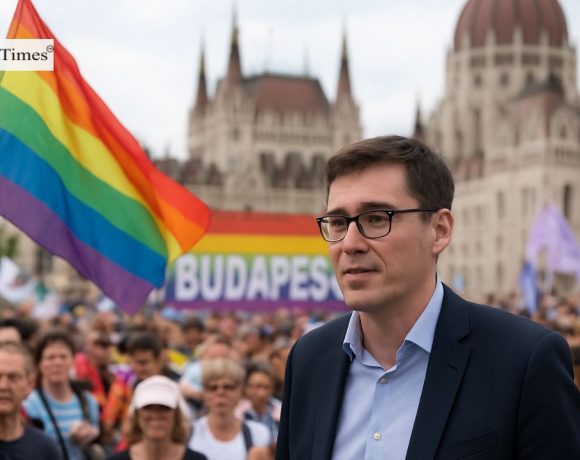
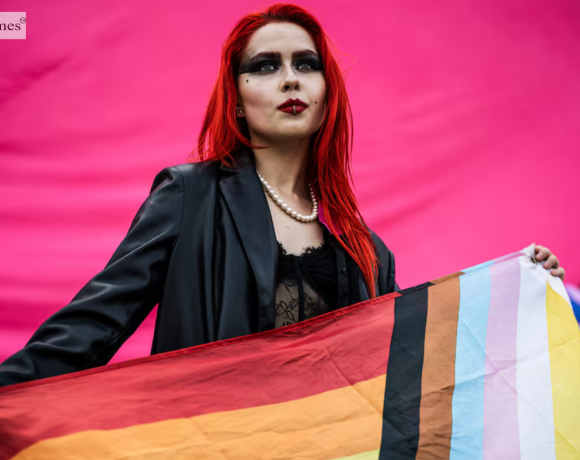
Hungarian Prime Minister Viktor Orban has warned of “clear legal consequences” for those organizing or participating in the Budapest Pride march, following a police ban on the event. The march, scheduled for this weekend, has been deemed illegal under new legislation passed in March, which allows authorities to prohibit LGBTQ parades on the grounds of child protection and use facial recognition technology to identify attendees and impose fines.

Orban defended the ban during a state radio interview, urging citizens to respect the law while stating that Hungary remains a “civilised country” where police should aim to convince people, not confront them. “We are in the world not to make each others’ lives more difficult but easier,” he said, calling this principle the essence of Christianity.

The ban has drawn criticism from human rights groups and Western allies, with over 30 countries, including Britain, France, and Germany, expressing support for Hungary’s LGBTQ community. European Commission President Ursula von der Leyen also urged the Hungarian government to allow the march. Orban compared her intervention to Cold War-era Soviet control, accusing Brussels of trying to dictate how Hungarians should live.

Pic Courtesy: google/ images are subject to copyright

featured News Trending

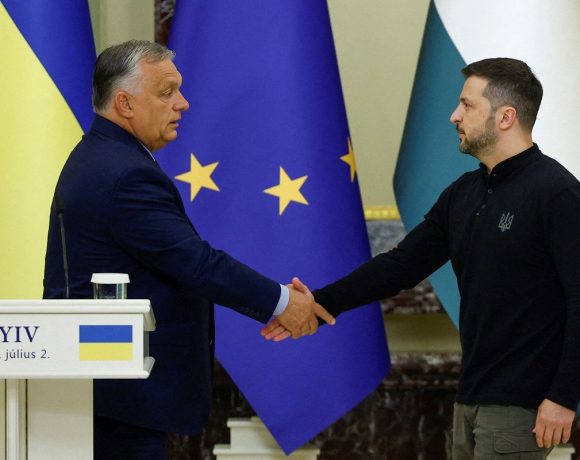
Viktor Orban arrived in Ukraine on Tuesday for an unannounced visit shortly after assuming the role of rotating president of the European Union. While in Kyiv, the Hungarian prime minister suggested that a ceasefire between Russia and Ukraine could expedite negotiations to end the ongoing conflict, which began with Russia’s full-scale invasion in 2022.

Orban, known for his critical stance on Western support for Ukraine and close ties with Russian President Vladimir Putin, has not visited Ukraine in 12 years but has met with Putin several times. During his joint appearance with Ukrainian President Volodymyr Zelensky, their body language was notably reserved, and neither took questions from the media.

Orban previously delayed the agreement on a €50 billion EU aid package meant to support Ukraine against Russia. However, his new role as head of the European Council for the next six months grants him significant influence as a European figurehead. He emphasized the need to resolve past disagreements and focus on future cooperation during his discussions in Ukraine.

Zelensky stressed the importance of maintaining Europe’s support for Ukraine and fostering meaningful, mutually beneficial cooperation among European neighbors. Orban highlighted the necessity of collaboration and proposed a ceasefire to hasten peace negotiations with Russia, expressing gratitude for Zelensky’s candid responses.

Orban stated that his visit underscored the importance of peace not just for Ukraine but for all of Europe, acknowledging the war’s profound impact on European security. Zelensky did not publicly respond to Orban’s ceasefire comments but later posted on X, emphasizing the significance of European unity and collective action. He described their discussion as focused on achieving a just, lasting, and fair peace.

Many Ukrainians view a ceasefire as potentially solidifying Russia’s control over seized territories and prefer negotiations from a position of strength. Ukrainian Foreign Minister Dmytro Kuleba expressed openness to working with all parties to solve problems, acknowledging the challenges but emphasizing the potential for tangible results.

During Orban’s visit, he and Zelensky also addressed bilateral issues, including the status of the 100,000 ethnic Hungarians living in Ukraine. Orban expressed optimism about progress on the rights of ethnic Hungarians and wished Ukraine success. The EU had initiated membership talks for Ukraine just before Hungary assumed the EU Council Presidency.

Picture Courtesy: google/images are subject to copyright

News Trending

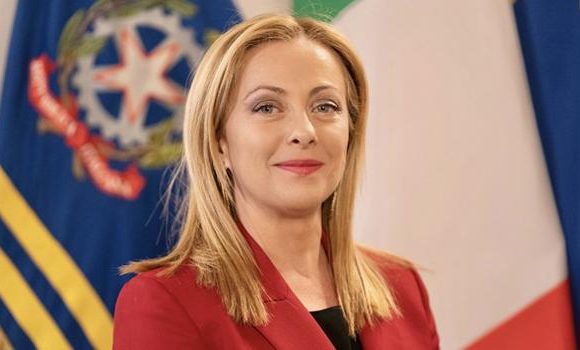
Italians have begun voting on the third of four days of European elections taking place across 27 EU nations. Although these votes are for the next European Parliament, Italian Prime Minister Giorgia Meloni hopes the outcome will strengthen her position in Italian politics. She has even encouraged voters to “just write Giorgia” on their ballots.

Most EU countries are voting on Sunday after several weeks of turmoil during which two European leaders and other politicians were physically attacked. On Friday evening, Denmark’s Prime Minister Mette Frederiksen was assaulted in the street in Copenhagen ahead of Sunday’s Danish vote. She sustained minor whiplash, according to her office, and a suspect has been detained.

European leaders have expressed their shock at the latest attack amid elections involving around 373 million European voters. Last month, Slovak Prime Minister Robert Fico survived an assassination attempt and was only recently discharged from the hospital. Several German politicians have also been targeted.

While these elections are intended to be separate from national politics, the reality is often different, especially in Italy. Meloni, who leads the far-right Brothers of Italy (FdI), was appointed prime minister in 2022. She has taken the unusual step of putting her name at the top of her party’s ballot, despite having no plans to take a seat in the European Parliament.

Since becoming prime minister in 2022, Meloni has enjoyed steady poll ratings, helped by a fragmented centrist and left-wing opposition and the decline of her junior coalition partner, Matteo Salvini’s League party. To counter this trend, Salvini has shifted his party’s rhetoric further to the right. The League’s election posters, which criticize EU-backed initiatives like electric cars and tethered caps on plastic bottles, have drawn both ridicule and attention.

Salvini’s lead candidate, Roberto Vannacci, has also drawn attention. The army general, dismissed after self-publishing a book with homophobic and racist views, has doubled down on these views since becoming a League candidate. His messages are frequently amplified by the media, which could translate into votes for the League. If not, Salvini’s leadership could be in jeopardy.

Similarly, the left-wing Democratic Party (PD) leader Elly Schlein must match the 19% vote share from the 2019 elections to maintain her position. Further to the left, Ilaria Salis, a self-described antifascist activist detained in Hungary since 2023, is running on the Left/Greens platform.

These European elections hold significant importance. While the Netherlands voted on Thursday, with exit polls suggesting a tight race between a left-green alliance and Geert Wilders’ Freedom Party, other countries like Ireland, the Czech Republic, Slovakia, Latvia, and Malta are voting across the weekend. Germany is voting on Sunday, with the center-right CDU/CSU expected to surpass Chancellor Olaf Scholz’s Social Democratic Party.

In France, President Emmanuel Macron’s Renaissance party is competing for second place with the Socialist party, trailing Marine Le Pen’s National Rally (RN). Macron, warning of the threat to Europe from the surge of the right, has called for a high turnout. Slovak Prime Minister Robert Fico, recovering from surgery after an assassination attempt, has recently criticized Slovakia’s liberal opposition. Hungary’s Viktor Orban, opposing EU support for Ukraine, warned that Europe is nearing a point of no return in preventing conflict from spreading beyond Ukraine’s borders.

Italy’s polls will be the last to close at 23:00 (21:00 GMT) on Sunday, with initial projections combining provisional results and estimates expected shortly after.

Picture Courtesy: Google/images are subject to copyright

News Trending

Brussels police are enforcing an order to shut down the National Conservatism Conference, preventing further entry of guests. Concerns over public safety prompted local authorities to oppose the event, which aimed to gather right-wing politicians like Nigel Farage and Hungarian Prime Minister Viktor Orban, along with figures such as former UK Home Secretary Suella Braverman and French politician Eric Zemmour. Organized by the Edmund Burke Foundation, the conference advocates for traditional values and opposes European integration.

The mayor expressed concerns over some attendees holding anti-gay and anti-abortion views, stating that the far right is unwelcome. The conference began as scheduled but was interrupted by police, leaving attendees unable to re-enter and facing limited access to necessities. Farage criticized the decision to close the event, condemning it as an infringement on free speech.

French politician Eric Zemmour, denied entry, accused the mayor of using the police to suppress European participation. Organizers vowed to challenge the closure, highlighting the peaceful nature of the event. The conference, originally planned to accommodate 850 people, had around 250 attendees. This was the third venue attempt, as previous locations backed out due to pressure from an antifascist group.

Picture Courtesy: Google/images are subject to copyright
News Trending

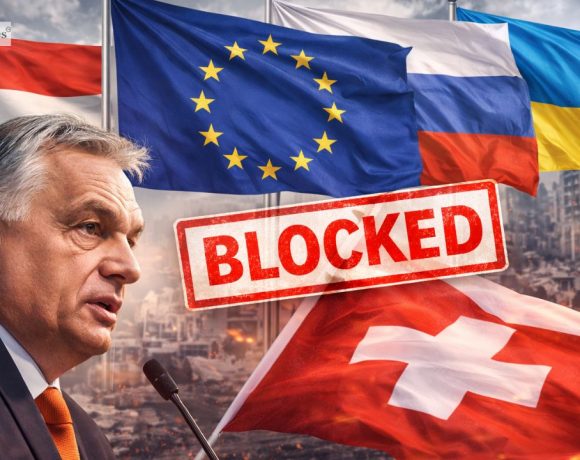
Sweden has cleared the final obstacle to its NATO membership after Hungary’s parliament voted to ratify its bid, prompted by Russia’s invasion of Ukraine in 2022. Initially met with delays and accusations of hostility from Hungary, Sweden’s application gained traction as Prime Minister Viktor Orban signaled support, emphasizing solidarity between the two nations.

Prime Minister Ulf Kristersson hailed the parliamentary ratification as a historic milestone, marking a significant departure from Sweden’s longstanding policy of neutrality spanning two centuries. This decision reflects Sweden’s commitment to defending its values and interests within the framework of the NATO alliance.

NATO Secretary General Jens Stoltenberg lauded Hungary’s approval, emphasizing its role in strengthening and ensuring the security of the alliance. With parliamentary hurdles cleared, Sweden now awaits the formal invitation to join the 31-member NATO group, signaling a transformative shift in its defense posture and regional security dynamics.

Picture Courtesy: Google/images are subject to copyright
News Trending

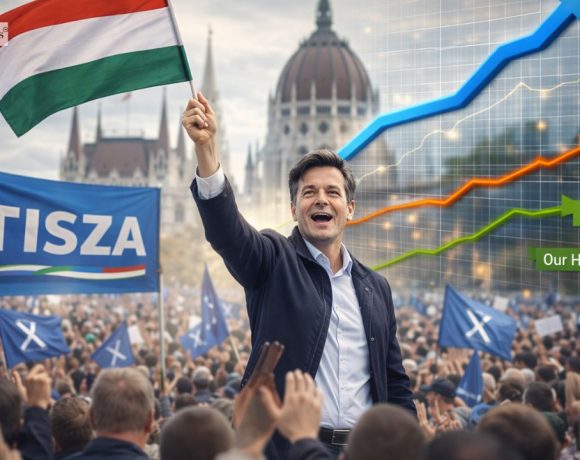
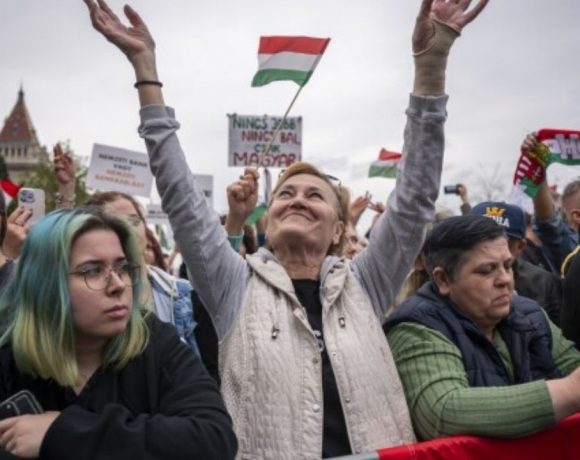
Thousands of people in Hungary have taken to the streets in response to a presidential pardon granted in a highly publicized child sexual abuse case. The protests, centered in Budapest’s historic Heroes’ Square, aimed to show support for abuse victims and denounce the controversial decision.

President Katalin Novak, along with two prominent figures from Prime Minister Viktor Orban’s ruling Fidesz party, resigned in the wake of the backlash over the pardon. Additionally, a bishop who had advised the prime minister also stepped down after admitting support for Novak’s decision.

The scandal surrounding the pardon has posed a significant challenge to Orban’s conservative leadership, marking one of the most serious threats to his rule since he took office in 2010.

The demonstrations, labeled “there are monsters out there,” drew large crowds to Heroes’ Square, with participants expressing outrage over the abuse case and demanding justice for victims.

Novak, who apologized for what she termed a “mistake” in granting the pardon, faced criticism after the names of 25 individuals she pardoned, including the deputy director of a children’s home convicted of covering up abuse, were disclosed by the media. The deputy director had coerced children into retracting allegations against the home’s director, who had been convicted of child abuse.

Notably, political parties were urged to abstain from participating in the protests, signaling a grassroots movement driven primarily by young Hungarians advocating for child welfare and social solidarity.

Orban’s government, known for prioritizing family values in its policies, faces scrutiny over its handling of the case. The prime minister is expected to address the nation’s concerns and outline the government’s next steps in an upcoming state of the nation address.

Picture Courtesy: Google/images are subject to copyright
News Trending

The president of Hungary has stepped down on live television following backlash over a controversial decision to pardon a man involved in covering up a child sexual abuse case. President Novak’s resignation comes amidst growing protests demanding her departure after it was revealed she pardoned a man convicted of coercing children to retract abuse allegations against a state-run children’s home director.

Novak, who had granted clemency to the individual, apologized for her actions, acknowledging her mistake. This decision also led to the resignation of Judit Varga, the former minister of justice, who approved the pardon and was overseeing the European elections campaign for Prime Minister Viktor Orban’s ruling Fidesz party.

The controversy erupted when the names of 25 individuals pardoned by Novak during a visit by Pope Francis were disclosed by Hungarian media. Among them was the deputy director of a children’s home near Budapest, convicted for pressuring children to withdraw abuse accusations against the home’s director, who himself was imprisoned for child abuse.

Novak’s sudden resignation, along with Varga’s departure, came as a surprise, considering Novak’s popularity within Fidesz and her significant role as the first female president of Hungary. The scandal has dealt a blow to Fidesz, known for its emphasis on traditional family values, and has caused embarrassment for the long-standing nationalist government.

In her televised address, Novak expressed regret for not standing up for the victims and acknowledged the doubts raised about the government’s commitment to combating pedophilia. The resignations of Novak and Varga, both prominent female figures in Fidesz, represent a significant setback for Orban’s party, especially with Varga slated to lead the party’s list in the upcoming European elections.

Picture Courtesy: Google/images are subject to copyright
News Trending

Italy has expressed strong concern and summoned Hungary’s ambassador after images of Ilaria Salis, a 39-year-old Italian woman, shackled in a Budapest court triggered public and political outrage. Salis, accused of participating in violent assaults against neo-Nazi sympathizers in February 2023, faced restraints on her hands and feet during the court appearance. The attacks occurred following a neo-Nazi rally in Budapest, with alleged far-left militants assaulting individuals after the “Day of Honour” rally.

A video showing anti-fascist activists beating a Hungarian person circulated widely in Hungary, leading to Salis’ arrest along with two German nationals. Salis faces charges of conspiracy to commit assault causing grievous bodily harm, with a potential 11-year jail term if convicted. Her case gained attention in October when her father highlighted the harsh conditions of her detention. Images of Salis in shackles during the court hearing sparked further outrage, with an online petition garnering over 90,000 signatures demanding her return to Italy.

Italian Foreign Minister Antonio Tajani summoned the Hungarian ambassador to inquire about the perceived violation of fundamental norms on detainee conditions. While Prime Minister Giorgia Meloni, an ally of Hungarian Prime Minister Viktor Orban, has not commented, there are calls for her intervention. The Five Star Movement leader urged Meloni to prioritize the rights and dignity of Italians over political alliances.

Salis’ lawyer criticized the scenes in court as a clear violation of the European Convention on Human Rights. Allegations of unsanitary conditions in Hungarian prisons were contested by the prison service, emphasizing high hygiene standards. However, human rights groups reported overcrowded and understaffed prisons in Hungary.

The case, dominating Italian headlines, has also attracted attention in Hungary and Europe. Concerns were raised about the use of physical restraints in court and the perceived repressive nature of Hungary’s judiciary system. The president of the European Parliament Committee on Civil Liberties deemed the scene in the EU state’s court as “appalling.” Salis’s lawyer expressed pessimism about the trial’s outcome and called for Salis to serve pre-trial detention in Italy, citing EU law allowing citizens to be held on house arrest in their resident member country.

Picture Courtesy: Google/images are subject to copyright