
featured News Trending

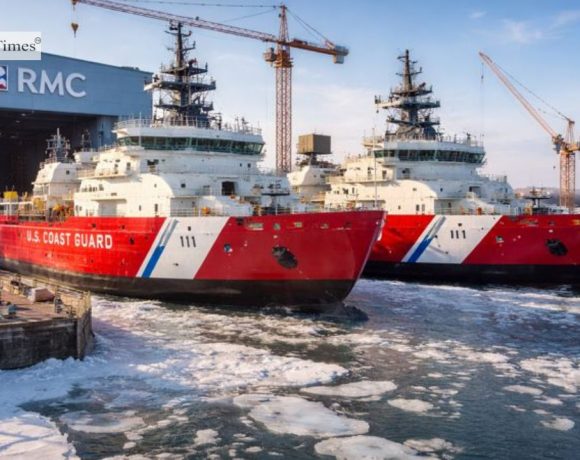
Finland’s Rauma Marine Constructions (RMC) has signed an agreement to build two icebreaker ships for the United States Coast Guard, with delivery scheduled for 2028. The deal comes as the US looks to strengthen its national security presence in the Arctic, where strategic competition has been intensifying. The vessels will be built at Finnish shipyards, known globally for their expertise in ice-capable ships.

These icebreakers are the first to be developed under a memorandum of understanding signed in October by US President Donald Trump and Finnish President Alexander Stubb. Under the agreement, Finland will construct four medium-sized Arctic Security Cutters, while the US plans to build up to seven additional vessels domestically, using Finnish technology and know-how. While RMC did not disclose the value of the two-ship contract, US officials estimate the total cost of procuring 11 icebreakers at around $6.1 billion.

RMC CEO Mika Nieminen described the deal as a historic milestone, highlighting the company’s ability to deliver vessels quickly and cost-effectively. The move addresses a growing capability gap, as the US Coast Guard currently operates just two polar icebreakers compared to Russia’s fleet of around 40. Finnish officials welcomed the agreement, calling it a major boost for Finland’s maritime industry and a recognition of the country’s leadership in icebreaker construction.

Pic courtesy: google/ images are subject to copyright
News Trending

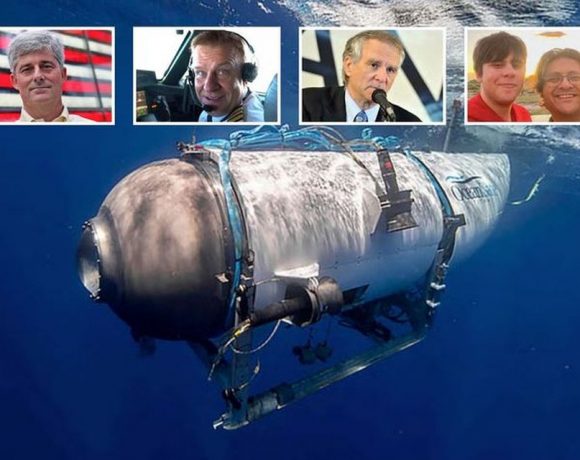
The recent incident involving the missing submersible, known as the Titan, and its crew members has resulted in a tragic outcome. According to the US Coast Guard, the five crew members aboard the Titan died due to a “catastrophic implosion” of their vessel. This conclusion was reached after examining debris found underwater, approximately 1,600 feet (488 meters) from the bow of the Titanic.

The missing craft, Titan, had garnered global fascination as numerous ships and aircraft were involved in the search efforts across an area of the North Atlantic twice the size of Connecticut. The submersible had lost contact with the Canadian research vessel Polar Prince on June 18, raising concerns about the crew’s diminishing oxygen supply.

During the search, unidentified sounds were detected, but they were not connected to the missing craft. The crew members aboard the Titan were identified as Hamish Harding of the UK, Paul-Henry Nargeolet of France, Stockton Rush of the United States, and Shahzada Dawood and Suleman Dawood of Pakistan. They were described as passionate explorers who had a deep love for the oceans.

The Titan, a 6.7-meter-long craft constructed from carbon fiber and titanium, was designed to carry a pilot and four crew members to a maximum depth of 4,000 meters (13,120 feet). It had systems in place to monitor the crew’s health and provide early warning in case of any issues during the dive.

OceanGate Expeditions, the operator of the mission, expressed their condolences to the families of the crew members and acknowledged their significant contributions to ocean exploration and conservation. The company offers expeditions to the Titanic site, allowing qualified explorers to join as mission specialists and support the scientific exploration of the historic shipwreck.

The loss of the Titan and its crew members is a tragic event, and the global community mourns their passing.

Picture Courtesy: Google/images are subject to copyright