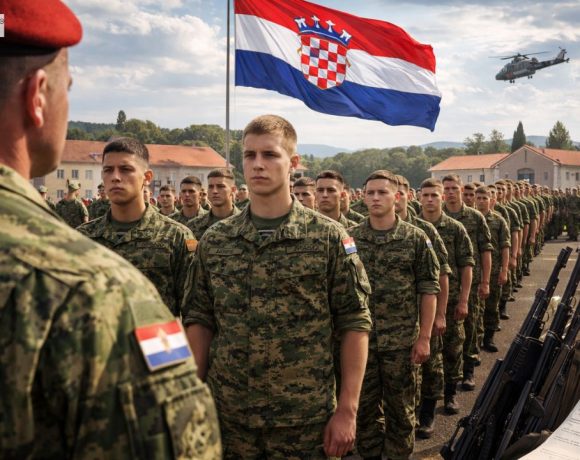
Hundreds of teenagers in Croatia have begun compulsory military service after the government reinstated conscription for the first time since it was abolished in 2008. Around 800 recruits reported to army barracks across the country, where they received their equipment and accommodation assignments before starting two months of training. Officials said more than half of the recruits volunteered for the programme, while about 10% of them are women, who are not required to serve under the new policy.
According to the Armed Forces of Croatia, the training programme will combine traditional military drills with modern defence skills such as drone operation, cyberwarfare basics and counter-drone protection. Chief of the General Staff Tihomir Kundid said recruits would be gradually introduced to military discipline to avoid excessive stress. The government also confirmed that only a small number of people have registered as conscientious objectors, who will instead complete four months of civilian service with lower financial allowances.
Officials say the decision to restore conscription reflects growing security concerns in Europe following the war in Ukraine. Defence Minister Ivan Anusic noted that the region’s security environment has changed significantly in recent years, prompting Croatia to strengthen its defence readiness. The move also reflects a broader trend across Europe, with several NATO member states reintroducing or maintaining mandatory military service amid rising geopolitical tensions.
Pic courtesy: google/ images are subject to copyright