featured News Trending

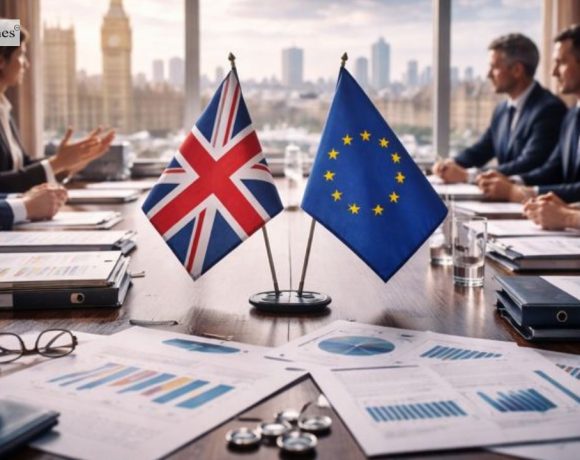
The head of the Trades Union Congress (TUC), Paul Nowak, has urged Prime Minister Sir Keir Starmer to keep the option of an EU customs union open as part of efforts to revive the UK economy. Speaking to the BBC, Nowak said the UK needs the “closest possible economic and political relationship” with the European Union, warning that public trust in mainstream politics could erode further if living standards do not improve.

Although Starmer has pledged to reset relations with Brussels, he has ruled out rejoining the EU single market or customs union, citing concerns that it could undermine recent trade deals with countries such as the US and India. Nowak, however, argued that Brexit has contributed to higher prices and trade barriers, particularly affecting industries like aerospace, automotive and steel. He said the government should “rule nothing out” and carefully assess all options to strengthen ties with the UK’s largest trading partner.

Nowak also stressed the importance of delivering fully on the government’s Employment Rights Act to improve job security and living standards, warning that failure to act decisively could push voters away from Labour. With polling showing financial insecurity among many households, he said economic improvement — not rhetoric on immigration — was key to countering political discontent and restoring faith in democratic politics.

Pic courtesy: google/ images are subject to copyright
featured News

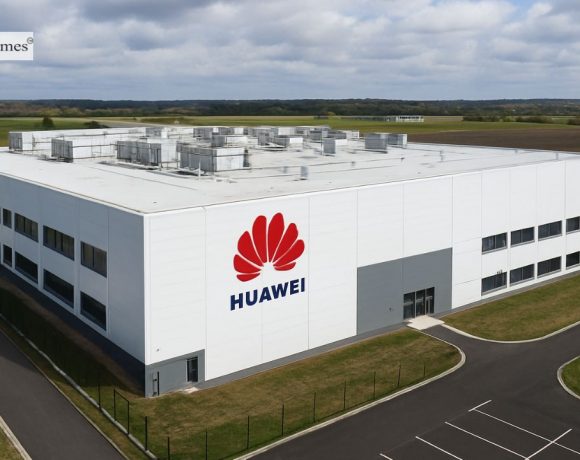
Huawei is reassessing the future of its newly completed manufacturing plant in eastern France as slow 5G deployment and growing restrictions on Chinese telecom equipment reshape its European plans. The €200 million facility near Strasbourg, finished in September, remains unused, with officials and executives suggesting the company is undecided about proceeding. The plant was meant to produce wireless base-station equipment and create up to 500 jobs, marking Huawei’s first manufacturing site in Europe.

Europe’s political climate has shifted significantly since the project was announced, with several governments toughening their stance on Chinese technology. Germany recently moved to ban Chinese components from future 6G networks, while broader EU measures aim to phase out Chinese telecom equipment. These developments, combined with sluggish 5G uptake, have placed Huawei in a difficult strategic position. Local authorities also cancelled a previously agreed €800,000 subsidy due to persistent uncertainty around the project’s future.

Sources say Huawei is considering “all options,” including selling the 52,000-square-metre site, with industrial groups already touring the facility. Security concerns and policy shifts have slowed the company’s ambitions in Europe despite its 35–40% market share in 4G and 5G equipment. While its European prospects dim, Huawei is experiencing strong growth in other sectors such as smartphones and smart-driving technology, prompting analysts to suggest the company may redirect resources where demand is rising fastest.

Pic courtesy: google/ images are subject to copyright
News Trending

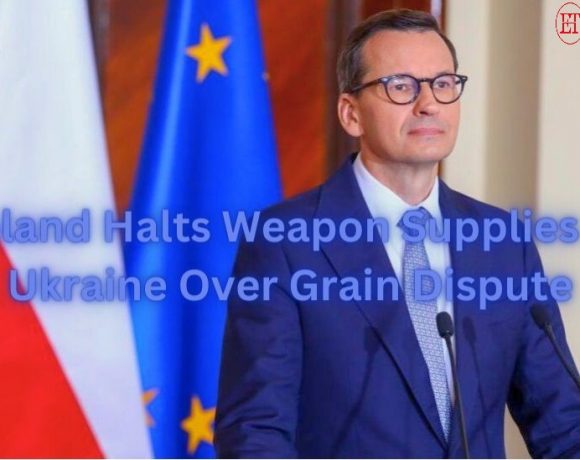
One of Ukraine’s steadfast supporters, Poland, has declared that it will cease its weapon supplies to its neighboring country, Ukraine, citing a diplomatic dispute regarding Ukraine’s grain exports as the primary reason. Prime Minister Mateusz Morawiecki emphasized that Poland’s current focus is on bolstering its own defense capabilities with more modern weaponry.

Poland had already provided Ukraine with significant military assistance, including 320 Soviet-era tanks and 14 MiG-29 fighter jets. However, their willingness to continue such support has dwindled, coinciding with escalating tensions between the two nations.

The recent diplomatic rift was triggered when Poland, along with Hungary and Slovakia, extended a ban on Ukrainian grain imports. Ukrainian President Volodymyr Zelensky’s comments at the United Nations, characterizing their actions as political theater, added fuel to the fire. Poland viewed these remarks as unjustified, given their longstanding support for Ukraine.

In his interview, Prime Minister Morawiecki underlined that while Poland remains committed to assisting Ukraine in its struggle against Russian aggression, it could not allow its own markets to be destabilized by Ukrainian grain imports. He pointed out that Poland was already replacing its depleted military hardware, which had been significantly reduced through transfers to Ukraine, with modern Western-produced equipment.

While arms exports to Ukraine will not cease entirely, only previously agreed deliveries of ammunition and armaments, including those from existing contracts with Ukraine, will be fulfilled. This decision reflects Poland’s commitment to its own security and stability, while the future of its assistance to Ukraine remains uncertain.

The ongoing grain dispute arises from Ukraine’s need to find alternative overland routes for grain exports due to Russia’s full-scale invasion, which nearly closed the main Black Sea shipping lanes. Consequently, large quantities of grain flowed into Central Europe, leading the European Union to temporarily ban grain imports into several countries. Despite the EU lifting the ban, Poland, Hungary, and Slovakia have maintained it, leading to Ukraine’s WTO lawsuits against these nations. Poland has signaled its intention to uphold the ban, while also hinting at the possibility of expanding the list of banned products should Ukraine escalate the grain dispute. However, diplomatic channels remain open, with discussions ongoing to seek a mutually beneficial solution.

Picture Courtesy: Google/images are subject to copyright