featured News Trending

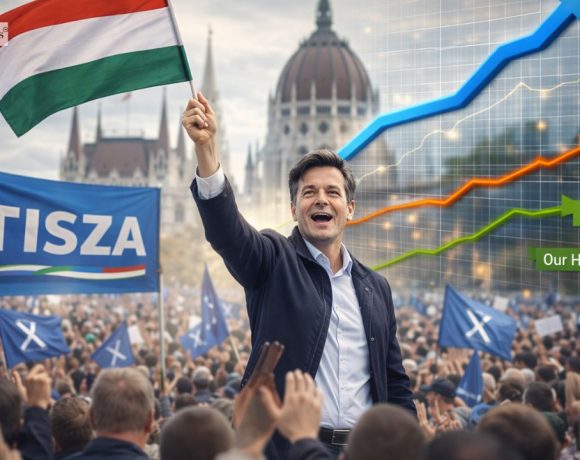
Hungary’s main opposition Tisza party has widened its lead over Prime Minister Viktor Orban’s ruling Fidesz party, according to two opinion polls released on Wednesday, raising the stakes ahead of the April 12 parliamentary election. The vote marks the first time in years that Orban, who has been in power since 2010, faces a serious electoral challenge, with implications for both Hungary’s political direction and the wider European landscape.

A survey by pollster Median showed Tisza, led by former government insider Peter Magyar, extending its advantage over Fidesz to 12 percentage points among decided voters. Tisza was backed by 51% of voters, while support for Fidesz slipped to 39%. Median noted that while Tisza is mainly attracting voters from other opposition parties, Fidesz has struggled to regain ground despite economic incentives and efforts to rally voters around fears linked to the war in Ukraine.

A second poll by the Idea Institute also pointed to a strong showing for Tisza, placing it at 48% support—10 points ahead of Fidesz. Magyar has pledged to keep Hungary firmly anchored in the European Union and NATO while pursuing pragmatic ties with Russia, contrasting with Orban’s closer relations with Moscow and frequent clashes with Brussels. Apart from the two main rivals, only the far-right Our Homeland party is seen as having a realistic chance of entering parliament.

Pic courtesy: google/ images are subject to copyright
News Trending

France’s President Emmanuel Macron has called a snap parliamentary election after a significant defeat by the far-right National Rally party, led by Marine Le Pen and Jordan Bardella, in the European elections. This unexpected move came as exit polls indicated that the National Rally secured over 30% of the vote, double that of Macron’s centrist Renaissance party. While France’s far-right victory was notable, the broader European election narrative saw the centre-right parties strengthening their hold on the EU Parliament, achieving successes in countries like Germany, Greece, Poland, and Spain.

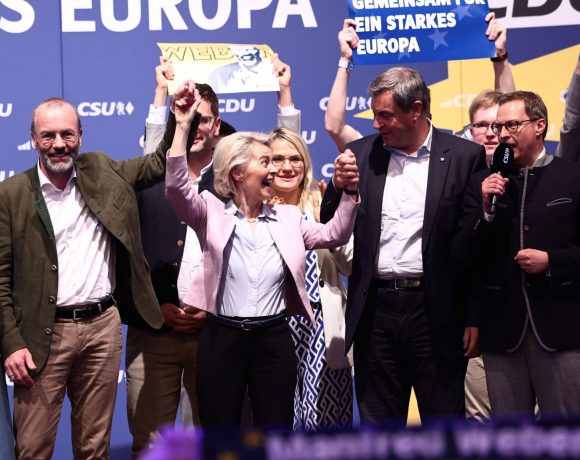
Ursula von der Leyen, head of the European Commission and a prominent figure in the centre-right European People’s Party (EPP), highlighted that despite gains by both far-left and far-right factions, the centre-right remained a stabilizing force. Von der Leyen reaffirmed the EPP’s commitment to alliances only with the Socialists & Democrats and the liberal Renew group, excluding any collaboration with far-right groups.

Germany’s elections saw the conservative CDU come out on top, whereas Chancellor Olaf Scholz’s SPD experienced its worst-ever European election result, finishing behind the far-right Alternative for Germany (AfD). In Italy, Giorgia Meloni’s far-right Brothers of Italy continued their dominance, while in Austria, the Freedom Party was poised for an unprecedented victory in the European vote.

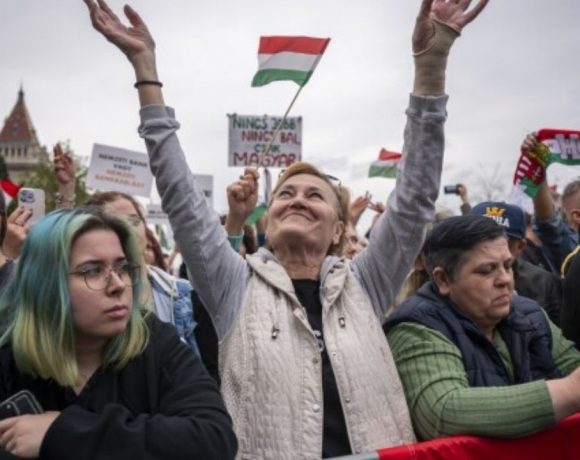
Elsewhere, Hungary witnessed a new challenge to Prime Minister Viktor Orban’s dominance with the rise of Peter Magyar’s centre-right Tisza party. Spain’s centre-right Popular Party narrowly defeated the Socialists, while far-right Vox came in third. In Denmark, the opposition Green-Left party achieved a surprise victory, and in Slovakia, the liberal Progressive Slovakia party triumphed over the ruling Smer party.

Overall, while the far-right made notable gains in specific countries, particularly France, their surge was less pronounced across Europe than anticipated. The centre-right’s consolidation of power, however, underscores a continuing preference for more moderate political forces in the EU.

Picture courtesy: Google/images are subject to copyright