featured News Trending

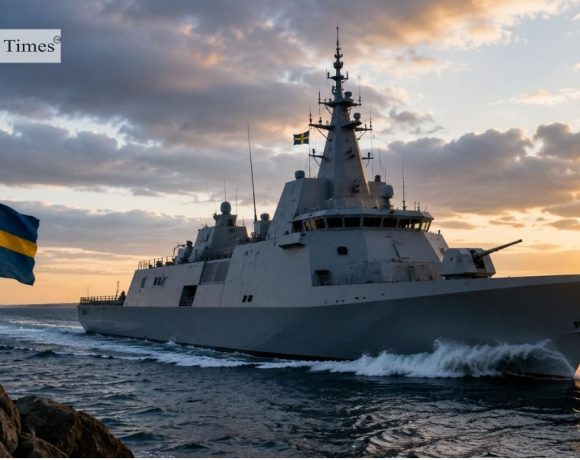
A court in Sweden has ordered the detention of the captain of a tanker suspected of being part of Russia’s so-called “shadow fleet” used to bypass Western sanctions on oil exports. The unnamed 55-year-old captain was arrested by the Swedish Prosecution Authority and appeared before a court in Ystad on suspicion of using forged documents.

The vessel, Sea Owl One, was intercepted by the Swedish Coast Guard in territorial waters south of Trelleborg. Authorities boarded the 228-metre tanker after suspecting it was sailing under a false Comoros flag. Officials said the ship was travelling from Santos to Primorsk and had previously transported oil between Russia and Brazil.

The tanker is among vessels sanctioned by the European Union and believed to be linked to Moscow’s network of ships with unclear ownership or insurance used to evade sanctions imposed after Russia’s invasion of Ukraine in 2022. Swedish authorities said the captain will remain in custody while prosecutors continue their investigation, marking the second seizure of a suspected shadow fleet vessel in the country within a week.

Pic courtesy: google/ images are subject to copyright
featured News Trending

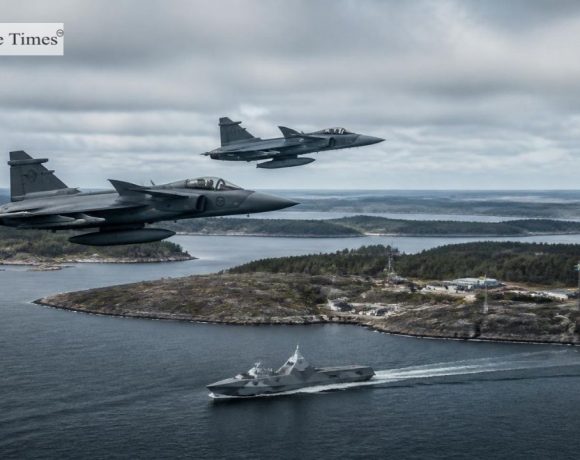
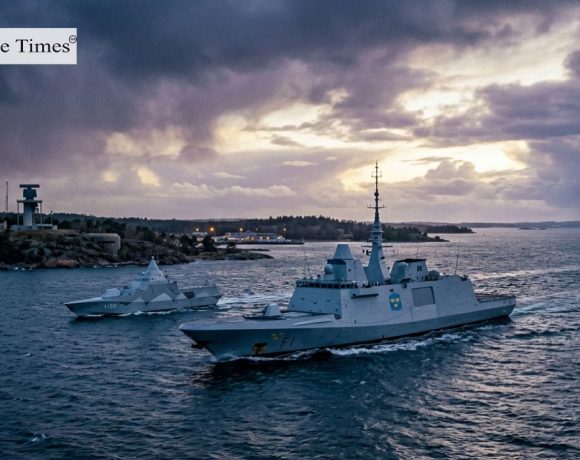
Sweden’s armed forces have confirmed that a drone jammed near the French aircraft carrier Charles de Gaulle in Malmö was Russian. The drone was detected about seven nautical miles from the carrier and was seen taking off from a nearby Russian intelligence-gathering vessel in Swedish territorial waters. The Swedish Navy acted quickly to disrupt the drone using jamming technology, which interferes with its control signals. The Kremlin has dismissed the accusation as “absurd.”

The Charles de Gaulle, visiting Sweden for the first time, is set to participate in NATO exercises across the Baltic and Atlantic regions under the La Fayette 26 mission. Swedish Prime Minister Ulf Kristersson described the incident as serious but not unexpected, suggesting it fit a broader pattern of Russian behavior. French Foreign Minister Jean-Noël Barrot called any confirmed Russian involvement a “ridiculous provocation,” while French military officials emphasized that the incident did not affect the carrier’s operations.

The episode comes amid months of reported drone sightings near military facilities across NATO member states, including Denmark and the Baltic countries. Sweden’s coast guard has also launched a separate investigation into a fuel spill in Malmö’s port, though authorities say it is unrelated to the carrier’s visit. The carrier strike group’s deployment signals France’s strengthened military engagement with northern European allies in response to growing tensions with Moscow.

Pic courtesy: google/ images are subject to copyright
featured News Trending

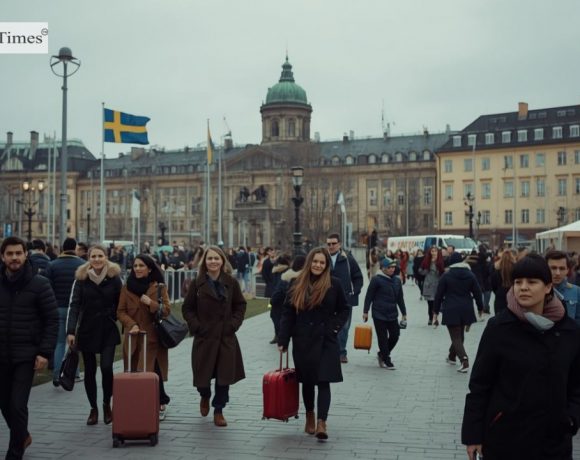
Sweden’s government announced plans to tighten citizenship rules, extending the required residency period from five to eight years, introducing a minimum monthly income threshold of 20,000 Swedish crowns ($2,225), and requiring applicants to pass a language and cultural knowledge test. Migration Minister Johan Forssell said the stricter measures aim to ensure applicants understand Swedish society and meet basic economic and social standards.

The new rules also impose longer waiting periods for individuals with criminal records. For instance, someone who served a four-year prison sentence would have to wait 15 years before applying for citizenship. The changes are part of a broader effort by the centre-right coalition to restrict immigration, which has been a contentious issue in Swedish politics since the large influx of asylum seekers in 2015.

The anti-immigration Sweden Democrats, supporting the minority government, have linked past immigration policies to rising gang-related crime. The stricter citizenship rules are expected to come into force on June 6, coinciding with other planned measures aimed at tightening asylum policies.

Pic courtesy: google/ images are subject to copyright
featured News Trending

Staff at Swedish pharmacy chain Apotek Hjärtat are taking part in a pilot “friendcare” scheme, giving employees paid time off to connect with friends and strengthen social bonds. Participants, like pharmacy worker Yasmine Lindberg, are granted 15 minutes a week or an hour a month during working hours to meet, call, or message friends. Volunteers also receive 1,000 kronor annually to spend on friendship-based activities and online training on recognising and addressing loneliness.

The initiative is part of Sweden’s broader effort to address a growing loneliness concern. Health Minister Jakob Forssmed and other officials are encouraging businesses to play an active role, noting that loneliness poses significant public health risks and economic costs. Around 14% of Swedes report feeling lonely some or all of the time, with structural factors like single-person households, cold winters, and a culture of valuing personal space contributing to social isolation.

Apotek Hjärtat CEO Monica Magnusson says early results from self-assessment surveys show participants reporting higher life satisfaction. The company is collaborating with other Nordic firms through the ‘Together against involuntary loneliness’ network to share strategies and best practices. Psychologists highlight that while these programs help lower the threshold for social interaction, deeper societal issues like income inequality, urban design, and digital habits also need attention for lasting solutions.

Pic courtesy: google/ images are subject to copyright

News Trending

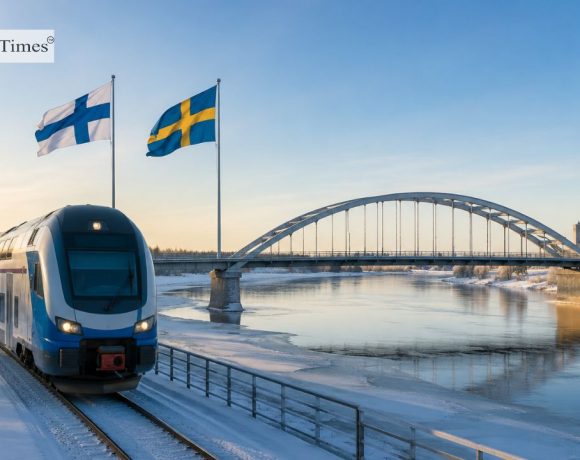
Calls for calm have been issued in Finland and the Baltic states following a draft Russian decree proposing border revisions in the Baltic Sea. Latvia is seeking clarification, while Lithuania accuses the Kremlin of using the decree as an intimidation tactic. Finnish President Alexander Stubb stated that political leaders are monitoring the situation and Finland will respond calmly and factually.

The draft, issued by Russia’s defense ministry, suggested altering sea borders around Russian islands in the Gulf of Finland and the exclave of Kaliningrad. Initially reported by Russia’s Tass news agency, the draft aimed to redraw Soviet-era borders from January 1985. It was unclear if Finnish or Lithuanian waters near Kaliningrad would be affected, but the proposal included the eastern Gulf of Finland, islands near the Finnish coast, and areas around Baltiysk and Zelenogradsk in Kaliningrad.

As members of the EU and NATO, Finland and the Baltic states have the alliance’s commitment to defend their borders. Finland’s defense and foreign committees convened emergency meetings, with Prime Minister Petteri Orpo stating there is no immediate cause for alarm.

The Russian proposals were subsequently removed from public view with a “draft deleted” notice. A Russian source later confirmed no plans to alter territorial waters in the Baltic. Kremlin spokesman Dmitry Peskov directed questions to the defense ministry, noting the political landscape had changed since the 1980s and emphasizing the heightened confrontation in the Baltic region.

Charly Salonius-Pasternak from the Finnish Institute of International Affairs suggested Russia’s approach was typical: probing reactions and retreating if met with resistance. Lithuania’s Foreign Minister Gabrielius Landsbergis described the draft as an escalation against NATO and the EU, advocating a strong response.

Simultaneously, Sweden’s armed forces chief, Gen Micael Byden, warned of Putin’s ambitions to control the Baltic Sea. Byden stressed the importance of keeping the Baltic Sea out of Putin’s control to maintain peace and stability. Sweden, a NATO member since March, has reinforced its military presence on the Baltic island of Gotland, which Gen Byden believes Russia has targeted.

In response to potential migration issues, Finland, which joined NATO last year, plans to prevent large-scale asylum seeker crossings from Russia. Helsinki fears Russia might exploit migration, but the UN refugee agency warns the draft law could lead to harmful pushbacks of legitimate asylum seekers, risking severe injuries, family separations, and deaths, according to UNHCR’s Philippe Leclerc.

Picture Courtesy: Google/images are subject to copyright
News Trending

Security measures are being intensified for the Eurovision Song Contest in Malmo, Sweden’s third-largest city, as large demonstrations are expected to coincide with the event. While police and organizers assert they are well-prepared and aiming for a “joyful” occasion, concerns linger amidst heightened tensions.

The annual Eurovision celebration, typically a lighthearted affair of pop music and showbiz, finds itself under a cloud this year due to Israel’s participation amid the conflict in Gaza. With Sweden already facing elevated security challenges, Malmo braces for one of its most extensive policing endeavors.

Upwards of 100,000 visitors are anticipated to flock to the city on Sweden’s southwestern coast for the world’s largest live music competition. Despite the festive atmosphere adorned with colorful Eurovision banners adorning the streets, apprehensions loom large.

The series of festivities kick off on Saturday, with semi-finals scheduled for next Tuesday and Thursday, culminating in the grand final on May 11. An estimated global audience of 200 million viewers is expected to tune in for the four-hour spectacle.

Law enforcement personnel have been mobilized from across Sweden, with reinforcements from neighboring Denmark and Norway. While Swedish police typically carry arms, additional officers will be equipped with larger weapons as a precautionary measure.

Malmo’s police chief, Petra Stenkula, acknowledges the country’s heightened state of alert, citing a “terror level of four out of five.” She notes that protests against Israel’s participation in the competition have taken place in Sweden, including Malmo.

Despite the absence of specific threats to the event, security concerns remain elevated, particularly following a series of Quran-burnings last August that sparked outrage in the Muslim world. An internal police report underscores Sweden as a “priority target” for violent jihadist groups, citing various potential risks including unrest, cyber attacks, and broadcast disruption.

Authorities have deployed extensive surveillance measures, including cameras and drones, while implementing airport-style security checks at venue entrances. Bags are prohibited for guests attending the event.

Malmo’s security director, Per-Erik Ebbestahl, emphasizes the city’s readiness, citing months of planning and collaboration with counterparts in Liverpool, the host of last year’s competition.

While Malmo has previously hosted notable events such as a papal visit and a Holocaust Remembrance conference, the current security landscape presents new challenges, particularly regarding large gatherings and generalized threats towards Sweden.

The sentiment is echoed by Ebba Adielsson, the executive Eurovision producer, who acknowledges the political controversies surrounding this year’s event but hopes they won’t overshadow the festivities. Israeli contestant Eden Golan’s participation has drawn attention, given the politically charged nature of her song.

Tensions are palpable in Malmo, with its diverse population expressing mixed sentiments. While some members of the Jewish community feel nervous, others from the Palestinian community have been vocal in their opposition to Israel’s participation.

Protests against Israel’s involvement in Eurovision are anticipated, with multiple demonstrations planned throughout the week. Police are bracing for potentially large-scale rallies, with measures in place to ensure public safety.

Despite the offstage tensions, Eurovision enthusiasts remain hopeful for a successful and enjoyable event. Amidst the challenges, the spirit of Eurovision prevails, with festivities planned to celebrate the competition’s cultural significance.

Picture Courtesy: Google/images are subject to copyright

News Trending

Denmark has announced significant reforms to its military, including extending conscription to women for the first time and increasing the standard service duration. This decision is part of a plan to bolster its defense capabilities and align with NATO targets amid heightened tensions in Europe following Russia’s invasion of Ukraine in 2022.

Prime Minister Mette Frederiksen emphasized that the aim of these reforms is not to seek conflict but to prevent it. The government intends to achieve gender equality in the armed forces, with Defence Minister Troels Lund Poulsen stressing that more inclusive conscription will address defense challenges and contribute to national mobilization.

Denmark will become the third European nation, after Norway and Sweden, to mandate women’s conscription starting from 2026, alongside extending service duration for both genders from four to 11 months. These changes aim to increase the number of individuals serving in the military annually from 4,700 to 5,000, with approximately 25% being women.

With a current armed forces strength of around 20,000 personnel, Denmark, with a population of nearly six million, plans to raise its military spending from 1.4% to 2% of GDP to meet NATO’s requirements. Lawmakers have taken measures such as abolishing a public holiday to redirect funds towards defense spending.

Denmark has been a staunch supporter of Ukraine, providing advanced weapons, financial aid, and training to Ukrainian pilots on F-16 fighter jets. Additionally, Finland and Sweden have recently joined NATO as the alliance strengthens its defenses in Europe amid ongoing geopolitical tensions.

Picture Courtesy: Google/images are subject to copyright

News Trending

Many Swedes are expressing relief and a sense of safety now that Sweden has officially joined NATO after nearly two years of application. The decision to apply for NATO membership was prompted by concerns over Russian aggression in the region, particularly after the invasion of Ukraine.

While there is widespread support for membership, some opposition remains, primarily from the Left and Green parties, who fear being drawn into conflicts and prefer diplomatic solutions.

Despite concerns about potential conflicts, the government and military maintain that NATO membership will enhance Sweden’s security.

However, there are mixed opinions among the public, with some welcoming the decision while others worry about potential repercussions. While there hasn’t been widespread panic, there are discussions about the visible impact of NATO membership, such as increased military cooperation and the presence of foreign soldiers on Swedish soil.

Picture Courtesy: Google/images are subject to copyright

News Trending

Sweden has cleared the final obstacle to its NATO membership after Hungary’s parliament voted to ratify its bid, prompted by Russia’s invasion of Ukraine in 2022. Initially met with delays and accusations of hostility from Hungary, Sweden’s application gained traction as Prime Minister Viktor Orban signaled support, emphasizing solidarity between the two nations.

Prime Minister Ulf Kristersson hailed the parliamentary ratification as a historic milestone, marking a significant departure from Sweden’s longstanding policy of neutrality spanning two centuries. This decision reflects Sweden’s commitment to defending its values and interests within the framework of the NATO alliance.

NATO Secretary General Jens Stoltenberg lauded Hungary’s approval, emphasizing its role in strengthening and ensuring the security of the alliance. With parliamentary hurdles cleared, Sweden now awaits the formal invitation to join the 31-member NATO group, signaling a transformative shift in its defense posture and regional security dynamics.

Picture Courtesy: Google/images are subject to copyright

News Trending

An incident at Sweden’s security service headquarters led to the hospitalization of eight individuals, including police officers, following reports of an unusual smell and subsequent evacuation of around 500 people. Initially thought to be a gas leak, authorities later confirmed no gas was detected. Police are investigating the cause, with speculation of phosgene detection, though unconfirmed.

Phosgene, a chemical used in plastics and pesticides and infamous from World War One, was suspected. Emergency services responded promptly, with roads closed and barriers erected. Six individuals were hospitalized for breathing issues, including police officers who detected the smell. Evacuation measures were extensive, with nearby schools and residences affected.

The incident concluded without further incident, coinciding with Prime Minister Ulf Kristersson’s visit to Hungary, where Sweden’s Nato membership ratification is pending.

picture courtesy: google/images are subject to copyright