News Trending

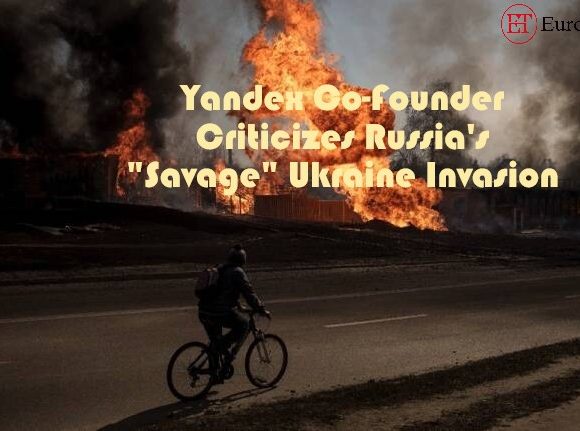
Arkady Volozh, a co-founder of Yandex and a prominent figure in Russia’s tech industry, has criticized Moscow’s complete military intervention in Ukraine, referring to it as “savage.”

In an official statement, Volozh expressed his distress over the daily bombing of Ukrainian homes and conveyed his opposition to the conflict. Although he resides in Israel and had been criticized for his silence on the matter, he acknowledged his responsibility for his home country’s actions.

Volozh stepped down as Yandex’s CEO in 2022, a move that coincided with personal sanctions imposed by the European Union. The EU cited his role in supporting actions undermining Ukraine’s sovereignty. Yandex, often likened to “Russia’s Google,” is the largest Russian-language internet search engine. Volozh’s condemnation of the invasion stands out among Russia-linked business figures who have openly criticized President Vladimir Putin’s decision to initiate the full-scale invasion of Ukraine in February 2022.

Picture Courtesy: Google/images are subject to copyright
News Trending War

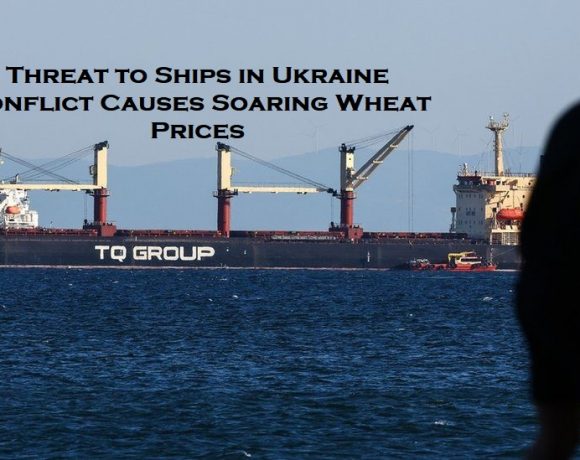
Wheat prices on the global markets have experienced a sharp rise following Russia’s declaration that it would consider ships heading to Ukrainian ports as potential military targets. This decision came after Moscow withdrew from a UN agreement that guaranteed safe passage for grain shipments through the Black Sea. In recent nights, Russia has launched attacks on Ukraine’s grain facilities in cities like Odesa. The White House has accused Russia of planning to attack civilian ships and then falsely blaming Ukraine for it. As a result of these developments, European stock exchange wheat prices surged by 8.2% to €253.75 per tonne, with corn prices also rising by 5.4%. US wheat futures recorded their highest daily increase since Russia’s invasion of Ukraine in February 2022, jumping 8.5%. President Vladimir Putin has expressed willingness to return to the international grain agreement if certain demands, including the lifting of sanctions on Russian grain and fertiliser sales, are met.

Amid these escalating tensions, Russian air strikes continued in Black Sea coastal cities for three consecutive nights, leading to civilian casualties. The attacks have targeted grain export infrastructure and raised concerns about the safety of shipping routes for essential food supplies. Ukraine’s options for exporting grain by rail are limited, with rail capacity smaller than shipping volumes, and some EU countries in Eastern Europe blocking Ukrainian grain to protect their own farmers.

Analysts have warned that Russia’s threatened escalation could disrupt waterborne grain shipments from the Black Sea, impacting both Russian and Ukrainian exports. Some Ukrainian officials have called on the UK, US, France, and Turkey to provide military convoys and air defenses to protect grain ships heading to Odesa.

The situation has raised concerns about potential impacts on global food security and inflation, particularly in developing countries, leading to social instability, food shortages, and increased migration. Critics accuse Russia of using food supplies as a political tool in its conflict with Ukraine.

Picture Courtesy: Google/images are subject to copyright
News Trending War

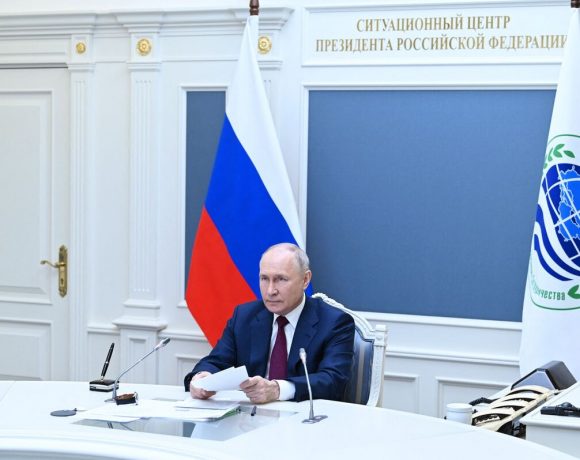
Russian President Vladimir Putin has reiterated his country’s opposition to Western sanctions following the invasion of Ukraine.

Speaking at the virtual Shanghai Cooperation Organisation (SCO) summit, his first international address since the recent mutiny in Russia, Putin expressed defiance towards the West, stating that Russia would counter external sanctions and pressures while continuing to develop. He emphasized the importance of trade agreements between SCO nations in local currencies, seen as a measure to mitigate the impact of sanctions. Putin also welcomed Belarus’s application to become a permanent member of the SCO. Indian Prime Minister Narendra Modi, hosting the summit, called for increased trade, connectivity, and tech cooperation among member states.

However, he did not directly address the war in Ukraine or China’s assertiveness in the Indo-Pacific, reflecting India’s delicate diplomatic position as it strengthens ties with both the West and China. Instead, Modi urged SCO members to cooperate on countering cross-border terrorism, with his statements commonly interpreted as aimed at Pakistan. China’s President Xi Jinping emphasized the importance of regional peace and security and called for solidarity and mutual trust among SCO members. All members agreed on the need to maintain stability in Afghanistan following the Taliban’s takeover.

The SCO, formed in 2001 by China, Russia, and four Central Asian countries, has gained relevance as relations with the West deteriorate for Russia and China. With around 40% of the world’s population and over 20% of global GDP, the SCO holds significant potential, and the inclusion of Iran as a full member further enhances its energy portfolio.

However, India’s ability to strike a diplomatic balance between its global partners, including Russia, China, and Pakistan, will impact the future of the SCO. Indian diplomats assert their commitment to an independent foreign policy without favoring any particular group.

Picture Courtesy: Google/images are subject to copyright