featured News

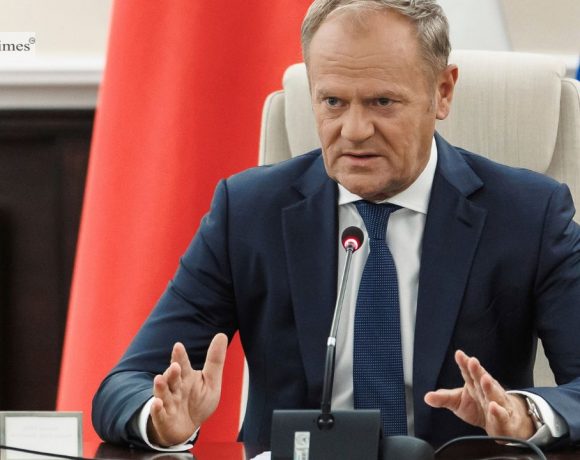
Polish Prime Minister Donald Tusk has accused Russia of orchestrating sabotage operations designed to destabilise Poland, calling the actions a form of “state terrorism”. His statement follows an explosion that damaged key railway tracks on the Warsaw–Lublin line over the weekend—a route linking Poland’s capital to the Ukrainian border. Tusk described the incident as an unprecedented assault on national security.

Authorities have identified two Ukrainian nationals as those responsible for the attack, alleging they collaborated with Russian intelligence before fleeing to Belarus. In response, Poland has requested their extradition, closed the last operating Russian consulate in Gdansk, and deployed thousands of soldiers to protect strategic infrastructure across the country.

Moscow has rejected the accusations and labelled Poland’s actions “Russophobia”, saying it will restrict Polish diplomatic presence in Russia. The explosion comes amid a broader increase in arson, sabotage, and cyberattacks across Europe since Russia launched its full-scale invasion of Ukraine in 2022, intensifying concerns about hybrid warfare tactics.

Pic Courtesy: google/ images are subject to copyright
featured News

Ukrainian security officials report a disturbing rise in teenagers being recruited through Telegram and other online platforms to carry out sabotage attacks inside Ukraine. One such teen, identified as “Vlad,” travelled hundreds of miles to plant a bomb in a military conscription van after being promised $2,000. Like many others, he was approached anonymously online with offers of easy money and gradually coaxed into increasingly dangerous tasks. Ukrainian authorities say more than 800 people have been recruited in the past two years, including at least 240 minors — some as young as 11.

The Security Service of Ukraine (SBU) says recruiters exploit vulnerable young people and motivate them with payments rather than political ideology. Many teenagers are instructed to collect explosives, commit arson, or conduct surveillance, often while being monitored by their handlers. Payments are frequently far less than promised, with many teens cheated or placed in life-threatening situations. Officials warn that some recruited minors have been killed during sabotage attempts, and in certain cases, devices were allegedly detonated remotely by handlers, knowing the teens would not survive.

Despite reporting numerous Telegram channels involved in recruitment, most remain active, continuing to post job-like ads disguised as “part-time work” or “quick money.” Ukrainian authorities accuse Russia of orchestrating the operations, while Russia denies responsibility and counters with accusations of Ukrainian involvement in sabotage inside Russia. As dozens of young suspects await trial, Vlad warns others against falling for online recruiters, saying their promises lead only to prison, injury, or death.

Pic Courtesy: google/ images are subject to copyright

featured News

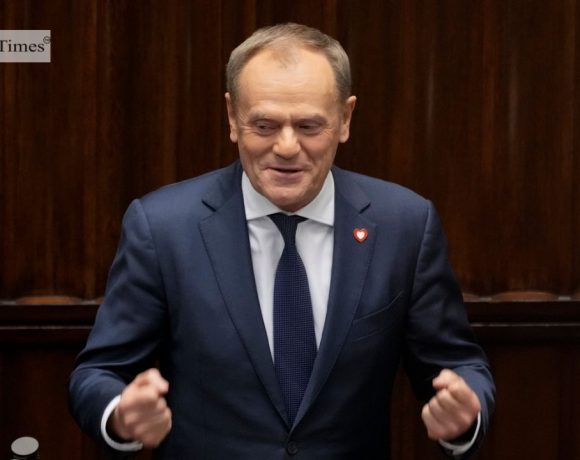
Polish Prime Minister Donald Tusk announced on Monday that the explosion that destroyed part of the Warsaw–Lublin railway line was the result of sabotage. Writing on X, Tusk confirmed that an explosive device caused the damage reported on Sunday, prompting emergency services and prosecutors to launch a full investigation. Additional damage was also found further along the same route, intensifying concerns about deliberate interference.

Local police had been alerted earlier when a train driver noticed structural damage on the track, leading to an immediate response and suspension of travel through the area. The incident highlights mounting security pressures in Poland, particularly as the country continues to serve as a major logistics hub for international aid flowing into Ukraine amid its war with Russia.

Warsaw has previously warned that its strategic role could make it vulnerable to hostile activities, though Moscow has consistently denied any involvement in sabotage efforts. The investigation into the railway explosion is ongoing.

Pic Courtesy: google/ images are subject to copyright
News Technology Trending

Tesla’s car factory in Berlin came to a standstill on Tuesday following a suspected arson attack in the vicinity. The incident occurred when an electricity pylon near the plant caught fire, resulting in power disruptions within the factory premises and neighboring towns. Despite ongoing protests by environmental activists against the factory’s expansion, they denied any involvement in the fire incident.

Although the fire did not reach Tesla’s factory itself, it caused damage to the electricity pylon and high-voltage wires nearby. The company took precautions by sending its workers home, ensuring the safety of its building. Authorities, including Brandenburg’s Interior Minister, emphasized the seriousness of the act of sabotage but urged against premature speculation regarding the perpetrators.

The situation has escalated against the backdrop of environmental concerns, with around 100 activists camping in the adjacent forest to protest against the factory’s expansion plans. Their primary objection revolves around the potential deforestation required for the expansion project. Despite assertions from environmental groups like Robin Wood denying any involvement in the fire, tensions remain high.

Tesla’s ambition to double the size of its only European plant is met with resistance from environmental activists. Currently, the factory produces approximately 500,000 cars annually, with plans for expansion aimed at doubling this output. However, the disruption caused by the recent incident has left production in limbo, with uncertainty surrounding when operations will resume.

Picture Courtesy: Google/images are subject to copyright

News Trending

Russian President Vladimir Putin dismissed accusations that Russia was responsible for the recent damage to the Baltic-connector gas pipeline between Finland and Estonia. Finnish officials, however, suspect external interference and possible Russian involvement.

Estonia’s Defense Minister also suggested that the damage was caused by more than just normal means. Despite this, President Putin denied any knowledge of the pipeline’s existence and suggested that the blame could lie with an anchor or seismic activity.

Nato Secretary General Jens Stoltenberg expressed solidarity with Estonia and Finland, warning of a united response if the damage is proven to be deliberate. Finnish authorities confirmed that the damage was not due to regular usage or pressure changes and emphasized that the country’s energy security remains intact due to alternative gas sources. The incident has reignited concerns about energy security after previous Nord Stream pipeline incidents.

Picture courtesy: Google/images are subject to copyright