News Trending War

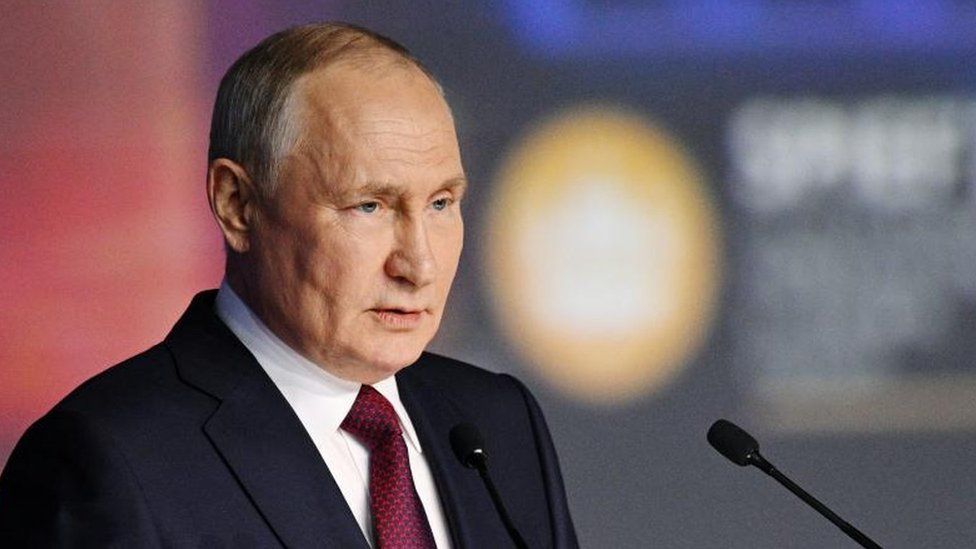
Vladimir Putin has announced that an initial batch of tactical nuclear weapons has been deployed in Belarus, emphasizing that they would only be utilized if Russia’s territory or sovereignty faced threats. The US government has stated that there are no indications suggesting Russia’s intention to employ nuclear weapons against Ukraine.

Belarus, a crucial ally of Russia, served as a launchpad for Putin’s full-scale invasion of Ukraine in February the previous year. Putin confirmed that the transfer of tactical nuclear warheads would be completed by the end of the summer, highlighting that it was a measure of “containment” to deter those considering a strategic defeat against Russia. These tactical nuclear weapons are designed for limited strikes and battlefield use, targeting specific areas without causing extensive radioactive fallout.

Putin is set to meet with African leaders in St. Petersburg following their visit to Kyiv as part of a peace initiative. However, while they were in the city, it came under Russian missile attack. President Cyril Ramaphosa of South Africa called for de-escalation and peaceful negotiations.

Ukrainian President Volodymyr Zelensky expressed the need to diplomatically isolate Russia and condemned its invasion. Putin reiterated his belief that Ukraine’s counter-offensive would not succeed and suggested that the country was running out of military equipment. Meanwhile, Ukraine’s Deputy Defence Minister reported advances in recapturing territory in the south of the country.

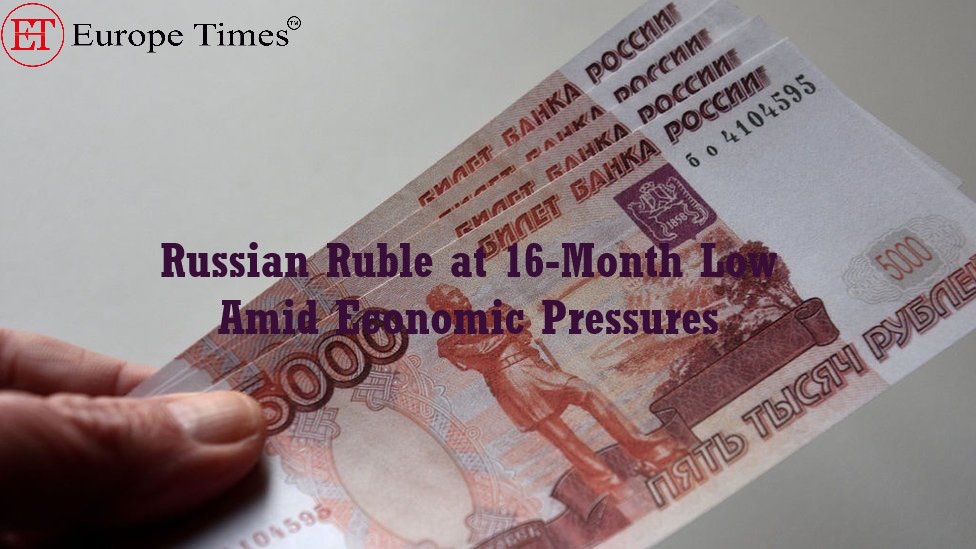
Putin also addressed economic matters, claiming that Western sanctions failed to isolate Russia and instead facilitated expansion in trade with “the markets of the future.” He praised new partnerships with Asian, Middle Eastern, and Latin American countries as reliable and responsible.

Picture Courtesy: Google/images are subject to copyright

News Trending War

Major-General Sergei Goryachev, chief of staff of Russia’s 35th Army, was killed in a missile attack in the Zaporizhia area, according to reports.

According to a Russian-backed figure in Ukraine, a top Russian officer was killed in a Ukrainian missile strike during Kyiv’s counteroffensive against Russian soldiers.

On Tuesday, Vladimir Rogov, a Russian-installed official in a part of the southern Zaporizhia region under Moscow’s control, said that Russian Major-General Sergei Goryachev, Chief of Staff of Russia’s 35th Army, was killed a day earlier on the Zaporizhia front, where Ukrainian forces have been retaking some territory.

The Russian Defence Ministry had no immediate confirmation of Goryachev’s death.

Goryachev, 52, was a renowned soldier. According to Reuters, he served in the Second Chechen War, commanded a tank brigade, controlled a Russian military facility in Tajikistan, and led Russian soldiers in Moldova’s breakaway pro-Russian province of Transdniestria.

If true, Goryachev’s killing represents the first Russian senior commander killed in Ukraine in almost a year. “Voenkor Z,” a Russian combat journalist and military blogger, broke the news of his death first.

“The army has lost one of its brightest and most effective military commanders, who combined the highest professionalism with personal courage,” Rogov said on his official Telegram channel. “Our heartfelt condolences to the deceased’s family and friends!”

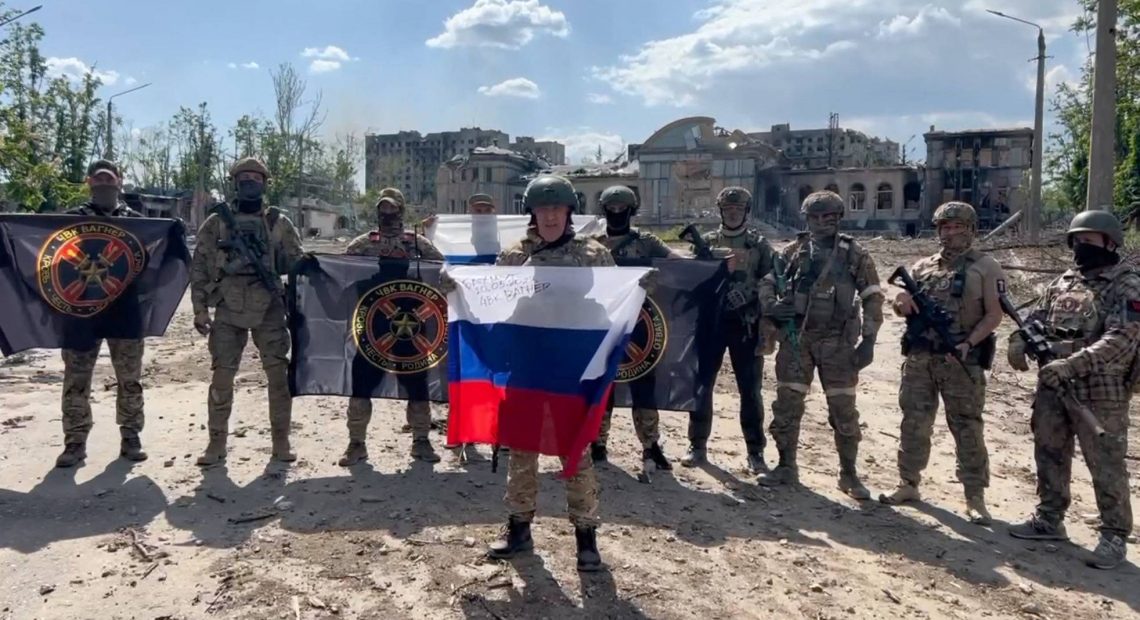
On Tuesday, Russian President Vladimir Putin met with 18 famous Russian military bloggers and war journalists in an effort to boost his narrative about the conflict’s favourable development in Ukraine.

The meeting, in which Putin stated that Ukraine had suffered “catastrophic” losses in its counteroffensive, comes amid “widespread discontent in the Russian information space” following drone attacks on Russian territory and border incursions by pro-Ukrainian but Russian armed groups, according to a leading war monitor on Wednesday.

The Washington, DC-based Institute for the Study of War (ISW) noted in a daily briefing paper on the Ukraine war that Russian “milbloggers” who have been more critical of Putin’s war operations were not invited to the conversation.

“Putin is likely setting information conditions to prevent potential lines of attack against the Kremlin in the event of Russian failure” in Ukraine, the ISW said, adding that the Russian president may be aware “that committed pro-war figures” and the influence of military blogging are “his key constituency as he calls on the Russian public to prepare for a protracted war in Ukraine”.

“Putin’s engagement with these milbloggers may suggest that the Kremlin will increasingly rely on the wider ultranationalist community to maintain support for the war effort,” the ISW said.

According to the ISW, Russian claims of Major-General Goryachev’s death in the Zaporizhia area show that “some Russian senior military commander officials continue to operate close to the front line and remain vulnerable to accurate Ukrainian strikes.”

Picture Courtesy: Google/images are subject to copyright

News Trending War

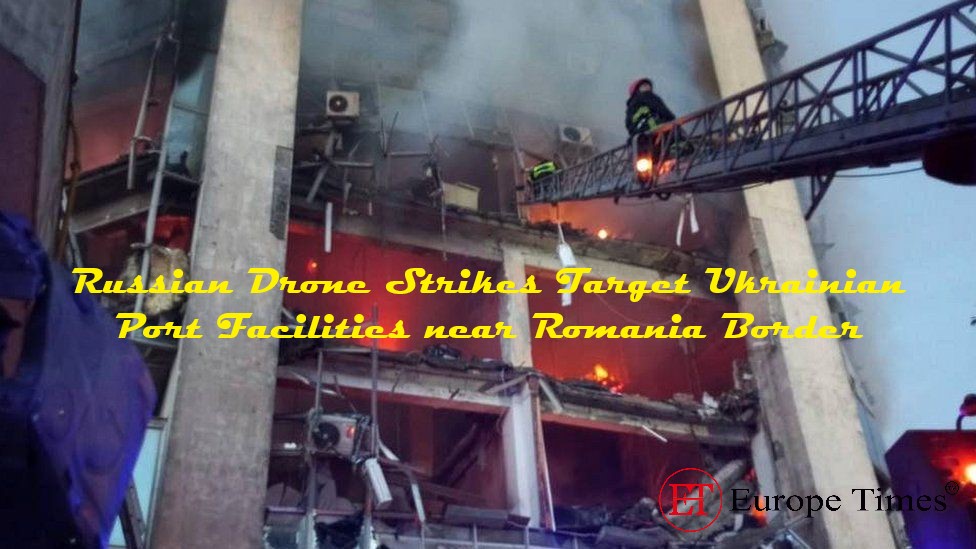
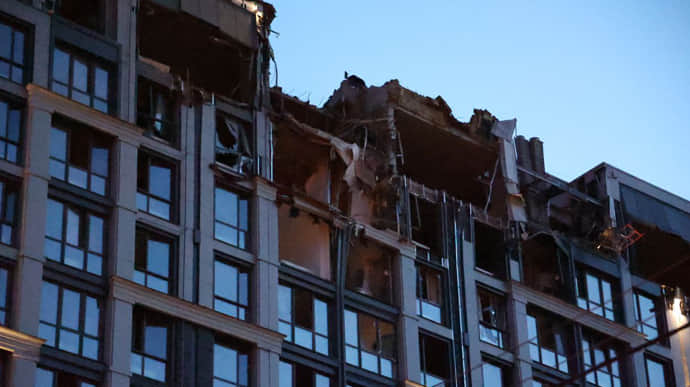
At least six people were killed and more than 30 were injured in a Russian missile strike on the city of Kryvyi Rih in central Ukraine.

According to Serhiy Lisak, governor of the Dnipropetrovsk region, where Kryvyi Rih is located, a multistory residential building was among the civilian infrastructure targeted in the early morning attack on Tuesday.

“A five-story building was demolished. Three of its occupants perished, according to preliminary accounts. “25 people were injured,” Lisak claimed early Tuesday morning on the Telegram chat service. “A massive missile attack on Kryvyi Rih,” he announced.

Oleksandr Vilkul, the city’s mayor, subsequently upped the death toll to six, despite previously warning that people were likely buried beneath the wreckage of buildings damaged in the attack.

“Unfortunately, six people have already died. “The rescue operation is still ongoing,” Vilkul wrote on the Telegram chat service.

Ukraine’s senior military command claimed air forces destroyed ten of the fourteen cruise missiles fired by Russia on Ukraine on Tuesday, as well as one of four Iranian-made drones.

It was unclear how many missiles targeted Kryvyi Rih or where the drones hit their objectives.

A drone struck civilian infrastructure in Kharkiv, according to Mayor Ihor Terekhov.

“According to preliminary reports, a utility company in the Kyivskyi district and a warehouse in the Saltivskyi district were both damaged.” “As a result of the explosion on the latter, a fire broke out,” he explained.

The current round of airstrikes comes as Ukraine claims to have retaken numerous villages and made significant progress in its counteroffensive against Russian soldiers.

Picture Courtesy: Google/images are subject to copyright

News Trending War

The leader of Radio New Zealand has apologised for airing “pro-Kremlin garbage.”

A journalist has been placed on leave after it was revealed that many web pieces regarding the Ukrainian war had been changed to benefit Russia.

Since personnel were notified on Friday, roughly 250 stories have been forensically investigated, according to CEO Paul Thompson.

Sixteen articles have been edited, with hundreds more to be reviewed.

“It’s quite frustrating. I’m devastated. It’s excruciating. “It’s shocking,” he said on RNZ’s Nine to Noon. “We need to figure out how this happened.”

Mr Thompson indicated that the organization’s editing practises will be subjected to an external examination.

The journalist in issue claims to have spent years editing news agency text for the RNZ website.

According to a statement by the state-owned RNZ, the 16 pieces had been reprinted with corrections and editor’s comments when flaws were discovered.

Mr Thompson apologised to the audience, readers, workers, and the Ukrainian community.

“It’s very disappointing that this pro-Kremlin garbage has ended up in our stories,” Mr Thompson said on Nine to Noon. “It’s inexcusable.”

The edited articles claimed that Russia unlawfully acquired Crimea following a vote, while Ukraine and the international community do not acknowledge Russia’s possession of Ukraine’s southern peninsula.

The United Nations has endorsed a resolution highlighting the referendum’s illegitimacy.

Picture Courtesy: Google/images are subject to copyright

News Trending War

Ukraine’s President Volodymyr Zelensky has indicated that the country’s long-awaited counter-offensive against Russia has begun. He acknowledged the occurrence of counter-offensive and defensive actions but refrained from providing specific details about the stage or state of the operation. Recent escalation of fighting in Ukraine’s south and east, along with speculation about the anticipated push, has contributed to the uncertainty surrounding the situation.

Reports suggest that Ukrainian troops have made advancements in the east near Bakhmut and in the south near Zaporizhzhia. They have also conducted long-range strikes on Russian targets. However, assessing the actual developments on the front lines is challenging as both sides present contrasting narratives. While Ukraine claims progress, Russia asserts that it is repelling attacks.

In Russia’s Kaluga region, which borders the southern districts around Moscow, the governor, Vladislav Shapsha, reported a drone crash near the village of Strelkovk. The accuracy of this report has not been independently verified by the BBC.

Russian President Vladimir Putin stated in a video interview that Ukrainian forces have indeed initiated their offensive, but their attempts to advance have been unsuccessful and resulted in heavy casualties.

Following discussions with Canadian Prime Minister Justin Trudeau in Kyiv, President Zelensky described Putin’s remarks as “interesting.” He shrugged his shoulders, raised his eyebrows, and pretended not to know who Putin was, emphasizing the importance of conveying to Russia that their time is running out. Zelensky also mentioned that Ukraine’s military commanders are in a positive mood and urged Trudeau to relay this message to Putin. During Trudeau’s visit, Canada announced a new military aid package of 500 million Canadian dollars (£297m) for Ukraine.

A joint statement issued after the talks affirmed Canada’s support for Ukraine’s NATO membership aspirations, stating that it should be pursued as soon as conditions permit. The matter is expected to be discussed at the NATO Summit in Vilnius, Lithuania, in July.

Fighting has intensified in the strategic southern Zaporizhzhia region, with Ukrainian forces aiming to push south and divide Russian forces, thus disrupting the occupied territory that links Russia to Crimea. However, Ukraine’s progress in the region may be impeded by significant flooding caused by the destruction of the Nova Khakovka dam. The flooding has affected approximately 230 square miles (596 sq km) on both sides of the Dnipro River.

President Zelensky reported that 3,000 individuals have been evacuated from the flooded Kherson and Mykolaiv regions. While water levels have receded by 27cm, over 30 settlements on the right bank of the river, within Ukrainian-held territory, remain flooded, with nearly 4,000 residential buildings still submerged.

NATO and Ukraine’s military have accused Russia of detonating the dam, while Russia has placed the blame on Ukraine. However, it is highly likely that Russian forces, who controlled the dam, deliberately destroyed it to impede Ukrainian forces from crossing the river as part of their ongoing counter-offensive, according to the BBC’s Paul Adams.

Picture Courtesy: Google/images are subject to copyright

News Trending War

According to Russian officials and military bloggers, Ukraine’s military has launched attacks on occupying Russian forces in the strategically important southern Zaporizhzhia region.

Ukrainian troops, supported by tanks, artillery, and drones, are reportedly attempting to advance south of the town of Orikhiv for the second consecutive night. The counter-offensive is believed to be focused on regaining access to the Sea of Azov, which would weaken Russia’s combat capability and eliminate a land bridge to Crimea, which was annexed by Russia in 2014.

Ukraine has been planning this counter-offensive for months and has been training troops while seeking advanced military equipment from Western allies.

The government has not revealed many details about its plans, but Ukrainian forces are reportedly testing Russian positions along the front line to identify weaknesses.

Picture Courtesy: Google/images are subject to copyright

News Trending War

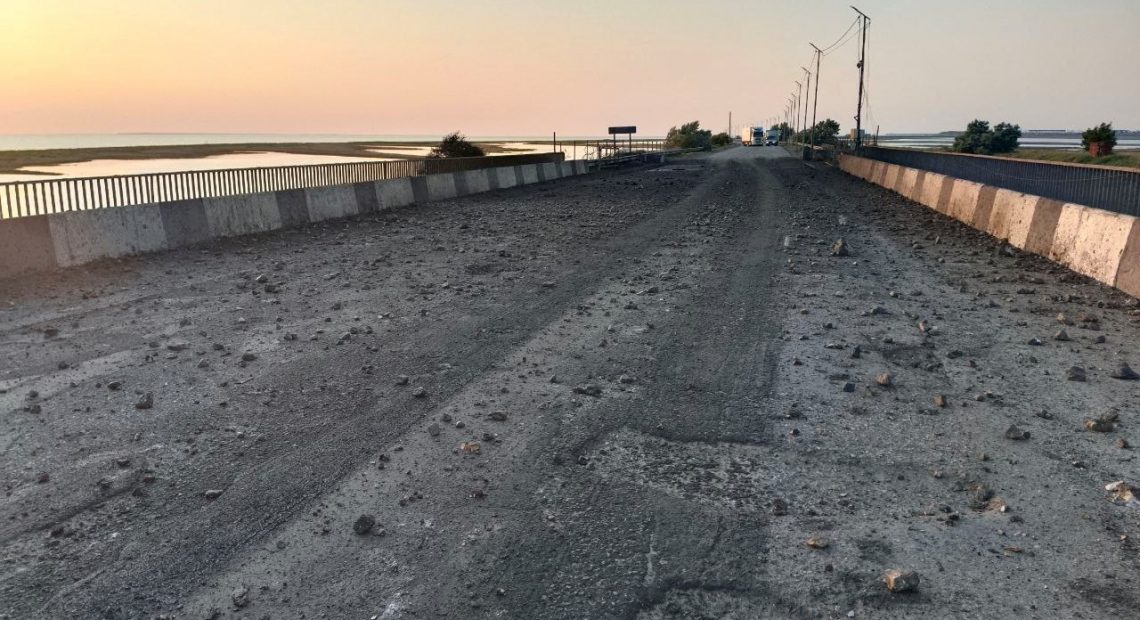
Russia has accused Ukraine of sabotaging a key ammonia pipeline and blamed them for a recent blast that damaged the Togliatti-Odesa pipeline. Moscow claims that the incident may have a negative impact on efforts to renew a grain export deal between the two countries. However, Ukrainian President Volodymyr Zelensky has denied these allegations and suggested that the explosion was likely caused by Russian shelling.

The pipeline, spanning 2,500 kilometers from Togliatti in Russia to three Black Sea ports in southern and western Ukraine, used to export 2.5 million tonnes of ammonia annually before operations were halted due to the Russian invasion in 2022. As part of the negotiations for the grain export deal last year, Ukraine and Russia agreed to ensure the safe passage of ammonia through the pipeline. The current agreement is set to expire on July 17.

The Kremlin expressed concerns about the pipeline blast, stating that it would negatively affect discussions on renewing the grain export deal. Russian officials mentioned uncertainty about the extent of the damage and the actions Ukraine would take. The Russian foreign ministry estimated that it would take one to three months to repair the damaged section, but the Industry and Trade minister stated that Moscow has no access to the affected area.

Ukraine strongly denied any involvement in the blast and instead accused Russia of conducting the attack. President Zelensky emphasized that the explosion occurred in a “grey zone” between territories controlled by Ukraine and Russia. He drew a distinction between this incident and the blast at the Khakovka dam, labeling the latter as terrorism orchestrated by Russia.

Reports have also emerged suggesting a Ukrainian counteroffensive in the southern region of Zaporizhzhia. However, Ukrainian officials, including the secretary of the national security council, denied these claims and stated that any offensive action would be publicly known. US officials have indicated that while a Ukrainian counteroffensive may be in its initial stages, the main thrust of the operation has not yet begun.

Picture Courtesy: Google/images are subject to copyright

News Trending War

Following the breach of a dam in the Russian-occupied town of Nova Kakhovka, Ukraine’s President Volodymyr Zelensky has expressed concern over the dire situation caused by the flooding. Hundreds of thousands of people are without access to drinking water, and tens of thousands remain stranded due to the floodwaters.

Evacuations are currently underway in the surrounding areas, as Kherson braces for the peak of rising water levels today. James Waterhouse, our correspondent in Kherson, reports that numerous homes have been submerged up to their rooftops. Distressed individuals in Kherson have sought refuge on rooftops and in trees, awaiting rescue.

Fortunately, the floods in Nova Kakhovka are subsiding according to local authorities. However, there are concerns regarding the impact on the vital agriculture industry in southern Ukraine, as the declining levels of the Kakhovka reservoir could have devastating consequences for irrigation.

The environmental damage caused by pollution and flooding is also a major worry, with Ukraine labeling it as one of Europe’s worst environmental disasters in decades. Nevertheless, there is currently no immediate threat to the Zaporizhia nuclear power plant upriver, as it relies on the reservoir for reactor cooling.

Picture Courtesy: Google/images are subject to copyright

News Trending War

Nadia Sadoviak, a Ukrainian music teacher residing in Newbury, Berkshire, has created an illustrated book of poems aimed at helping children understand and cope with the impact of the Russia-Ukraine war. Sadoviak explained that the book provides a means for children in her homeland to navigate a situation that they can hardly comprehend.

The book features a character named “Brave Goose” portrayed in various roles such as a medic and a volunteer. Sadoviak expressed her constant concern for helping children and her continuous efforts to establish connections and foster positivity. While acknowledging the impossibility of finding positivity in the dire situation in Ukraine, she has received positive feedback regarding the book’s usefulness in aiding children in coping with their difficult circumstances.

Copies of the book have been produced in the UK, and Sadoviak intends to distribute it to as many Ukrainian children living in Berkshire as possible. She will officially launch the book at Newbury Library on June 14.

The library holds significance for this event as it has recently been granted Library of Sanctuary status for its commendable efforts in welcoming and supporting refugees and individuals seeking sanctuary, making it an appropriate venue for Sadoviak’s book launch.

Picture Courtesy: Google/images are subject to copyright

News Trending War

According to Ukraine, Russia has been accused of detonating the dam. The reasoning behind this accusation is that Russia may have feared Ukraine’s potential use of the dam to facilitate troop movements in their recent counter-offensive.

The destruction of the dam is expected to have several consequences. One significant impact is on a crucial water channel that carries water from the Dnipro River to Crimea, which is currently under Russian occupation. The channel originates from Nova Khakovka and is likely to be affected by the dam’s destruction. Additionally, the Zaporizhzhia nuclear power station, located approximately 160km upstream on the banks of the Dnipro, is also at risk.

Andryi Yermak, the head of President Zelensky’s office, stated that Russia would bear responsibility for depriving the people of Crimea of drinking water. Yermak further emphasized that Russia’s actions pose a threat to the Zaporizhzhia nuclear power plant (ZNPP).

Picture Courtesy: Google/images are subject to copyright