
featured News Trending

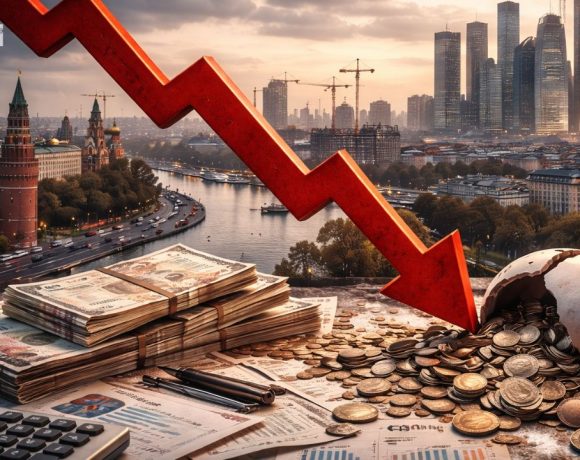
Russia’s capital city Moscow will reduce its investment programme for the first time since the COVID-19 pandemic, highlighting growing financial pressure across the country’s regional governments. Mayor Sergei Sobyanin said revenue growth in the first two months of the year slowed to 2%, far below the expected 6.5%, prompting the city to cut planned 2026 investments by 10% from 1.2 trillion roubles and reduce municipal staff by 15%.

The move reflects broader fiscal challenges in Russia as the war in Ukraine enters its fifth year. The country’s consolidated budget deficit, which includes both federal and regional accounts, widened sharply to 8.3 trillion roubles in 2025, or 3.9% of GDP—more than double the previous year. While the federal government maintains that national debt remains manageable, many regions are increasingly relying on expensive commercial bank loans as concessional federal funding declines.

Regional finances are also under pressure due to slowing economic growth and weaker corporate profits. Official data shows corporate profits fell 5.5% in the first eleven months of 2025, contributing to a rise in deficit-running regions from 50 to 74. Analysts warn that if economic growth does not recover, regional governments may be forced to cut spending on infrastructure and development projects while also coping with rising social and military-related expenditures.

Pic courtesy: google/ images are subject to copyright
News Trending

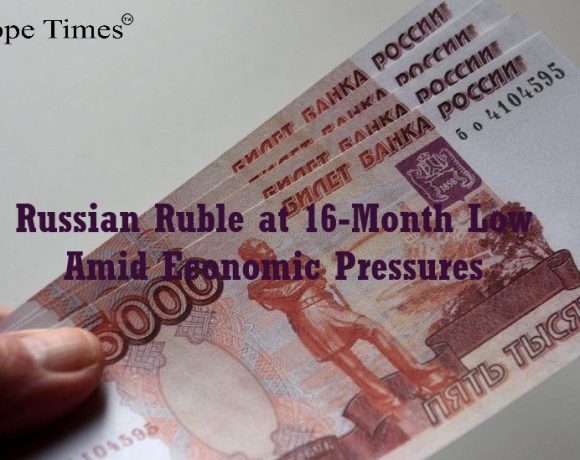
The Russian ruble has reached its lowest point in 16 months, dropping below 100 against the US dollar.

This decline is a result of mounting pressures on the Russian economy, marked by a faster increase in imports compared to exports and heightened military expenditures due to the conflict in Ukraine.

Following Russia’s invasion of Ukraine in February 2022, Western nations imposed sanctions on Russia. Although the ruble initially plummeted during the onset of the conflict, it received some support from capital controls and exports of oil and gas.

Since the war began, the ruble’s value has been fluctuating, but it has overall lost around 25% of its value against the US dollar since the invasion of Ukraine.

On a recent Monday, the ruble’s exchange rate was 101.04 per US dollar. A higher number of rubles needed to buy a dollar indicates the currency’s weakening, given the dollar’s status as a dominant global currency.

Russia’s central bank has suggested the possibility of a key interest rate increase but maintains that the country’s financial stability is not under threat. In response to the invasion, the bank had raised rates from 9.5% to 20%, subsequently reducing them.

Jane Foley, Managing Director at Rabobank London, noted the progressive weakening of the ruble throughout the year, with the pace accelerating since late July. She attributed this trend to Russia’s challenging economic fundamentals, such as budget deficits and export pressures.

Russ Mould, Investment Director at AJ Bell, indicated that Western sanctions, particularly concerning oil and gas, were negatively impacting Russia’s trade and economy. The EU countries heavily reliant on Russian energy sources pledged to decrease their dependence and explore alternative suppliers.

The imposition of a price cap by G7 and EU leaders in December 2022, aimed at limiting Russia’s oil export revenue by maintaining oil prices below $60 per barrel, contributed to the reduction in Russia’s oil-related exports.

The interruption of gas supplies to Europe by Russia also played a role. Germany, a significant importer, announced its reduced reliance on Russian fossil fuels for energy.

Mould stated that the exclusion of Russia from Swift, a global payment system, had further impacted Moscow.

He pointed out that the ruble’s depreciation should also be considered alongside the strength of the US dollar. The dollar’s gain against emerging currencies was partly attributed to the robust US economy, prompting the Federal Reserve to raise interest rates while many emerging central banks were cutting rates.

The attractiveness of holding dollars or dollar-denominated assets was further enhanced due to higher cash returns in dollars compared to other currencies.

Picture Courtesy: Google/images are subject to copyright