
featured News Trending

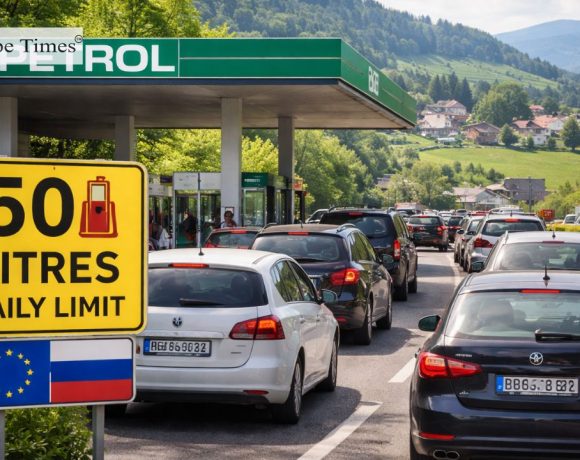
Slovenia has become the first EU country to introduce fuel rationing in response to supply disruptions following US-Israeli strikes on Iran and subsequent regional tensions. Private motorists are now limited to 50 litres per day, while businesses and farmers can purchase up to 200 litres. Petrol stations are tasked with enforcing the rules, and stricter limits are encouraged for foreign drivers.

The move comes as “fuel tourism” increases, with drivers from neighbouring Austria crossing into Slovenia to take advantage of lower, regulated prices. While Austria sees petrol prices approaching €1.80 per litre and diesel near €2.00, Slovenian rates remain capped at €1.47 and €1.53, respectively, though an increase is planned.

Reactions among locals are mixed: some view the foreign visitors as a nuisance, causing long queues, while others appreciate the economic boost they bring to shops and restaurants. Prime Minister Robert Golob reassured citizens that Slovenia’s fuel reserves are sufficient and there will be no shortage despite the rationing.

Pic courtesy: google/ images are subject to copyright
featured News Trending

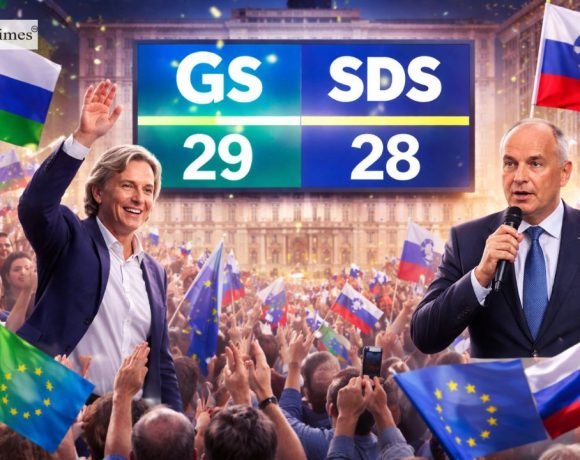
Slovenia’s parliamentary election has resulted in a tight race between the liberal Freedom Movement (GS) led by Prime Minister Robert Golob and the right-leaning Slovenian Democratic Party (SDS) headed by Janez Janša. Preliminary results show both camps nearly tied, with GS securing 29 seats and SDS close behind with 28 in the 90-seat parliament. Neither side appears likely to reach the 46 seats required for a majority, making smaller parties crucial in forming the next government.

With most votes counted, Golob’s bloc could gather around 40 seats with its partners, while Janša’s alliance may reach about 43. Golob told supporters that the mandate would be used to work toward a better future for citizens, while Janša questioned the vote counting process and warned he might push for a recount, claiming discrepancies in tens of thousands of votes.

Political analysts expect lengthy coalition negotiations as parties attempt to form a stable government. The outcome will shape Slovenia’s political direction, with Golob advocating liberal reforms and closer alignment with European policies, while Janša has promoted tax cuts for businesses and changes to spending on NGOs, welfare and media.

Pic courtesy: google/ images are subject to copyright