News Trending

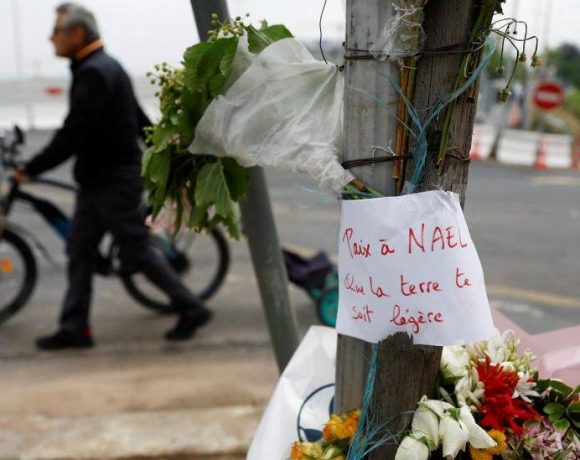
The fatal shooting of Nahel M, a 17-year-old, has sparked widespread riots in various cities across France, including his hometown of Nanterre, located west of Paris.

Nahel, who was raised by his mother as an only child, worked as a pizza delivery man and was involved in playing rugby league. He had a tumultuous educational background and was enrolled in a college in Suresnes, near his residence, with the intention of becoming an electrician.

Residents of Nanterre spoke highly of Nahel, describing him as well-loved in the community where he lived with his mother, Mounia. He had a close relationship with his mother and expressed his love for her before she went to work on the day of the incident.

Tragically, in the morning, during a police traffic check, Nahel was fatally shot at close range in the chest while driving a Mercedes car, after attempting to drive away from the scene.

Nahel’s mother expressed deep sorrow and devastation, stating that she had dedicated everything to him and he was her only child and best friend. His grandmother remembered him as a kind and good-hearted boy.

The incident has drawn attention to the police shooting, leading to protests and calls for justice across France. Politicians and activists emphasized that a refusal to stop should not result in lethal force, emphasizing the right of all citizens to fair treatment.

Nahel had been involved with the Pirates of Nanterre rugby club for the past three years and participated in an integration program called Ovale Citoyen, which aimed to assist struggling teenagers by providing apprenticeships. He was learning to become an electrician through this program.

Jeff Puech, the president of Ovale Citoyen, described Nahel as a determined individual seeking social and professional integration, contrary to negative portrayals of him on social media. Puech praised Nahel’s exemplary attitude and knew him well during his time in the Vieux-Pont suburb before moving to the Pablo Picasso estate.

Notably, Nahel’s family had Algerian origins, and expressions of support and condolences were seen on a banner displayed on the Paris ring road. Some individuals in France, particularly those from Arab or black backgrounds, highlighted the issue of police violence and demanded justice for Nahel.

Nahel had been subjected to multiple police checks, known as refus d’obtempérer (refusals to cooperate), with records indicating up to five such instances since 2021. It was reported that he had recently been detained for refusing to cooperate and was scheduled to appear in juvenile court in September. His recent troubles mostly involved incidents related to cars.

The riots triggered by Nahel’s death serve as a reminder of the 2005 events, when two teenagers, Zyed Benna and Bouna Traoré, were electrocuted while evading police after a football game and sought refuge in an electricity substation in the Parisian suburb of Clichy-sous-Bois.

The emotional impact of Nahel’s death resonates with many in France, as they can relate to the incident and perceive the potential for it to have happened to themselves or their loved ones.

Picture Courtesy: Google/images are subject to copyright

News Trending

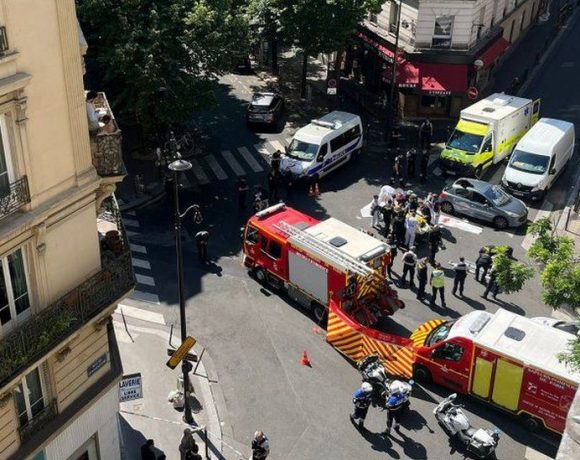
Violent protests erupted in Paris overnight following the fatal shooting of a 17-year-old who failed to comply with a traffic stop order by police. Video footage circulating on social media shows a police officer aiming a gun at the driver of a car, followed by a gunshot and the car subsequently crashing. The teenager, identified as Naël M, succumbed to chest wounds despite receiving assistance from emergency services. The officer responsible for the shooting has been apprehended on charges of homicide.

Initially, the police claimed that the teen had driven his car toward them with the intent to harm. However, verified footage contradicts this account, revealing two officers attempting to stop the vehicle. One officer points his weapon at the driver through the window and seemingly fires at close range as the driver tries to flee. In the video, an unidentified person can be heard saying, “you’re going to be shot in the head,” but the speaker’s identity remains unclear.

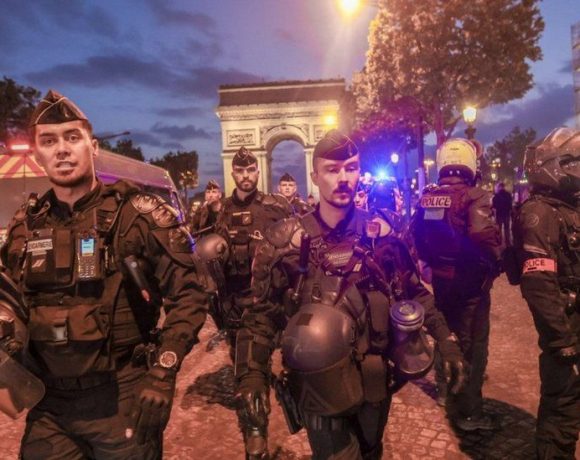
Two other individuals were in the car at the time of the incident. One of them fled, while the other, also a minor, was detained by the police. The shooting triggered protests in the Nanterre area, located west of Paris, with incidents of arson, destruction of bus shelters, and the use of fireworks near the police station. Riot police employed tear gas to disperse the protesters, leading to the arrest of twenty individuals.

Following the teenager’s death, two separate investigations have been initiated—one into the potential misconduct of a public official resulting in a fatality, and another into the driver’s failure to stop the vehicle and alleged attempt to harm a police officer.

Paris police chief Laurent Nuñez expressed concerns about the officer’s actions, although he suggested the officer may have felt threatened. The family’s lawyer contested this justification, stating that the video unequivocally depicted a police officer deliberately killing the young man. The family filed a complaint against the police for providing false information initially, claiming that the car had attempted to run over the officers.

Interior Minister Gérald Darmanin described the video shared on social media as “extremely shocking” and called on people to respect the family’s grief and the presumption of innocence for the police. Left-wing leader Jean-Luc Mélenchon extended his condolences to the teen’s family, emphasizing that no officer has the right to kill unless in self-defense. He called for a comprehensive reform of the uncontrolled police force, which he believes undermines the authority of the state.

This incident follows another fatal police shooting two weeks earlier in Angouleme, where a 19-year-old driver was killed after allegedly hitting an officer during a traffic stop. Last year, a record number of 13 individuals died in police shootings during traffic stops in France, according to Reuters. Naël M’s death marks the second such incident this year.

Picture Courtesy: Google/images are subject to copyright

News Trending

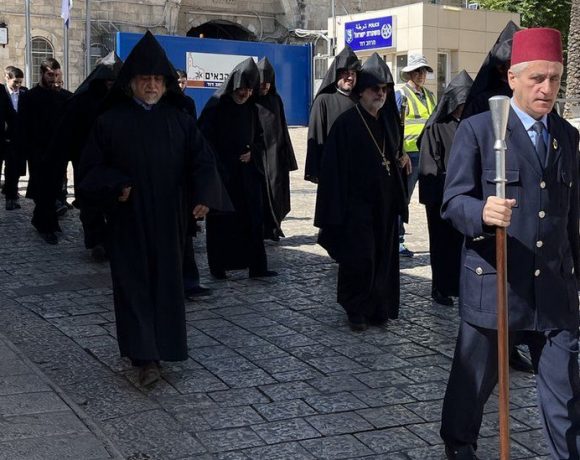
A procession of Armenian priests, distinguished by their peaked black headdresses and long robes, marches through the stone streets of Jerusalem’s Old City. Accompanied by suited individuals in felt tarboosh hats, carrying ceremonial walking sticks, they make their way to the Church of the Holy Sepulchre for prayers.

While Jerusalem remains a focal point of the Israeli-Palestinian conflict, the presence of Armenians in the city dates back to the 4th century when Armenia became the first nation to adopt Christianity as its official religion. The Armenian community has a significant stake in the city’s most sacred Christian sites and resides in their own quarter, situated in the southwestern corner of the Old City, where approximately 2,000 Armenians reside.

However, the community now finds itself feeling vulnerable due to a controversial real estate transaction involving their own Church leaders. Amidst vehement protests, the Armenian patriarch has gone into hiding, and a disgraced priest, who denies any wrongdoing, has fled to California.

The unfolding situation reveals that approximately 25% of the Armenian Quarter has been sold on a 99-year lease to an enigmatic Jewish Australian businessman for a luxury development. This includes a substantial car parking area, one of the few remaining open spaces within the Old City walls, which has already been taken over by his company. Many Armenians had hoped this land could be used for the construction of affordable housing for young couples within their dwindling community.

Unofficially obtained plans indicate that the sale encompasses an Ottoman-era building housing five Armenian households, a restaurant, shops, and the seminary. Concerns have been raised that this could jeopardize the long-term viability of living within the quarter.

However, the controversy extends beyond the immediate community. The ramifications are seen as far-reaching, as losing this historically significant land, owned for 700 years, would not only impact the daily cultural life of the Armenians but also alter the overall fabric of Jerusalem. Hagop, a community activist, explains that it would disrupt the status quo and the intricate mosaic that defines the city.

During Orthodox Easter celebrations in April, panic gripped the Armenian community as news of the land sale spread. The Armenian Patriarch, Nourhan Manougian, admitted to signing away the land but claimed he had been deceived by a local priest in his employ.

The defrocked priest faced heated scenes as he was expelled from the Armenian Quarter, escorted away under Israeli police protection while residents labeled him a “traitor.” In recent times, Armenians have been participating in weekly protests, joining arms and singing patriotic songs beneath the window of the patriarch, who now remains secluded within his convent. They demand the revocation of the land deal.

Against the backdrop of increasing attacks on Christians in Jerusalem by extremist Jewish groups, some Armenians view this sale as self-inflicted harm to the Christian presence in the city. Arda, an Old City resident, laments the changing character of the city and asserts that religious nationalists are growing bolder due to the prevailing political climate in Israel.

East Jerusalem, including the Old City, was captured by Israel from Jordan in the 1967 Middle East War and subsequently occupied and annexed, despite lacking international recognition. Since then, it has remained at the center of the Israeli-Palestinian conflict, with both sides claiming it as their capital. Consequently, plots of land in this area are fiercely contested.

Near the Armenian Quarter, at Jaffa Gate, a notable entry point to the Christian Quarter, a reminder of these disputes persists. Two landmark hotels, managed by Palestinians, were covertly sold to foreign companies acting as proxies for a radical Jewish settler group. The Greek Orthodox Church’s lengthy legal battle to annul the deal was unsuccessful, and settlers moved into a portion of one of the hotels last year.

Armenian elders recount that settlers have frequently expressed interest in acquiring land within their quarter to bolster the Jewish presence in East Jerusalem. The proximity of the Armenian Quarter to the Jewish one makes it particularly desirable.

However, a spokesperson for the settler group involved in the Jaffa Gate property purchase claimed ignorance of the Armenian land sale when approached by the BBC.

Picture Courtesy: Google/images are subject to copyright

News Trending

After a lady in her fifth month of pregnancy died of sepsis, women’s rights activists called for rallies in dozens of Polish cities.

Thousands of people marched in Poland against the country’s stringent abortion law after a woman five months pregnant died of sepsis, the latest such death since the ban was tightened.

Protesters chanted “Stop killing us” as they marched through Warsaw’s capital towards the health ministry’s headquarters on Wednesday, some carrying placards reading “We want doctors, not missionaries” and “Hell for women,” a common slogan used to convey how the measure affects those carrying an unwanted or dangerous pregnancy.

Poland’s abortion laws, which are among the harshest in Europe, have sparked major protests in recent years, and the death of Dorota Lalik, 33, in May has fueled anti-government sentiment among many liberal Poles ahead of elections in October or November.

As conservative politics have progressively taken hold in one of Europe’s most devoutly Catholic countries, Prime Minister Mateusz Morawiecki’s nationalist administration implemented a constitutional court judgement prohibiting terminations of pregnancies with foetal malformations in 2021.

According to abortion rights campaigners, there were at least five incidents of pregnant women dying whose families went public, blaming abortion restrictions for their deaths.

When asked about the consequences of the tight abortion restriction, Mateusz Morawiecki cautioned against “politicising” the Lalik case.

“Such perinatal deaths occurred also during the Platforma Obywatelska [Civic Platform],” Morawiecki remarked on Wednesday, referring to the centrist opposition party that ruled before his conservative party won office in 2015.

Even before Morawiecki’s Prawo i Sprawiedliwo (Law and Justice) party came to office, Poland had one of the most stringent abortion laws in Europe.

Women have the right to abortion under present legislation only in circumstances of rape or incest, or if their life or health is in danger. This week, government officials emphasised that the law was not the cause of the woman’s death. They emphasised that in such instances, women have the right to a legal abortion, and that the hospital infringed that right.

Several women have perished since 2020, when the constitutional court declared that women may no longer abort pregnancies due to serious foetal defects.

Women’s rights groups claim that the present statute, as well as the wider conservative milieu, has chilling effects. Another issue, they claim, is doctors who refuse to perform abortions because of their moral conscience.

An inquiry into Lalik’s death has been launched by prosecutors. They are already investigating two similar incidents in which pregnant women died in hospital following the demise of the foetus they were carrying.

In 2021, her family criticised physicians’ “wait-and-see attitude” when a pregnant 30-year-old mother from Pszczyna died.

A year later, a 37-year-old lady died in Czestochowa, Poland, just weeks after losing her 12-week-old twin foetuses.

Picture Courtesy: Google/images are subject to copyright