featured News Trending

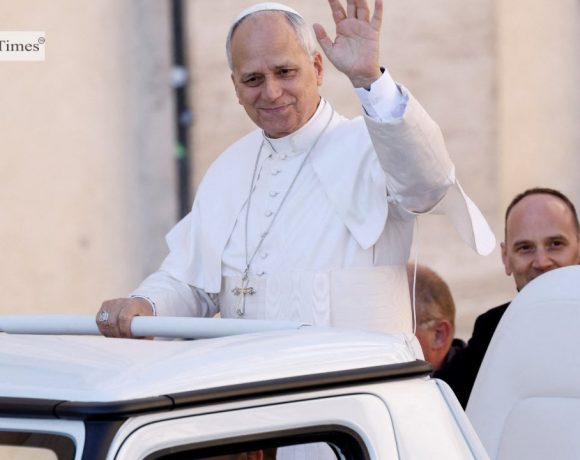
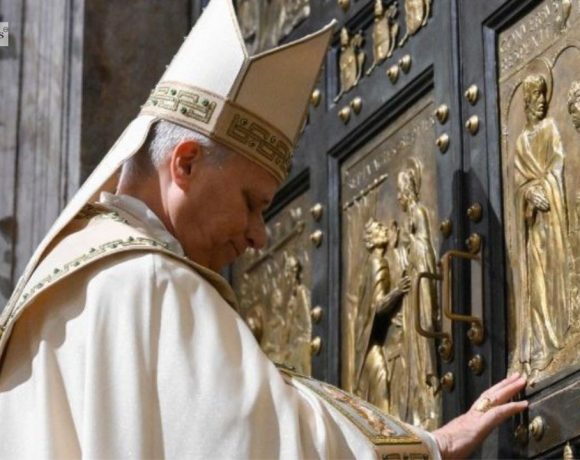
Pope Leo on Tuesday formally closed the Catholic Church’s Holy Year by sealing the Holy Door at St. Peter’s Basilica, urging Christians around the world to show greater kindness to those in need, especially foreigners and migrants. Speaking at a Vatican ceremony, he reflected on the record 33.5 million pilgrims who visited Rome during the jubilee, calling on them to recognise humanity in strangers rather than viewing people as commodities.

Highlighting themes that have defined the early months of his papacy, Leo criticised what he described as a distorted global economy that seeks to profit from everything, including human movement and aspiration. Dressed in gold-trimmed vestments, the pope shut the bronze Holy Door at 9:41 a.m., officially ending the jubilee year, which traditionally symbolises peace, forgiveness and renewal for Catholics.

The 2025 Holy Year was notable as a rare historical event, having been opened by Pope Francis and closed by his successor, following Francis’ death in April after 12 years as pontiff. Vatican officials said pilgrims arrived from 185 countries, led by Italy, the United States, Spain, Brazil and Poland. The next jubilee is not expected before 2033, when the Church may mark 2,000 years since the death of Jesus.

Pic courtesy: google/ images are subject to copyright
featured News Trending

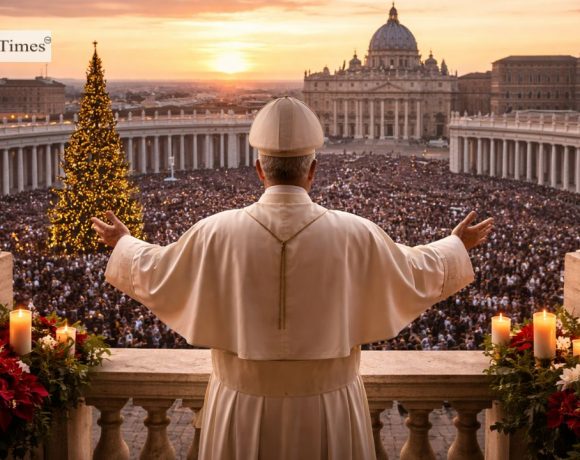
In his first Christmas sermon, Pope Leo made an unusually direct appeal regarding the humanitarian crisis in Gaza, asking how people could ignore Palestinians living in tents exposed to rain, wind, and cold. The U.S.-born pope, known for his quieter and diplomatic style, usually avoids political commentary in sermons, but he emphasized the plight of vulnerable populations worldwide, linking their suffering to the message of Jesus’ birth in a humble stable.

During the “Urbi et Orbi” blessing, Leo also addressed broader global issues, calling for an end to wars and lamenting the destruction caused by conflicts in Ukraine, Sudan, Mali, Myanmar, Thailand, and Cambodia. He highlighted the struggles of young people forced into combat and the ongoing humanitarian challenges, stressing the importance of dialogue, reconciliation, and international support.

The pope’s remarks also extended to the homeless and migrants, reflecting his early papacy’s focus on caring for vulnerable communities. He reiterated that resolving long-standing conflicts, including the decades-long Israeli-Palestinian dispute, requires practical solutions such as the establishment of a Palestinian state, while urging all parties to work toward peace and humanitarian relief.

Pic courtesy: google/ images are subject to copyright

featured News Trending

Pope Leo has expressed deep sadness over Russia’s refusal to agree to a Christmas ceasefire in its nearly four-year-long war with Ukraine. Speaking to journalists outside his residence in Castel Gandolfo, Italy, the pontiff said the decision was particularly disheartening given the symbolic importance of Christmas as a time for peace and reflection.

The Pope appealed once again to global leaders and “people of good will” to respect at least Christmas Day as a pause in hostilities. He urged all sides involved in conflicts to consider a temporary ceasefire, even if only for 24 hours, as a gesture of humanity and compassion during the Christian holy period.

Pope Leo, the first pontiff from the United States, said he hoped his renewed appeal would be heard and lead to a brief moment of peace, not only in Ukraine but across the world. His comments come amid continued fighting and international calls for restraint during the festive season.

Pic courtesy: google/ images are subject to copyright
featured News

Pope Leo has advised American students to avoid using artificial intelligence to complete their homework, saying it should be used as a tool for personal growth rather than a shortcut. Speaking via live video from the Vatican to about 15,000 young people gathered at a Catholic youth conference in Indianapolis, the pope said AI is rapidly becoming a defining force in society, but should be used responsibly and in ways that build knowledge, not replace effort.

In the 40-minute dialogue, Leo — the first U.S.-born pope — answered questions about faith, friendships, and personal development. He urged the young audience to make real connections and rely on human relationships over digital replacements.

Pope Leo also briefly touched on U.S. politics, reiterating his call for compassion in immigration debates. Criticizing divisive rhetoric, he emphasized that Christians should be “bridge builders rather than wall builders” and reminded listeners that the Church is not bound to any political party but is meant to guide conscience and promote wisdom and love.

Pic Courtesy: google/ images are subject to copyright