
featured News Trending

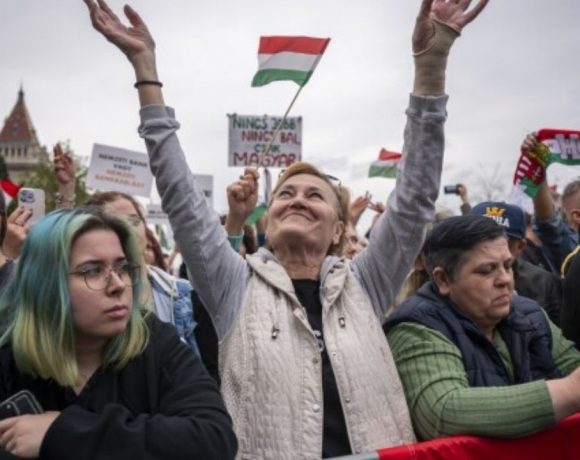
Hungary’s main opposition Tisza party has widened its lead over Prime Minister Viktor Orban’s ruling Fidesz party, according to two opinion polls released on Wednesday, raising the stakes ahead of the April 12 parliamentary election. The vote marks the first time in years that Orban, who has been in power since 2010, faces a serious electoral challenge, with implications for both Hungary’s political direction and the wider European landscape.

A survey by pollster Median showed Tisza, led by former government insider Peter Magyar, extending its advantage over Fidesz to 12 percentage points among decided voters. Tisza was backed by 51% of voters, while support for Fidesz slipped to 39%. Median noted that while Tisza is mainly attracting voters from other opposition parties, Fidesz has struggled to regain ground despite economic incentives and efforts to rally voters around fears linked to the war in Ukraine.

A second poll by the Idea Institute also pointed to a strong showing for Tisza, placing it at 48% support—10 points ahead of Fidesz. Magyar has pledged to keep Hungary firmly anchored in the European Union and NATO while pursuing pragmatic ties with Russia, contrasting with Orban’s closer relations with Moscow and frequent clashes with Brussels. Apart from the two main rivals, only the far-right Our Homeland party is seen as having a realistic chance of entering parliament.

Pic courtesy: google/ images are subject to copyright
News Trending

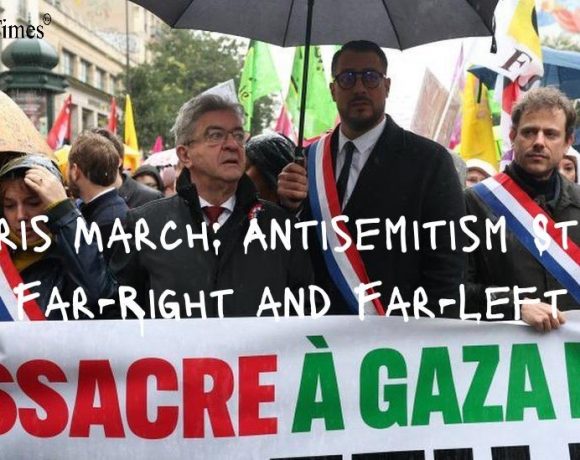
In an unprecedented turn of events in Paris this weekend, a significant demonstration took place in response to the Israel-Hamas conflict, drawing representatives from major political parties. Notably, the far right, including Marine Le Pen and Jordan Bardella of the National Rally, participated, while the far left, led by Jean-Luc Mélenchon of France Unbowed, boycotted the event, citing it as a gathering for supporters of the Gaza massacre.

This shift is symbolic, considering historical political dynamics in France. Traditionally, the far right was ostracized due to its perceived anti-Republican views, especially on Jewish issues. The far left, on the other hand, despite criticism, remained part of the broader political spectrum. However, the current scenario reflects a shake-up in the political landscape.

The contemporary far right in France, now labeled as “hard right” or “national right,” has shifted focus from past anti-Semitic stances to prioritize issues such as immigration, insecurity, and Islamism, aligning with some Jewish perspectives. Meanwhile, the far left interprets the Gaza conflict through an anti-colonial lens, emphasizing solidarity with the oppressed against perceived superpower aggression.

This unusual alignment sees a party with a history of Holocaust denial, like the National Rally, supporting French Jews openly. Conversely, a party built on human rights and equality, like France Unbowed, faces accusations of antisemitism for not condemning Hamas as a terrorist organization.

While nuances exist, the overall trend shows the National Rally under Marine Le Pen successfully integrating into the mainstream, while France Unbowed under Jean-Luc Mélenchon appears to be distancing itself. Opinion polls reinforce this, with Marine Le Pen leading in presidential election polls, while Mélenchon’s support has declined.

Serge Klarsfeld, a prominent figure in the fight against antisemitism in France, acknowledges the irony. He appreciates the far right’s departure from antisemitism, seeing it align with Republican values, yet expresses sadness over the far left’s perceived abandonment of efforts to combat antisemitism.

Picture Courtesy: Google/images are subject to copyright